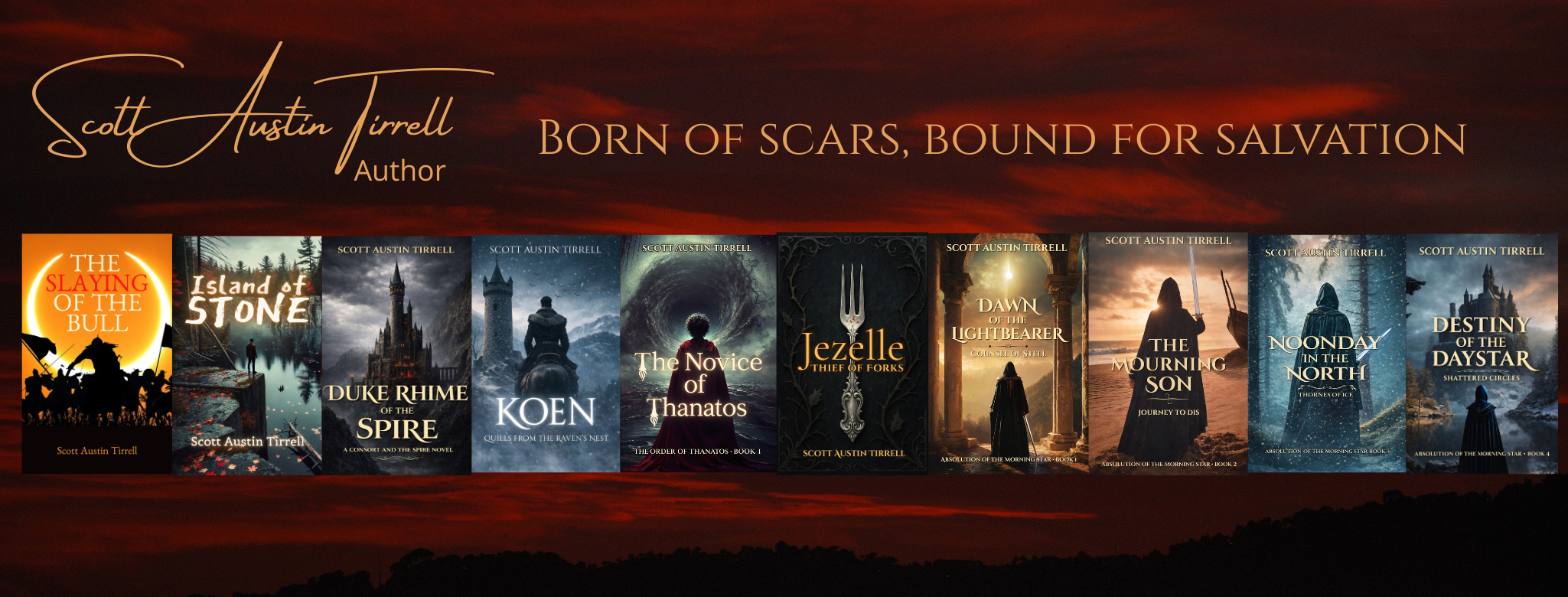
Yesterday, I spent about another four hours going back over my last chapter in the Slaying of the Bull (book 1 in my Tocharian Gospels series). I’ve been reading over the roughly ten chapters I added to the end of the novel as they are pretty green. I was happy with what I wrote until I got to the very end of the last chapter. As you can imagine, it must be perfect, so I wrote the last few pages over and over, but it just wasn’t coming out the way I wanted. Sometimes this happens, and you get stuck. You follow a path until you hit a dead-end, erase, and repeat until it comes out right. It can be frustrating, but when you finally get where you want to go, it is incredibly gratifying. This endpoint hasn’t happened yet, but it’s very close. I am going to go through the book from the beginning one last time, and that should clear things up.
When I have writer’s block (yes, that is real, and it happens to everyone), my remedy is to research. Although I wouldn’t necessarily call what I mention above as pure writer’s block, as I was still writing, it is just as frustrating. Usually, when I have any block, it is because, one, I don’t have any ideas, or two, my thoughts feel unsupported. Often, with a bit of research, I can find inspiration. Last night, that took the guise of researching the dichotomy between good and evil found in Manichaeism and generally, the philosophical debate of what is Evil. This fundamental debate is critical to my book, and I needed to brush up on some ideas. Saint Augustine’s great gift to Christianity was a philosophical proof of the existence of an omnipotent good God. Augustine’s views won a long-standing debate between Christians and Manicheans, which subsequently led to the Manichean faith disappearing from history.
The Manicheans believed that there was a God of pure good and a God of pure evil, and our world was a struggle between these forces. But if you separate the world into just good or evil, then what side does existence fall? If it is on the side of good than the good God exists, but if the bad God is the direct opposite of the good God, that means the bad God can’t exist. If existence is bad, then the opposite would be true, and therefore the good God can’t exist. We know that both good and evil exist in this world, we see proof of this every day, so this drills a sound hole in the Manichean argument of a dualistic world.
Augustine realized that this bad God is not a god at all and that you can’t have pure evil (as this complete lack of something means it doesn’t exist). Evil is not a thing at all. It is a lack of something, namely the result of when you remove the good that is supposed to be there. Existence, therefore, becomes a receptacle of Goodness and Evil is a lack of this good, just like dark is the absence of light.
I know, it was a bit of light reading before bed. But it clarified for me the struggle in my book and especially its antagonist, the entity I call the Radix Obscurum (roughly translated as the root of darkness). This evil has a quest for destruction and nothingness. Full of vengeance of being cast from heaven, it is trying to drain the world of light, until it is empty of good. If there is a complete lack of good, then existence also falls prey, leading to a great nothing. Scary, huh?
Don’t forget to check out Island of Stone and if you haven’t already, leave an Amazon review or send me feedback below, on Facebook, or here.
Cheers!
Discover more from Author Scott Austin Tirrell
Subscribe to get the latest posts sent to your email.
