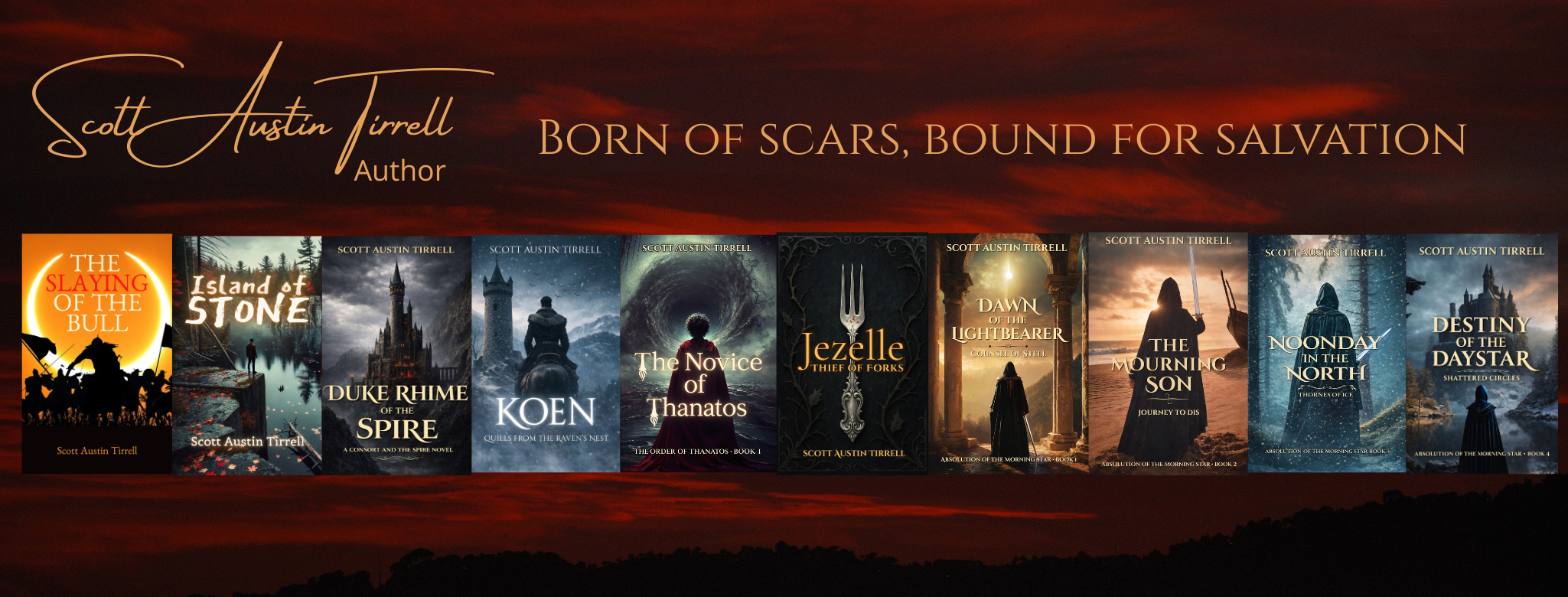
The Slaying of the Bull– if anything, I have a pretty good title for the first book in the Tocharian Gospels Series, but what does it mean?
Originally the book’s title was going to be The Lion’s Order, but as the story developed, so did the words that would encapsulate the book (and to avoid confusion with another order in my book, the Order of Preachers, this changed to the League of the Lion). The main arc moved away from an ancient order of European kings and focused on Isa and the secrets bestowed upon him. If you type in The Slaying of the Bull in Google, the first hit you’ll get is likely a Wikipedia page talking about the Tauroctony. What is that? Well, if you don’t have the time to read the page, if you click on images, you get plenty of pictures- including the current cover of my book. So what is this image, what does it mean, and why is it important?
The Tauroctony is the core symbol of Mithraism. This ancient lost religion spread through the Roman Empire around the same time as Christianity’s development and was very much a rival for followers. It was particularly popular among the Roman Army from the 1st to the 4th century, causing it to spread quickly and widely around Europe. We don’t know very much about this religion for two reasons. One, they were very strict about writing down any of their core beliefs. It was a secret society, and those secrets were spread verbally among the initiates. Secondly, it was a conflicting religion during the spread of Christianity. As Christianity grew and developed, it destroyed much of what we knew of Mithraism, and the religion virtually ceased to exist by the 4th century. Luckily, Mithraists worshiped in underground temples called Mithraeum, so although Christians persecuted Mithraists to extinction, many of their temples remained hidden, and researchers have found countless examples of the Tauroctony as far north as England and as far west as along the Danube in Poland and Hungary.
So what is this Tauroctony? Well, we don’t know for sure, but there is a pretty good theory, which I use in my book. When you see the scene’s violent nature, you may think that it is dealing with some form of bull sacrifice. Sacrificing animals, including bulls, to the gods is not rare. These animals were essential to ancient life, and killing one in your god’s name was a big deal. It showed your commitment to this god and was a worthy offering. But, that is not what we have here, and we know this because of the inclusion of other animals in the scene. Other than the bull, we often see a dog and snake that feed on the bull’s blood and a scorpion that utilizes its claws on the poor bull’s nether regions. There are often lions, cups, ears of wheat, twins, and ravens. If you haven’t figured it out yet, more overtly, the scene usually has representations of other celestial bodies like the sun and moon. The Tauroctony represents the heavens, and it signifies a groundbreaking realization in antiquity- proof of Monotheism.
The ancient intellectual and spiritual world (namely Greek and Roman based cultures) believed that the stars and planets were gods and their movements in the heavens dictated every aspect of human existence. Although there were some stars brighter than others and therefore some gods more powerful than others, they all had some form of influence on humanity and were worshiped widely. But, in 128 BCE, the Greek astronomer Hipparchus discovered the procession of the equinoxes. When Hipparchus compared his observations with those passed down from the distant past, he noticed that the equinox had shifted from Taurus’s constellation to Aries’s starting a new astronomical age. This movement indicated that something more significant and powerful than all the other gods had moved the entire cosmic sphere, proving the existent of a single all-powerful being. Mithraists memorialized this moment of enlightenment by showing the deity Mithras slaying the Taurus bull marking the end of the Age of Taurus (if the tune Age of Aquarius pops into mind, it’s natural, although technically this age won’t begin for another 500+ years).
Therefore, my title is referencing this moment in human development. Soon after this discovery, monotheist religions began to take hold and spread from their localities worldwide- namely Christianity and Islam. Of course, it is a bit more involved than that, and I don’t want to give away any spoilers, but I will say that Mithraism and Christianity did not develop in a vacuum. They existed simultaneously among the same culture with the same people, and Mithraist influences may run deeper than we think. Or, perhaps there is something more fundamental that just may link everything. You’ll have to read The Slaying of the Bull to find out.
Cheers!
Discover more from Author Scott Austin Tirrell
Subscribe to get the latest posts sent to your email.
