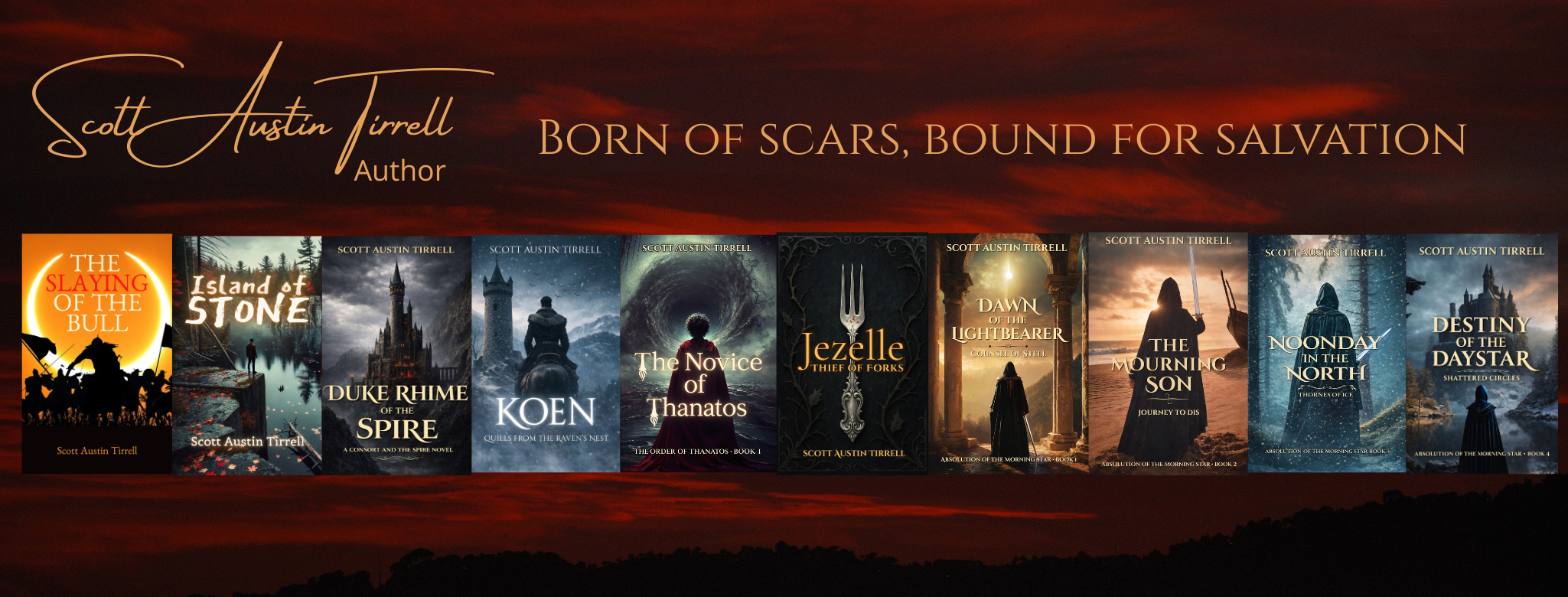

When you write a book, sometimes creepy things can happen. I’m sure all authors would agree that you find yourself in tune with some higher power every once and a while. There are many names for this, but the most common is the muse. This entity visited me recently with an interesting bit of inspiration. I know the muse well, but this time I am not quite sure what to think.
The series I am currently working on requires a lot of research. One of my main characters in the first book, The Slaying of the Bull, is King Bela IV of Hungary. I am currently reworking some parts of this book, and King Bela will appear again briefly in the series’s second installment. So I’ve been digging into his life and times, looking for inspiration and making sure I capture him right.
Bela is a fascinating King with all the ingredients for a strong character. His father, Andrew II, was a weak ruler who left Bela with many issues, and when Bela was a prince, their relationship was tense. Andrew arranged a political marriage for Bela and then a few years later tried to end the relationship when those politics didn’t pan out (fortunately, the Pope intervened). The relationship between Andrew and Bela soured to the point where they almost fought a civil war. When Andrew II died, the kingdom was left fractured and virtually penniless after a failed crusade. Andrew II is also famous for signing the Golden Bull, Hungary’s Magna Carta, and is one of history’s first instances of constitutional limits placed on a European Monarch (signed in 1222).
If those were not tests enough, six years into Bela’s reign, the Mongols invaded and decimated his kingdom (The Slaying of the Bull deals with this period). Twenty-five percent of the population, some 500,000 lives were lost, the Mongols destroyed the Hungarian army, looted the treasury, destroyed its institutions and administrative centers, and reduced 80% of Hungarian settlements to ash. If you research Hungarians from this time, you will find that many have a death date as April 11, 1241. When King Bela IV reentered Hungary (after barely escaping himself) in 1242, he had no money, army, and country. History refers to Bela IV as the second founder of Hungary for what he did after these tests. He rebuilt cities behind stone walls, raised armies with improved equipment, and repopulated the country by promoting colonization through various incentives such as favorable tax treatment. He became a politically savvy and sometimes aggressive ruler that reinstated the Hungarian Kingdom’s dominance in the region.
This is all interesting and important to my book, but I stumbled upon something that hit a bit closer to home in my research. I may have mentioned that my love for history has also made me intrigued by my Geneology. A few months ago, I tracked both sides of my family back pretty far using the site Geni, a Geneology social network that pools resources and makes it easier to track your past. It is a great site, and I highly recommend it. Anyway, I just happened to be researching King Bela a bit more when I noticed a search result in Geni. So I clicked on it, and it showed at the top of the screen that I had a possible relationship with King Bela. I clicked on the link for more information, and it calculated for a long time (we’re talking about the 13th century here). Come to find out, King Bela IV is my 24th Great Grandfather on my mother’s side, a direct relation!
Researchers estimate that just about everyone alive today with European ancestry is related to royalty in some manner, and this is not the first king I’ve found in my genealogical past. Still, the fact that I am directly related to this particular king is exhilarating, as I did not know this when I started to tell his story. It makes it all the more visceral for me, and I can’t help think it is my destiny to share a bit of King Bela with the world.
You never know what will happen when you start writing, and you compound this when you throw history in the mix. Sometimes it leads you to dead ends and wastes of time, and sometimes, if the stars align just right, you find you’re a grandson to kings! Alas, the Hungarian throne ceased to exist by the early 20th century, so no crowns and riches for me, but it is still pretty neat and validates countless hours of research and work on a pretty exciting book.
Cheers!
Discover more from Author Scott Austin Tirrell
Subscribe to get the latest posts sent to your email.

A completely new area of history to me – very interesting. Thank you for bringing it to my attention, your Majesty. 🙂
LikeLiked by 1 person