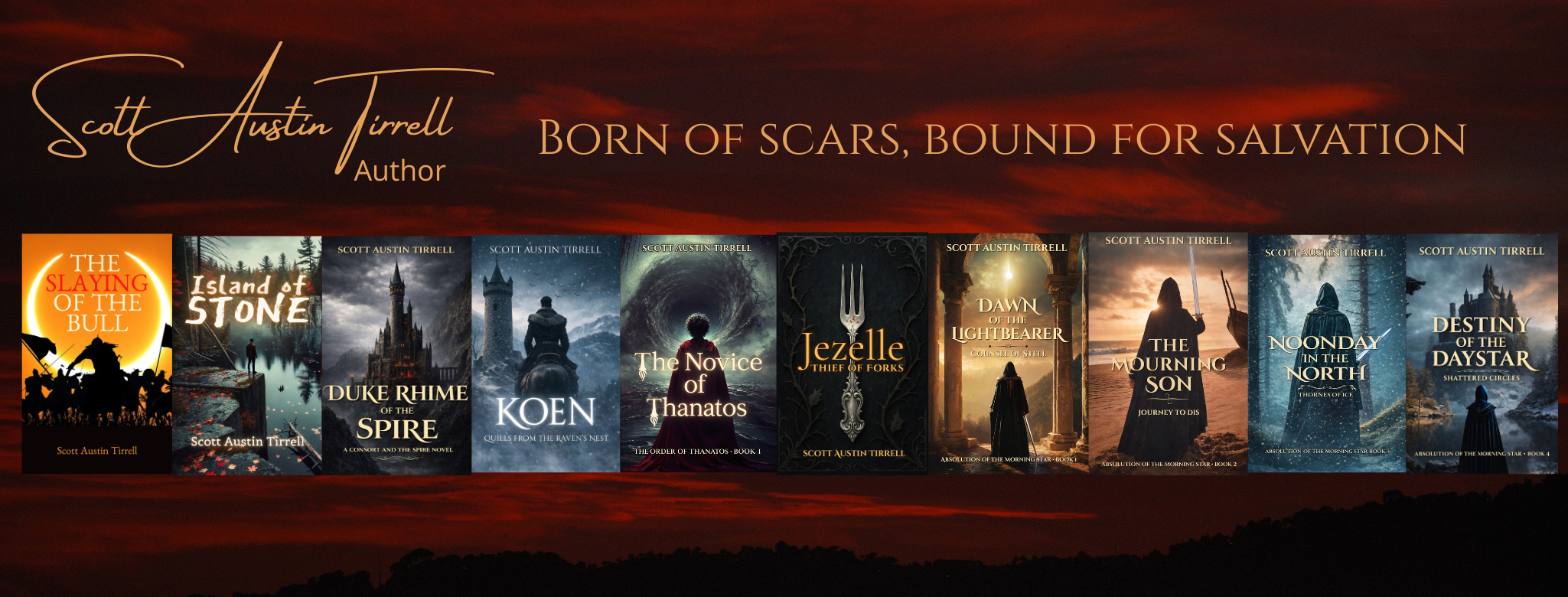

Author’s notes on the Bull’s story-
I originally planned to include these notes at the beginning of The Slaying of the Bull, but how Amazon is structured, it would take up too much of my book preview. If I put it in the back, no one would read it- plus the extra pages would make the book more expensive. So I decided to publish it here and will link to it in the book for those interested. Plus, I thought it a good time to revisit the what and why’s of The Slaying of the Bull. For those who have already acquired a copy, they can see some of the backstory. For those yet to embark on the adventure that is the Bull, it will provide some enticements! I tried to avoid spoilers, but there are some hints below, so be forewarned.
The idea for The Slaying of the Bull came to life almost 20 years ago, the inspiration being the Mongol invasion of Europe. This historical moment may be new to many of you as it is not something typically taught in school. During my junior year in college, it was new to me too. I was taking a fascinating Chinese history class in my pursuit of a minor degree in Asian history. Actually, that is not giving the course enough justice, for it would turn out to be much more than just a class. It was a moment of transition in my life that would change everything. The subject would not only blow air on the flame of my love for history but also stimulated a desire to learn more about Chinese culture. A little less than a year after I graduated, I would leave everything behind and move to China to live and work there for two years. I would meet my wife, start focusing on my writing, and my whole life path changed.
Of course, I had heard of the Mongols before, but I never knew that they had faced European knights on the battlefield. Being a Chinese history course, the focus was mainly on the Mongol’s Yuan dynasty after subjugating the Chinese and not this particular event in the larger Mongol conquests. Still, there was a brief mention of their push into Poland and Hungary, and I was instantly intrigued. Here, when I say brief, I mean just a few sentences. The details were remarkably absent. How could something that seemed so monumental as the clashing of eastern and western cultures just be a little more than a footnote? Over the next few years, I couldn’t get enough of this history. Although I will say there is an incredibly inadequate amount of scholarly work written about this critical event, it added to the hunt’s thrill and tested my research skills.
The actual writing of The Slaying of the Bull, then titled the Lion’s Order, didn’t start until after my return from China. It was probably somewhere around early 2007 in the brief time my wife and I lived with my parents before we moved to the Boston area to start graduate school. It took me a long time to build up the courage and the writing chops to tackle what I knew would be a very long and complicated book. By the time I finished the first rendition of the story in 2009, I had started my career at MIT (where I still work some 11+ years later). I tried to get the book published the traditional route and queried extensively, but after the 30th plus rejection, I shelved it as a failure and moved on. If you are a writer, you know this anguish all too well.
I rediscovered the passion for the story in April of 2020, more than a decade after I originally wrote it. This was during the very beginning of what has become a huge historical event in its own right, the COVID-19 pandemic. In March, I had started working remotely. Given a bit more free-time with not having a two-hour commute every day, I was able to put out my first self-published book, Island of Stone, which was a test of the self-publishing waters. Seeing a bit of success, learning much, and finding some joy in promotion, I decided that it may be a good time to look back at my old work. I dusted off The Slaying of the Bull and embarked on a serious rewrite.
I changed the story’s focus, some of the character details, added about 50,000 words, and completely rewrote the ending. In many respects, other than the historical context, it is an entirely different and much more sophisticated book than the one I wrote in my 20s. After a couple months, I got it to a place where I thought it was ready and then sent it off into the world. It would teach me a valuable lesson- I need to be careful about rushing these things. Self-publishing is almost too easy, and you have to be mindful not to get ahead of yourself. I also learned what should have been obvious, selling books is really hard and takes a considerable amount of time and effort. This means the writing must be flawless, so you don’t ruin the few chances you have to gain readership.
Ultimately, the epic story I envisioned was getting there, but I discovered it still had a way to go before it was truly ready. After some solicited and unsolicited feedback, I realized that I could do better (you may say to yourself that I should have done this beforehand, but my circle is quite small). The book wasn’t selling, and even when I made it free, it still wasn’t moving. Something was indeed wrong. It was hard to hear the criticism at first, and the lack of interest didn’t help my self-esteem as this book embodies much of my soul, but I am always trying to improve as a writer. Also, as I started to work on the sequel, The Power of the Heliodromus, some sticking points were making the overarching story challenging to move forward. So, I made the difficult decision to start from scratch… yet again.
The version available now is the result of that second major rewrite. The characters are roughly the same, and their path is basically unchanged, but the underlying fundamentals were retooled entirely. I increased the action, I cut a bit to make the story flow with fewer flowery scene descriptions, added some pictures of my own design, and I reorganized some things to help transition into the sequel that I had already started writing. Is it perfect? Probably not, but it is as close as I can get it with the facilities that I currently have. Sure, I could spend some money to get it professionally edited, but I don’t think people understand how expensive that is (roughly $3 a page X 518 pages is $1,554 = would need to sell more than 1,500 books to make that money back). For a product in a very competitive market, it could easily be money down the drain. Also, once you start dishing out cash as a Indie writer, it snowballs quickly- trust me. I’ve committed myself to doing this on my own and enjoy the challenge.
Now, as to the story. I want to be completely forthcoming here, The Slaying of the Bull is mostly a work of historical fiction, but it does contain a bit of whimsy and fantasy, so be forewarned. There is controversy on how much and how accurate the history must be to classify a book as historical fiction. I see the validity of both sides’ points, but I feel that the critical word here is fiction. If a writer binds themselves too closely to the factual, it starts to feel like non-fiction. Although I love a good thick history book, I am trying to tell a unique tale with The Slaying of the Bull, not a retelling of an already established story.
I make these statements because I don’t want you, the reader, to be disappointed. If you love historical settings and context, but also enjoy a bit of what-if, mysticism, and a good yarn, this book is for you. If this artistic license rubs you the wrong way, I understand entirely, and there are plenty of other books out there that follow the path of history like a map. You may think that I don’t need to make these statements, but I have received criticism in the past (some of it quite nasty) because I put a couple drops of fantasy in this mix. I really want people to enjoy this book, and I don’t want you to continue if it will make you unhappy. Selfishly, negative reviews because of genre opinions don’t help me as a writer and only hurt my sales.
As an additional disclaimer, The Slaying of the Bull touches on some religious topics that may irritate or perhaps anger some of the faithful. Unsurprisingly, religion is always a touchy subject. If possible, I ask that you embark on this journey with an open mind and have fun with it. Remember, it is fiction. If that is asking too much, you do not have to proceed. It is not my goal to anger anyone, especially when I am only playing with a narrative and not trying to preach.
Honestly, I do vilify some of the Church’s actions during the period, but this is not an attack on the faith itself. It is only an attack on the human frailty that guided the faith at the time. The 13th century was the peak of Church power, and with so much influence and wealth, the nasty side of human nature did rear its head. I am certainly not alone in these beliefs. Even Pope John Paul II famously asked for forgiveness for his forefathers’ grievous errors over the last 2000+ years. The formation of the modern Christian faith is a human story, not necessarily a spiritual one. I guarantee you that it has diverged dramatically from what Christ envisioned of his ministry. If you don’t believe me, play the game Telephone. You will soon learn how much a story can change the more distant it gets from the source.
The core religious details in The Slaying of the Bull are legitimate and much of the contents is based on recent archeological research or academic theories on the formation of Christianity (and to less extend, other religions). Although many would like to believe that the Christianity of today just appeared complete after the death of Christ, they would be gravely mistaken. The spread of the religion started from a group of 70. Some of these bishops traveled thousands of miles over the course of their lives all while being persecuted. They struggled to spread within the autocratic atmosphere of the Roman Empire and many would find martyrdom. Ultimately, it took hundreds of years for Christianity to begin to take hold and over the next couple thousand it went through an assortment of growing pains, including debates, threats both internal and external, inquisitions, schisms, and reformations. In actuality, the history of the Christian faith is quite a mess and, in large part, a mystery, especially the further you go back in time. This allows a bit of artistic license for fiction and leads me to the Prisca Theologica (which I call the Tocharian Gospels in this series). Don’t get me wrong, the term is real and means ‘ancient theology.’ It is a theory that Saint Augustine of Hippo (among other Christian theologians) heavily believed in and mentions many times in his writings. Basically, it is the belief that there is one underlying true theology gifted by God to humanity in the ancient past that spurred the creation of most, if not all, of the world’s religions (certainly the monotheistic ones). It is a theory and the Tocharian Gospels do not really exist, although they certainly could. It is a very intriguing concept and gives this story proper weight. I also kind of like the idea of there being something fundamental that links all of humanity. During this time of division, I think we need that.
Now, as to the history. The people, places, and events in The Slaying of the Bull are mostly accurate. Only occasionally does the story diverge from the documented history of the 13th century, which is not particularly robust, to be frank (especially literature on Hungarian history written in English). As the tale takes place in 1241, the particulars of much of the period are few, so again it is a bit forgiving to threads of fiction when research is not fruitful, or the tale’s needs require a bit of artistic license. It is why I love writing fiction in this period.
Isa, Victor, and Lwica are entirely fictitious characters but based on the likelihoods of those living in the time and area. But, all of the named Dominicans, royalty, Mongols, and other clergy are based on real people, including some minor characters. If I could find someone real that fits my narrative, I tried my best to research what they may have been like and included them. Places such as Saint James Church in Sandomierz Poland, Chartres Cathedral, the Basilica of San Savino in Piacenza, Verecke Pass, St. Mark’s Basilica, Milan, Venice, Buda, Pest, Constantinople, etc., are all real places. I scoured maps, read documents, reviewed architectural plans and visited these places so as to bring them to life in a way that they would have existed in the 13th century. Significant events such as the encirclement of the Papacy by the Holy Roman Empire, and the battles of Verecke Pass, Sajo Bridge, and Mohi did happen.
Most importantly, the Mongol conquests lead to millions of lives lost. In the Kingdom of Hungary, it is believed that upwards of 500,000 were killed, with 80% of the settlements destroyed. The horrors of the 20th century, God forbid, may lessen this number’s impact, but 500,000 was 25% of the Hungarian population of the time. All told, an estimated 40 million lost their lives to Mongol conquests (without clear census data, the range is 20-57 Million).
I stress this because I don’t want readers to perceive that I am vilifying the “other” in my story. The Radix Obscurum is a creation of my imagination, but what it represents is real. In the 13th century, the Mongols were a legitimate scourge that threatened the entire European and pan-Asian world’s way of life. The Mongol Empire was impressive, but it was also an empire built on immense suffering. It is a historical fact that the Mongols were vicious. They intentionally used violence, slaughter, and desecration of the dead to strategically instill fear in their enemies. Much of their actions were, for lack of a better word, evil. When the Mongols began to invade Japan, their first stop was the island of Iki. After they slaughtered virtually the whole island’s population, they covered their boats with naked women strung together with rope through their palms. Another favorite Mongol method of execution was literally drowning people in pools of blood. During the siege of Baghdad, an event of importance in the next book in the series, they massacred 800,000 over the course of a week. Just think of that number and try to visualize what that would look like. That is roughly the population of San Francisco, Seattle, or Washington DC.
Genghis Khan and his decedents believed that they were destined to rule the world, and their prophecy was self-fulfilling in that as long as they kept winning battles, it only strengthened their belief that they were chosen by God. This is the dangerous mindset of a conqueror, and indeed, the Mongols are not the only example of this terrible human error, just one of the more drastic. During my time in China, I met many Mongolians, and they were terrific people. Still, the same can be said of the Germans, English, Spanish, Portuguese, Japanese, Chinese, and even the Americans, all of which have traveled down the road of conquest with devious results at some point in their history. Therefore, the Radix Obscurum is actually the evil contained in humanity and not the Mongols in particular.
Additionally, the prophecy found in the roundels of San Savino is fiction, but the roundels themselves are real, and the history and mythology used to frame the prediction is based on thorough research. I always knew I wanted to have some sort of prophecy in the book. Stumbling upon the mosaics in the crypt of a period church in northern Italy that meshed with the story and would legitimately be on a path of travel from France to Hungary took just a massive amount of research. They are extraordinary and allowed me to delve into some other histories outside of Christianity, linking the ancient religious world to medieval times. I love iconology, and many hours were spent writing and rewriting the roundel chapters. The current version is probably the 10th rewrite and if you pay attention, they unveil some neat things for the future books.
Lastly, the fiction is intentionally symbolic. As you will see very soon, my main character Isa has been alive for a long time. It is undoubtedly fiction and probably more towards fantasy, but it is done for a definite purpose that ties strongly into the overarching narrative in the Tocharian Gospels series. How, and more importantly, why he is still alive is the mystery I hope will pique your interest. The quest for immortality is an old theme that finds a home in every culture on this planet. In the Christian world, this is often embodied in the search for the holy grail. Although I don’t plan to have any magic cups in my story, I intend to include discussions of life eternal and what it means for someone who truly believes in heaven to be forced to forever dwell in this physical plane. It raises all sorts of interesting existential questions that I find fascinating, especially when you tie in some of the Christian inspired dualistic/gnostic religions of Manicheanism, Bogomilism, and Catharism. These three religions were deemed a real threat to the apparent victor of the struggle, Catholicism. Later in the series, we will also discuss the Waldensians. If all of these religions sound strange to you, that’s ok. When I started this quest, they did for me too. I strongly suggest delving into their history because it is truly fascinating and gives you a whole different perspective of the rise of the church we know today. It also offers a glimpse of the sparks that ignited the Protestant reformation.
I wanted to include the paragraphs above to remind people that I did my due diligence to frame The Slaying of the Bull in reality. Still, I also want readers to remember that it is a fiction story and not a textbook. As a fiction writer, the story is the most crucial part, and history is just a tool from the tool bag to help breathe life into the narrative. Thus, I strive for entertainment instead of pure academic enrichment, but if you can learn a few things while being entertained, why not? If anything, I hope that readers take a moment and venture a bit deeper into history themselves, stimulated by the questions raised by this book.
In the end, I hope that you enjoy this story, or, at the very least, find it intriguing. If it angers you, enlightens you, or just spurs your interest, feel free to reach out below or here (if you want it private), and we can have a civil discussion. My ideas and beliefs are just as much a learning journey as they are for your own world view. In actuality, this book was a bit of a personal struggle that I’ve chosen to share with the world. At times I have been faithful and at others completely unfaithful. I grew up with going to church every Sunday, went through a period of complete rebellion, and then began to come back to the notions of a higher being. I found a home in history, philosophy, and science as they fulfilled my need for proof, but at the same time, especially with recent theories in Quantum Physics and reading works by Augustine and other, these areas of inquiry have actually reopened doors to my faith that I thought were closed forever. This book has helped me come to terms with some of the disparities I’ve found and struggled with during this most important life journey of discovery.
At times, The Slaying of the Bull was not easy to write (a nightmare may be more accurate), and its narrative has gone through many renditions to get it to where it is today, but I am happy with it now at this moment in my life, and I hope you will be too.
Cheers!
Discover more from Author Scott Austin Tirrell
Subscribe to get the latest posts sent to your email.
