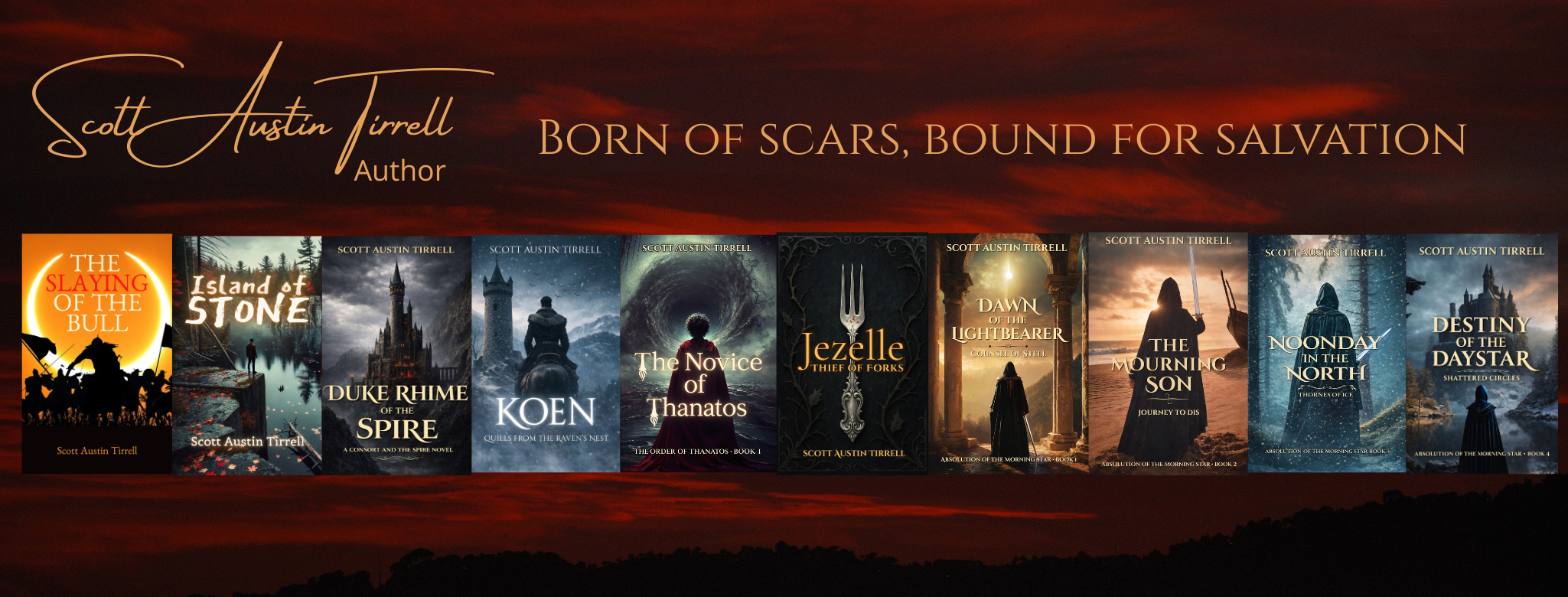

Last time, I wrote about how I didn’t set out to write dark fantasy but found myself here all the same, drawn by the arcane, the spiritual, and the broken beauty of stories that don’t look away from pain. I’m still learning the boundaries of the genre (if there are any) and figuring out where my work fits. But as I settle into this shadowed corner of speculative fiction, a new question has started to gnaw at me:
Who is reading Dark Fantasy?
Because if we’re in the middle of a surge in the genre, and all signs point to that possibly being true, then something resonates deeply with a growing audience. What are they looking for? What are they finding in these books that the rest of the market isn’t giving them?
And perhaps more importantly… who am I writing for?
Dark fantasy readers aren’t chasing escapism in the traditional sense. They’re not here to flee the world but to confront it through stories that don’t pretend everything will be okay.
They’re readers who’ve been burned by false promises. Who knows what it means to carry loss? Who recognize that sometimes, the people meant to protect us are the ones who hurt us the most.
These aren’t readers looking for heroes. They’re looking for witnesses and flawed, hurting characters who refuse to be erased. They want the truth, even if it cuts, maybe especially if it cuts.
That’s why I think Jezelle has struck such a deep chord with me as a writer. She isn’t some larger-than-life warrior or chosen heir. She’s a broken girl who survives the unthinkable and refuses to stay down. Judging by the kind of conversations I see happening around similar books—The Poppy War, Babel, The Broken Earth trilogy—this is precisely what many readers crave: not strength without scars, but strength because of them.
A recent analysis by New Book Recommendation found that millennials and older Gen Z (ages 25–39) are now the dominant force in fantasy readership, and dark fantasy ranks among their top three favorite subgenres.
What’s more, readers identifying as queer, neurodivergent, or part of historically marginalized communities were significantly more likely to cite “morally ambiguous protagonists,” “emotionally complex themes,” and “non-traditional narratives” as key appeals of the genre.
These aren’t casual beach-read browsers. They’re deliberate. They want worlds that challenge them, and characters who earn their redemption, if they even get one at all.
And many of them are creators, too. Fan theorists. Reviewers. Writers. Readers who see beyond the surface. If you give them a world that bleeds, they will ask how it got wounded—and who benefits from the wound.
I see this in how readers discuss systems of power in A Song of Ice and Fire, colonial trauma in Black Sun, or generational pain in The Book of the New Sun. They’re not just reading stories. They’re dissecting them.
When I think about who I’m writing for, it’s not someone seeking comfort. It’s someone seeking recognition.
Someone who’s been left behind or pushed aside. Who knows the pressure of faith, the ache of abandonment, and the rage from being told to stay quiet. They might’ve been the overlooked daughter, the second son. The child burdened with silence. Or they might’ve been someone like Mishal from The Novice of Thanatos—given a sacred duty they didn’t ask for, only to learn it might be a lie.
That reader wants depth. Not mindless worldbuilding or jargon for its own sake, but emotional weight. Stakes that bruise. They want to feel a book in their bones.
I hope they find that in my work. I hope Jezelle, especially, meets them where they are: in the dark, angry, half-healed places—and gives them something fierce to hold onto.
Dark fantasy isn’t just about monsters and misery. It’s about the space between hope and hopelessness. The tension of survival. The sacred power of refusing to disappear.
If last week’s post was about how I found myself in the genre, this one is about the people waiting there when I arrived.
To those readers: I see you.
And I’ll keep writing stories that don’t turn away.
Cheers!
Discover more from Author Scott Austin Tirrell
Subscribe to get the latest posts sent to your email.

Dark fantasy – I think – is about ‘survival’ against oppression. Not heroic survival, because people don’t feel like heroes any more. They want to read about people who aren’t heroes but who have the ‘being’ to outlast those who would crush them into dust. They want to see how that ‘being’ might be possible for them, too. And that can even extend to a king who is oppressed by a cursed sword that seeks to corrupt his very soul. For people today, kings are humans too. They might achieve heroic results but they don’t have heroic hearts. They fear and they doubt. The main challenge for the dark fantasy writer is to avoid falling into ‘sock-washing’. Ordinary folk don’t waste time wondering if they could have done better – or not for long. The dark oppression they face doesn’t allow that indulgence. But equally, there must be light at the end of the tunnel and not just ‘lucky escape’. Dark fantasy is about ‘spirit’. Keep doing this, Kent … You’re good at it.
LikeLiked by 1 person
I like your take. I’m fascinated by ‘spirit’- I love to dissect those who keep moving, living, even when it seems purposeless. What are the motivations, the drivers? Whose will is stronger? But just as interesting is when characters decide to stop.
LikeLike
An interesting overview. I really enjoyed this. Thank you.
LikeLike
No, thank you for reading!
LikeLiked by 1 person
😊🙏🏻
LikeLike