Welcome back to the six-part series detailing the history of Eldenspire and the family that called it home, the Battenbornes. Duke Rhime of the Spire is available for pre-order now and releases July 29th!
Here is what we learned from Part II: During the Age of Restoration (160–300), the Battenbornes rebuilt Eldenspire into a thriving stronghold atop soil made fertile by strange storms. Though distant from the capital, they ruled quietly and effectively, earning the name “the Silent House.” Prosperity followed, but so did unease—heirs with strange traits, relics sealed but never destroyed, and rites the Green Faith would not bless. As the storms faded and the land soured, the Spire endured, and something older stirred beneath its stones.
Now, for Part III: The Long Watch and the Darkening (300–580)
By the fourth century, the world began to crumble at its edges. The rich, ash-fed storms that once rolled in from the Wastelands ceased entirely. In their absence came only dry winds, bitter with smoke and flint. The rains that once fed Eldenspire’s black soil became a memory. Years passed without harvest. Rivers fell to silence. Orchards shriveled, and the trees split and died.
The Spire’s bounty withered, but the suffering did not remain local.
The Darkening, as it came to be known, was not confined to the borders of the Wastlands. It spread like a stain across all of the Five Kingdoms. The seasons twisted. Winters grew longer, creeping deep into summer. Crops failed across the valleys and coastal fields. With famine came pestilence—fevers without name, afflictions that blackened the gums or twisted the joints, some said it was born from the Wastelands, others whispered from the sins of men, and a few blamed it on the machinations of the Nyth Cigfran, or Raven’s Nes— the coven of witches who had been the bane of humanity since before the Nephilim.
Kingdoms once firm in rule found themselves splintered. Unrest took root in the streets of cities once thought eternal. Petty lords broke faith with their suzerains. Open rebellions ignited in Redbourne, Dover, and Grassglen. Armies marched not against foreign powers, but neighbors and kin.
The Five Kingdoms turned their eyes inward, no longer obsessed with old slights, ancient grudges, or uniting the realm under a single crone. They all focused on keeping what they had. Advancement ceased. Libraries burned in riots. Universities shuttered. Knowledge stilled, and in many places, culture reversed, giving way to zealotry, fear, and survival.
Eldenspire, too, fell into this rut, and the age of quiet rebuilding was over.
Spiretown, which had grown into a sizeable city, began to dissolve. Most of the good families—those with memory, trade, or faith—packed what they could and traveled east and south, seeking the last places where rain still fell and laws still held. They took their stories, their prayers, and their coin, leaving only broken fences and gutted shrines behind.
What remained were leeches and cockroaches—the scum that clings to a boot in love with the squish. Brigands, madmen, smugglers, toothless crones selling flint-marked bones, peddlers of tinctures that burned more than they healed. The last market days in Spiretown were said to be little more than auctions of rot and flesh.
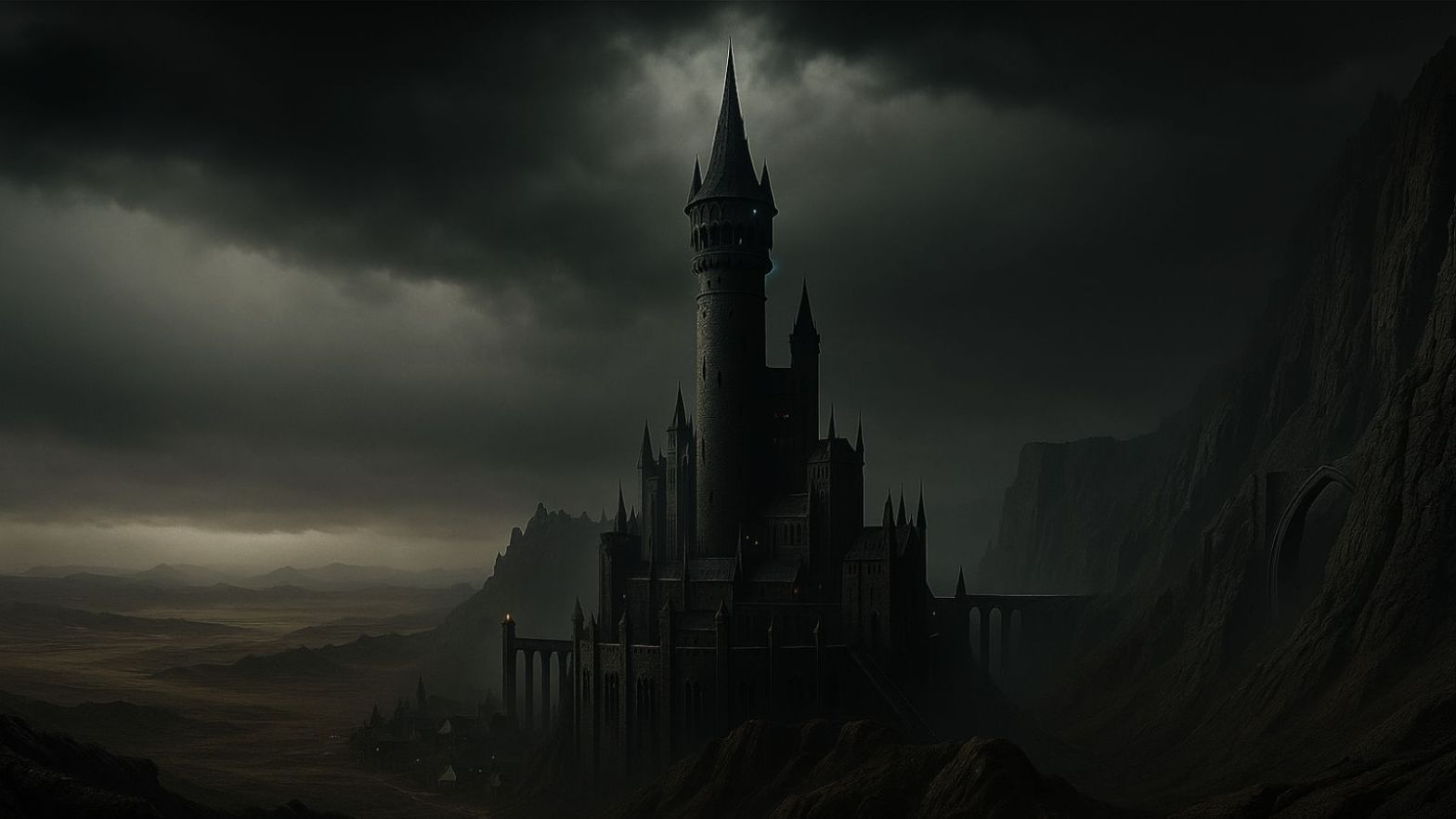
And above it all, Eldenspire stood unchanged—at least from without.
The Battenbornes became quiet and still. They sent no summons, offered no shelter, and made no protest as the town below them twisted into ruin. They simply watched. Not with cruelty or disdain, but with the stillness of those who have long known what the world must learn.
Within the Spire, change came in silence. The outer wings were sealed—first the barracks, then the training halls, then the west cloisters and skywalks. Statues of former lords were shrouded, not with mourning cloth, but with sheets of hammered iron. The lords and ladies of the house moved deeper, into the inner keep, the vaulted heart of the mountain, where their ancestors once feared to tread.
Their retinue shrank. Household staff, once drawn from Spiretown or neighboring valleys, now came only from within—Spireborn, trained from infancy in silence, reverence, and duty. Most never saw beyond the walls. They were said to sleep on stone and eat only what grew within the Spire’s inner gardens, lit by sulfur lamps and prayers that went unrecorded.
Ceremony, too, grew strange.
Gone were the rites of the Green Faith. In their place came liturgies in unknown tongues, held by lamplight that flickered without flame. Some rituals were said to be conducted in perfect darkness, as if vision itself were a trespass. Others involved offerings of blood, though from whom or what, no one dared say.
At least once a year, the bells of Eldenspire were heard—but never seen rung. Their tolling caused hounds to wail and cattle to miscarry in the valleys below. No guests arrived in those years. No emissary stayed the night. Even the crows, once drawn to the rich fields and charred offerings, now veered wide of the cliffs, as if the wind carried poison.
In Westerly Rock, the Battenbornes remained on the ledgers, titled, taxed, and noted. But they were no longer called peers. When named aloud, it was with formality, never familiarity. They were not traitors. They had raised no arms, defied no crown. But neither were they allies. They had become something else.
By the mid-fifth century, it was whispered that no living Battenborne had been seen outside the Spire for generations. Messengers arrived from Eldenspire when required, but they bore masks of bone or silver, and their faces were never shown. Some rode horses with sewn-shut eyes.
Tales flourished:
- That the last true lord of Eldenspire had died centuries ago, and that a shadow wore the crest now, bound in blood and stone.
- That the Battenbornes had become undying, sustained by ancient rites, waiting in a hollowed vault until the stars were right.
- That their spirits had merged with the Spire itself, and that every echo in its halls was a whisper from their mouths.
But one truth no one could deny: no Battenborne ever left the Spire.
Thus, they became the Long Watchers—a house neither dead nor living, removed from history but not erased. Their gaze remained fixed upon something none could see, their silence a presence that pressed against the edge of reason.
They asked for nothing. Demanded nothing. But their stillness unsettled the realm more than armies ever could.
And so the dark times continued—not just for Eldenspire, but for all Lucardia. A world unmoored, a culture unraveling, a people blind to what still watched from the mountains.
The serpent did not stir. But neither did it sleep.
Be sure to come back on Wednesday for Part IV: Sereth the Warborn and the Fire Beneath (580–650). Check out Duke Rhime of Spire’s trailer here, and find the first chapter here.
Cheers!
Discover more from Author Scott Austin Tirrell
Subscribe to get the latest posts sent to your email.
