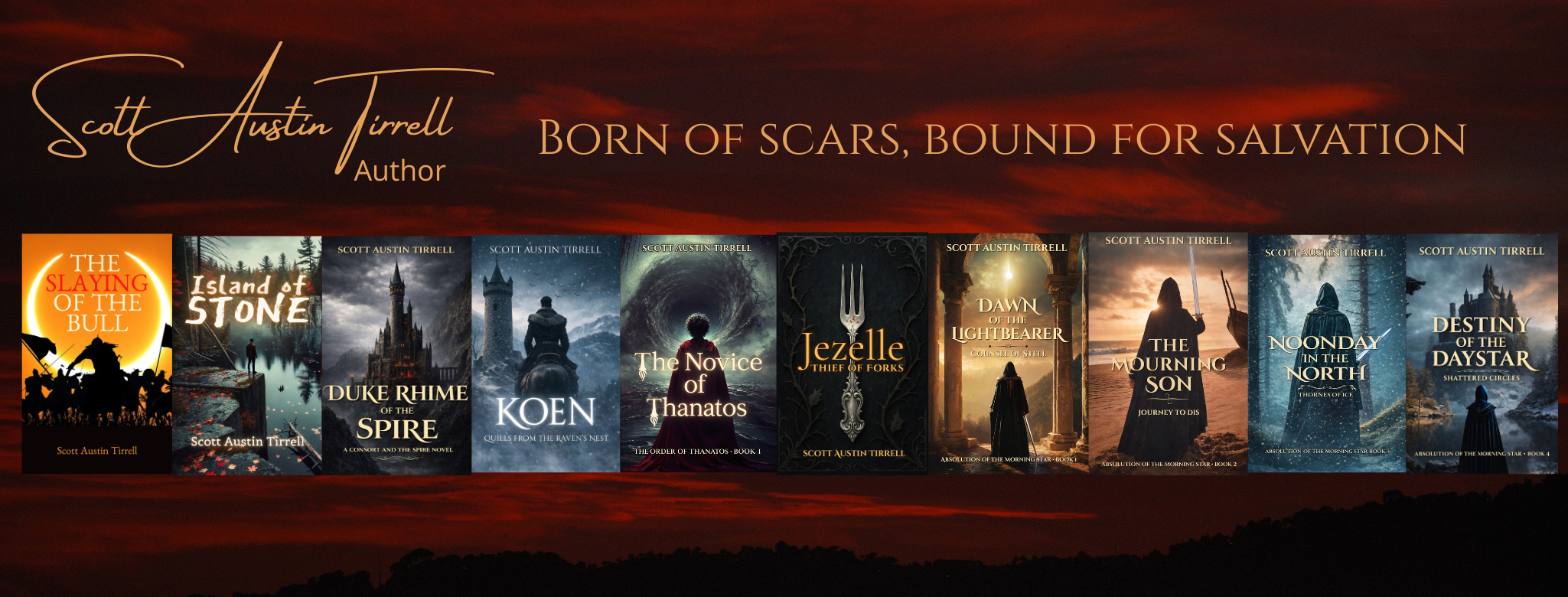
Welcome back to the six-part series detailing the history of Eldenspire and the family that called it home, the Battenbornes. Duke Rhime of the Spire is available for pre-order now and releases July 29th!
Here is what we learned from Part IV: Sereth the Warborn and the Fire Beneath (580–650). In 632, Sereth Battenborne reawakened Eldenspire after centuries of silence, rallying a mysterious black-cloaked force to save Westerly in the Second War of the Five Kingdoms. Though he was hailed a hero, rumors of dark magic led to a kingdom-wide purge. Defying this decree, Sereth transformed Eldenspire into a sanctuary for magic, drawing the ire of the crown and the Legion. To protect their lineage, Sereth and his son Varion staged Sereth’s execution, a public sacrifice that masked a deeper plan: to preserve magic and one day claim the throne.
Now, for Part V. Varion the Cunning (650–670).
If Sereth had burned brightly, Varion smoldered in silence.
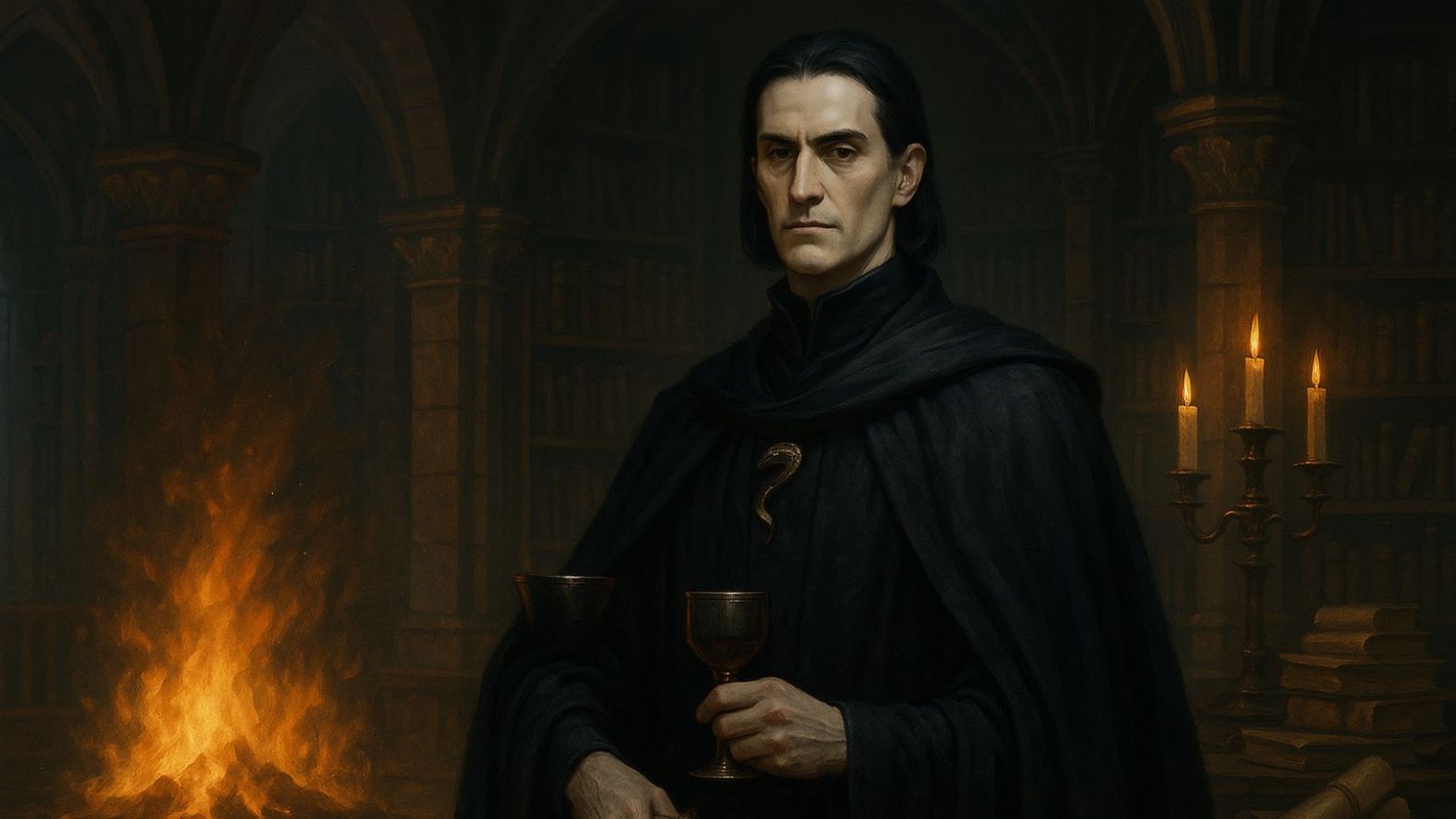
Where his father wielded the power of the curse like a blade, Varion sheathed it beneath silk and smoke. He adorned no grim sigils. His robes bore courtly colors, his speech soft iron masked in honey. He became a fixture of royal banquets, where he toasted the purge with polished restraint, declaring Eldenspire’s unwavering loyalty in the war against “arcane contagion.” He sent out hunting bands with firebrands and gallows-ropes, their eyes sharp, their hands red. To the world, he played the part flawlessly. A duke of reason. A man of principle. The living proof that even Battenborne blood could be tamed.
But it was all choreography, a cruel and delicate theater. For Varion, perfection was not virtue—it was armor. It made him untouchable.
Behind the smoke of pyres and sermons, he moved like a shadow. Where others burned grimoires, Varion bartered for them. While townsfolk wept over desecrated shrines, he whispered in the ears of desperate priests, buying charred pages and half-cracked relics. His agents sifted ash heaps like gold miners. His coin bought silence from inquisitors, and his strong arm tore out secrets for his ears alone. He did not hoard for belief, but for leverage. For prophecy. For war yet to come.
And high above the world, in the basalt heart of Eldenspire, he forged a vault unlike any other. Not a shrine, nor a sanctum—but a graveyard for the forbidden. A library never to be seen, containing scrolls bound in human vellum, reliquaries sealed in salt, and diagrams etched in alphabets no tongue dared pronounce—all interred behind iron doors, thick walls, and secret passages. Each artifact was logged, sorted, and forgotten by all but him.
No one knew the full catalog. No scribe walked its halls twice. Those who carted crates up the spiral staircase vanished quietly. It was a reliquary of nightmares and brilliance, preserved not for worship, but utility. A future arsenal. A war chest for someone else.
For despite the whispers, Varion never practiced magic. Never cracked a spellbook’s spine. Never muttered a word of power. He was no sorcerer. He was a steward. A curator of danger. The serpent’s blood ran in him, cold and slow, but his ambition was eternal. He did not gather for himself—he gathered for a generation not yet born. One that might have the will to use it.
Meanwhile, Eldenspire’s lands prospered under his hand. Trade flowed again along the eastern roads. Roads he guarded not with armies, but with trust. The people called him the Iron Steward. The high court praised his moderation. The king, once proud of him, famously declared, “If all lords were like Varion, there would be no need for fire.”
But kings age and die like the rest of us.
In 672, the old king passed quietly. His heir followed soon after, poisoned or poxed, no one could say. Onto the throne slithered Vaelric—cruel, vain, and unworthy. He distrusted what he could not command, and Varion had grown too vast. His name was too heavy. His coffers were too deep. Eldenspire’s gates were too thick with discipline. Whispers at court became knives.
Varion was summoned less. Then not at all. Rumors bloomed like mold in a locked room. The duke was plotting. The duke was dabbling. The duke had a dragon buried beneath his tower.
In the spring of 680, as the drought split the Step like old bone and prayers dried in priests’ mouths, Varion and his wife were found dead, side by side, holding hands, in their tower chamber. The doors were sealed from within. No sign of poison, blade, or struggle. No fire. No blood. Just silence.
Their eyes were open. Their lips pale. The sheets between them were undisturbed. Some said suicide. Others, sorcery. A few whispered that a debt was finally collected. But most knew it was jealousy of the king.
Varion left behind three sons. The eldest, Rhime, became Duke of Eldenspire within the month.
And so the serpent did not die. It shed its skin. It coiled and prepared to strike.
Be sure to come back on Wednesday for the final chapter, Part VI: Rhime of the Spire (690– ). Check out Duke Rhime of Spire’s trailer here, and find the first chapter here.
Cheers!
Discover more from Author Scott Austin Tirrell
Subscribe to get the latest posts sent to your email.
