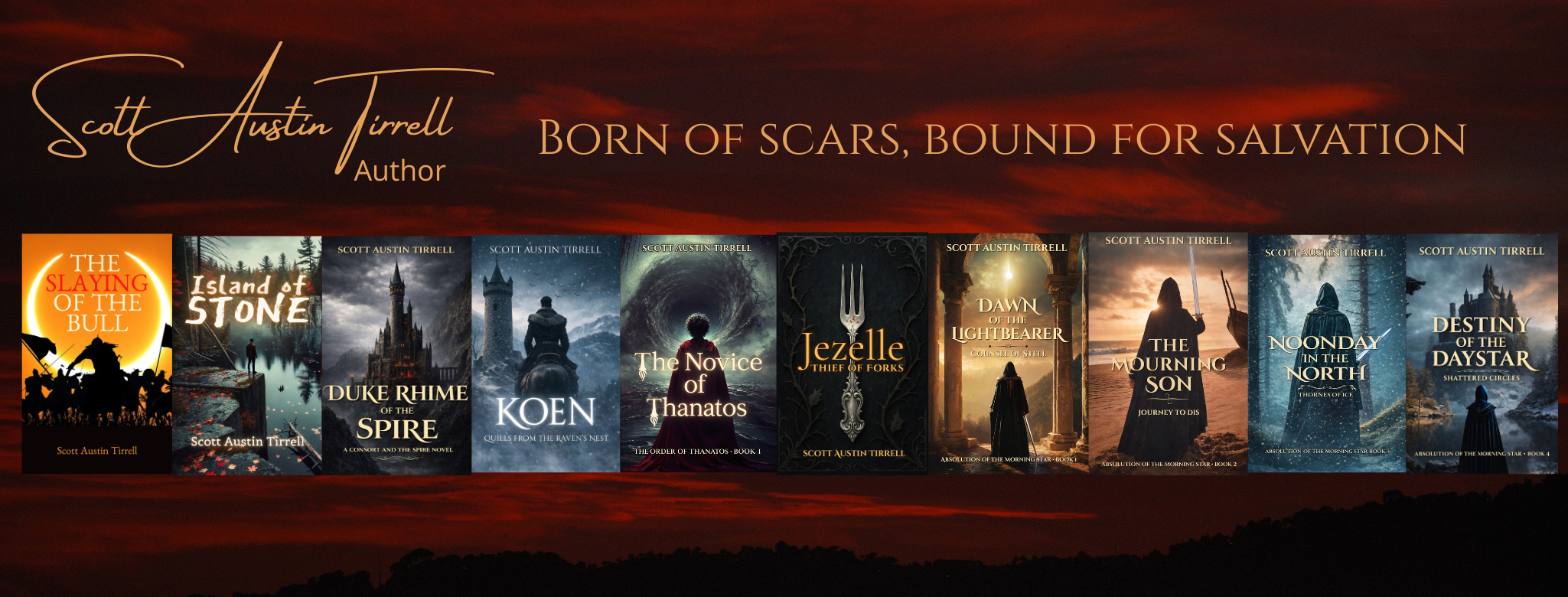
Next Saturday, April 4, Jezelle: Thief of Forks releases.
Jezelle did not begin as a concept for me. I never even planned to tell her story when she appeared in Dawn of the Lightbearer as a secondary character. But as the series progressed, she made her voice heard anyway, and slowly became a view-point character in book 2, The Mourning Son. It had everything to do with the brief conversation in DL about her early life. Something about that resonated with me and it stuck. Before I knew it, a book began to grow in my mind.
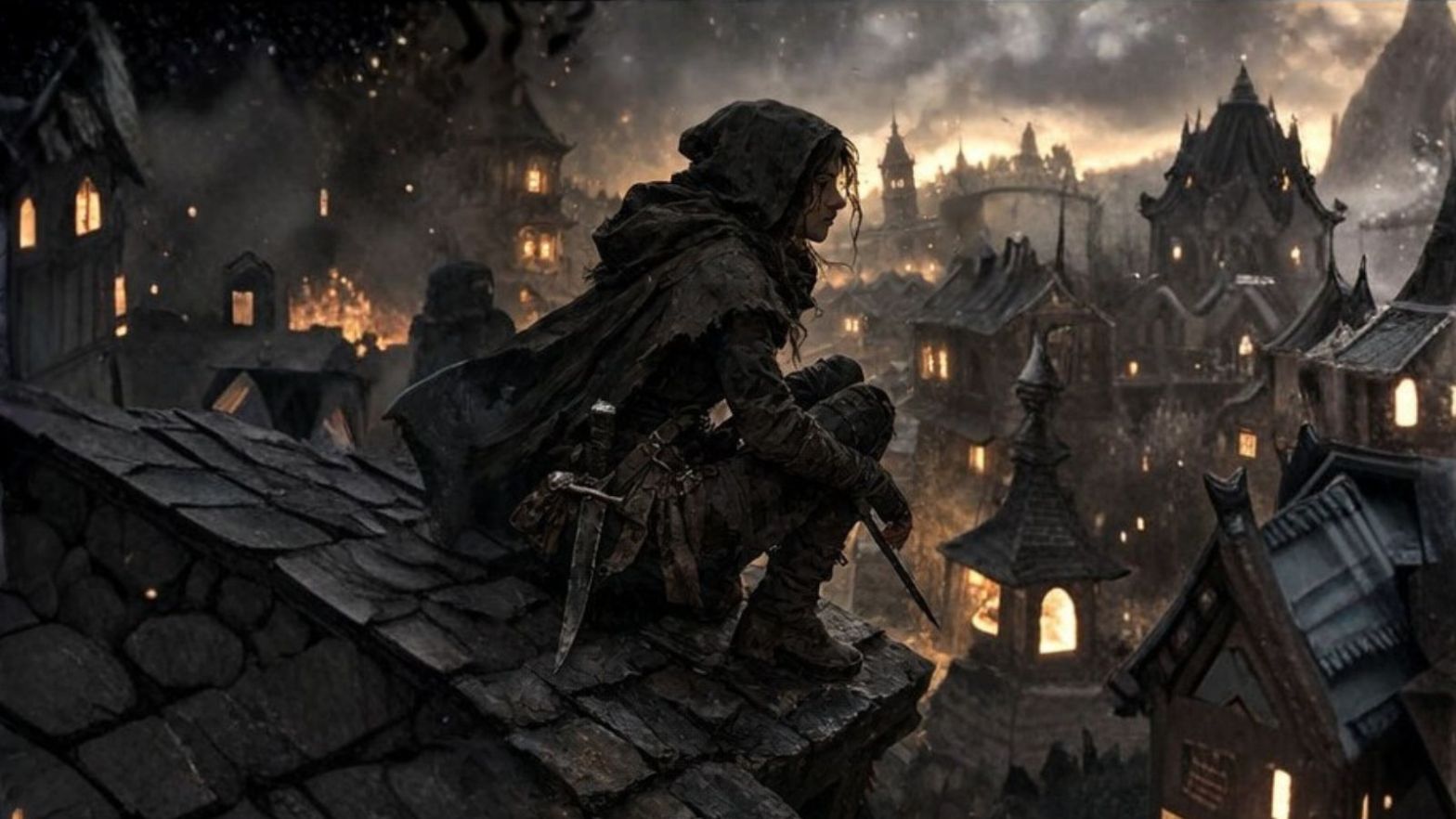
Jezelle began as a girl in a bad place, young enough to still need protecting and already learning that no one was going to do it. By the time I really had hold of her, she was already watching people closely. Watching hands. Watching faces. Watching for the shift in a room that tells you trouble is coming. She was so damn perceptive.
What drew me to her was never some tidy notion of a “strong female character.” I hate that phrase. It treats a woman’s strength as a special category, as if strength belongs more naturally to men and becomes noteworthy only when it appears in a female body. I reject that completely. Strength does not reside in sex. It resides in the person. In will. In endurance. In what someone does when life bears down on them and keeps bearing down.
Jezelle mattered to me because she felt like one of us. Frightened. Hungry. Humiliated. Angry. Cunning in ways that were learned too early and learned for all the wrong reasons. Someone who was one choice away from ruin or prosperity.
She comes from abandonment and filth and fear, and those things shape her fast. A person does not go through that untouched. It changes how they listen. How they sleep. How quickly they trust. It changes what they notice and what they hide.
That was what held me to the page with her. Not spectacle. Not misery for its own sake. I was interested in the smaller damage, the kind that settles into a person’s habits. The way hunger changes your manners. The way shame becomes practical. The way a child learns to make herself harder to see, harder to want, harder to reach.
Jezelle is clever, but not in a polished way. Nothing about her life would allow for polish. Her intelligence is immediate. Bodily. She learns by watching, by being afraid, by being wrong, by paying for mistakes. She reads danger before she reads kindness. She learns what a hand is about to do before it does it.
I did not want to write her as noble in suffering. I do not believe suffering makes people noble. Sometimes it makes them mean. Sometimes it makes them secretive, suspicious, manipulative, quick to strike, slow to trust. Sometimes it leaves them starving for tenderness and unable to bear being touched. That felt closer to the truth as I understand it, and it felt true to Jezelle. It is what people do on the other side of suffering that matters.
There is a part of her story that lives in the body before it ever becomes language. Bare feet on cold streets. An empty stomach. The shame of being noticed. The shame of not being noticed. Before she learns to steal well, before she learns to move lightly or vanish into a crowd, she learns how low a person can be brought without vanishing entirely, and then, miraculously, she stands up and stands tall.
That refusal is at the center of her.
Not glamour. Not swagger. Not the kind of strength people like to celebrate because it looks good from the outside. What lives in her is refusal. She does not disappear. She does not go quiet inside herself. She does not become harmless.
Jezelle has teeth, but I do not mean that in a bravado way. I mean that the world cornered her young, and she had to grow some way of biting back.
Some characters are enjoyable to write because they move easily. Jezelle was not like that. She asked for honesty. She did not let me look away too soon or clean her story up into something more graceful than it was. She remained a child to me where she was a child, and that mattered. I did not want pain on the page to become style. I wanted it to feel like the real-life damage we all know, and sometimes are afraid to face.
That is one reason I love dark fantasy. It has room for ugliness without pretending ugliness is all there is. It has room for fear, hunger, cruelty, tenderness, and the strange forms of love and endurance that can still survive in a broken place. Jezelle belongs to that kind of story.
On April 4, readers will meet her at last. They will meet a girl with quick hands, sharp instincts, and a heart that has been hurt early. They will meet someone trying to survive without becoming nothing. More than anything, I hope they meet a person. Not a type. Not an argument. A person.
And I hope they feel what I felt while writing her: that she is truly alive.
Cheers!
Available on Amazon here.
Find more on Jezelle here.
Watch the book trailer here.
Read a sample here.
Discover more from Author Scott Austin Tirrell
Subscribe to get the latest posts sent to your email.
