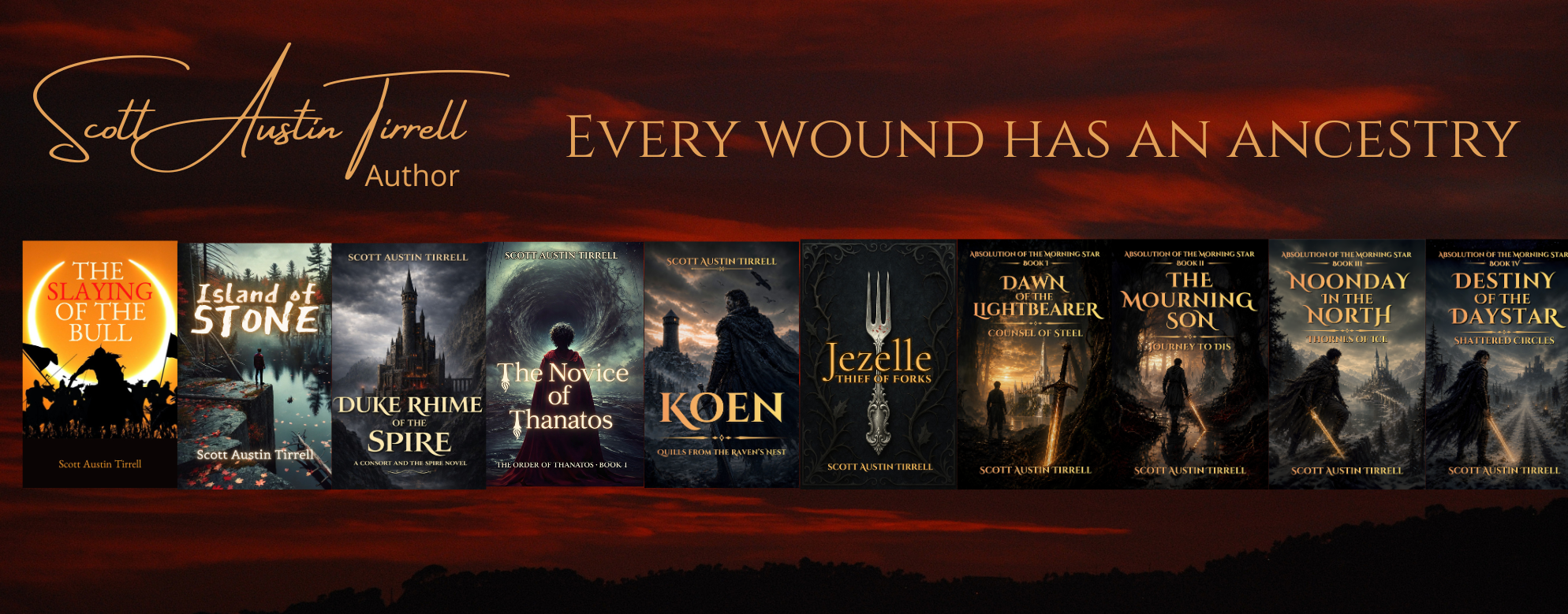
When I first started my journey as an author, I approached every line like a piece of poetry. I fell in love with language and spent considerable time and energy crafting beautiful prose. I actually thought that I had some sort of innovative way of describing the world that hasn’t been done by millions of writers before me. But you soon realize that language is just a tool to tell a story, and if it gets in the way, then all those beautiful prose are transforming you from a great writer to a boring one. Its why many poems are short. Like the flash in the pan, they bombard the senses with words to create an explosion. Do that too much, and readers are no longer surprised by the fireworks. People mostly read a novel for the story and not how well you described every mundane detail. You want to scatter a few breadcrumbs and let them discover their own path to the witch. Even knowing this, I would say that I’m still an over-writer. As I edit the Slaying of the Bull (book 1 of the Tocharian Gospels Series), I chop more than I add. Let me tell you why this is so.
As I write, I have a scene in my mind, and I want to paint that scene like a realist painter. It’s fresh and raw, and I want to capture it and display it like a trophy. I will devote whole paragraphs utilizing every sense to describe the room my character just entered. The same goes for representing the characters themselves. You can explain every detail of someone’s face, every crack, pimple, freckle, and mole. But ultimately, the reader is going to craft their own image based on their experience. So when I go back through in subsequent drafts, I will take a whole paragraph and cut it to a single line that capture what I’m trying to say in as few words as possible (of course a few long descriptions will make it to the final product, but that’s because they’re important).
I’ve realized that flowery description is selfish, and it’s a great lesson to have learned. But descriptive writing does have its place in the process. By over describing in the first draft, when I go back and do my editing, I can distill and chop to the bare essentials that will hopefully gentle nudge the reader to the desired direction. It may seem like a waste of time, but it’s the way I currently work and fulfills my need to play with words even if the final product has none of that effort. Just as realism fell out of favor for expressionism in the art world, people got board of every fold of cloth and every shimmer of light. Photography took hold and filled that need. The artist thus transformed to using thick brush strokes and vibrant color to instill the emotion and the mood of the scene. The viewer (or reader) can then step back and fill in the blanks.
As a writer, you should work hard to distance yourself from being a dictator and become more like a guide (the same could be said of many things). You have to examine and isolate why people read and hone in on those motivations. I think you’ll find the joy of reading is being able to take a story and add a bit of your own imagination. This is likely the reason overly flowery and descriptive language dropped-off in novels around the turn of the century. Visual cues are covered now by photography and screen (both big and small). Exercising the reader’s imagination is what distinguishes writing from these other vehicles, and is why books remain popular even with all the competition. So to be successful in today’s writing game, you have to focus on a great story and know where to sprinkle those few wonderful seeds. Let the reader be the farmer. Let them nourish those seeds and bring them to life!
Cheers!
Discover more from Author Scott Austin Tirrell
Subscribe to get the latest posts sent to your email.

One thought on “Realism to Expressionism”