
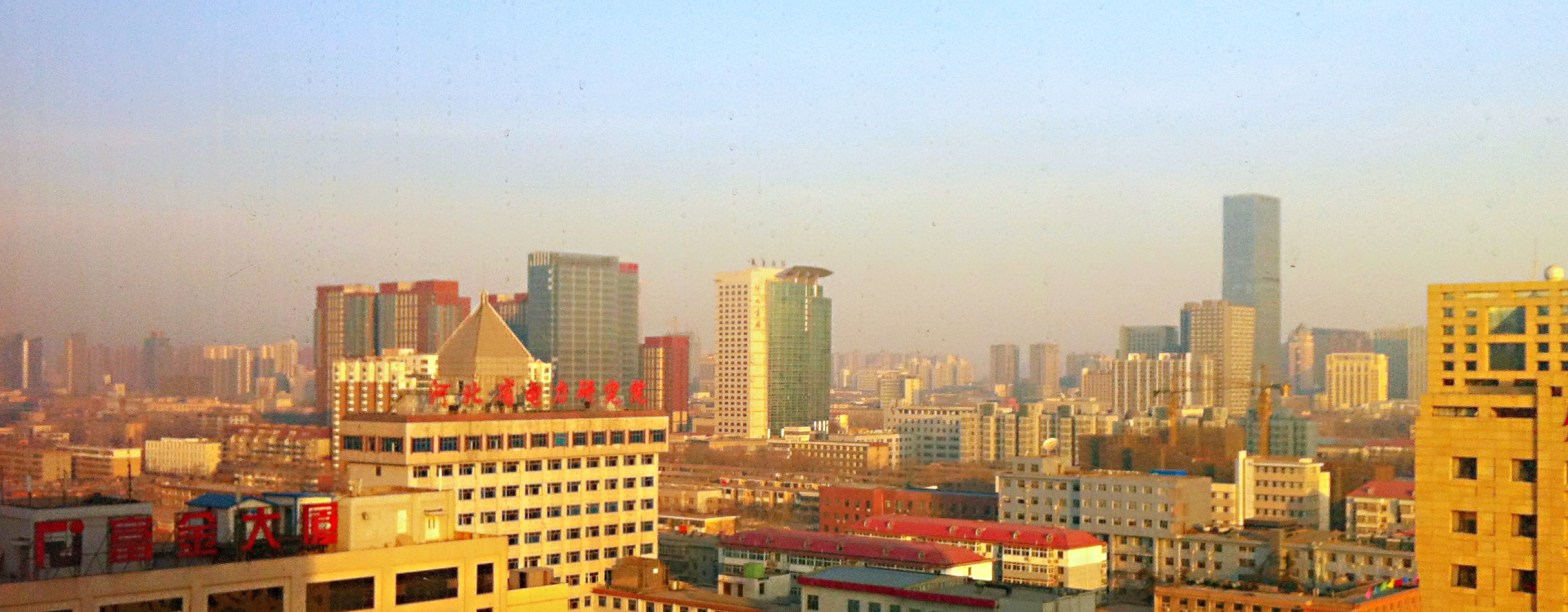
I was in China again after being away for two months, and it was fantastic to be back. No more getting up early for the hourly job and no more living with my parents. I was on my own again, and better yet, I was now a “living in China” veteran (sort of). I had become one of those same people I looked up to when I first arrived. I knew what to expect and how things would go. I could speak Chinese (not a lot but some), and I knew where and how to get things. There were restaurants I couldn’t wait to eat at again, DVDs I wanted to buy, and places I was eager to see and experience. Most importantly, I was in the arms of my love again, and that was just awesome. It was like I never left. Baoding was my home.
I would love to say that China didn’t change when I was away, but China is nothing but change. You can’t imagine how fast the country was developing back then (and probably still is). Just in those two months, Baoding grew. Old buildings were gone, and new buildings were not only under construction but complete… in two months! There were whole sections of the city I didn’t recognize.
As a quick aside, this shock was even more profound when I went back to Baoding after being away for ten years. They replaced whole neighborhoods with high-rise apartments and they built a huge new train station. Baoding needed a new station. The one they replaced was downright scary and much too small. But the high-rises, I could do without. It’s beginning to get difficult to differentiate which Chinese city you’re in as they all look the same. This unhindered progress is often at the expense of those little mom and pop stores and restaurants that I loved, and the demolition took some of the historical buildings that gave Baoding its charm. It was no longer the Baoding I knew and loved. This place was a different city.
Luckily, back then, the change wasn’t so profound, and instead of disappointment, I felt awe and a bit of excitement. There were always new places to explore, shops to peruse, and restaurants to try. In general, China’s growth in the early 2000s was just awe-inspiring and put the US to shame. This was back when there was some foresight and enthusiasm and before the zombie developments that plague China today- these vast ghost cities are built using government-backed loans, without planning, and without tenants. The enthusiasm for growth ran out of control and caused some of the country’s economic difficulties that we see today.
One benefit of the growth and development was that Hebei University bought and remodeled a building across from Dàbáilóu that would be for foreign teachers’ apartments. It was a fantastic surprise. Instead of a hotel room, I would now have a real apartment with a kitchen and my very own water heater (hot water anytime I wanted)! Of course, it wasn’t all rosy. I would end up being on the ground floor that year, so mosquitoes were a problem during the summer. They were monsters and came at night to buzz at your ears. Many epic battles were fought in the room against the flying devils. We also had to pay for our own electricity, which was more of an inconvenience than a financial burden (although it wasn’t cheap). I would just be starting a wash, sitting down to watch a movie, or worst, finishing a chapter on my computer when the breaker box outside would click and the power would go out. I would then have to go to the front desk and pay. I can’t even count how many great works were lost with that sudden blank screen. I certainly got used to saving my work often and checking the meter constantly. But, worst of all, there were six female Mongolian students in the room above me, all with high-heel shoes on cement floors and a predisposition to partying. I don’t know if you have met many Mongolians, they are just the nicest people, but they are loud and sometimes live up to their ancestors’ wild ways (especially when beer is involved).
When I arrived, they hadn’t finished remodeling the new apartments yet, but they assured me that I would be moving in soon. For the time being, it was back to the hotel room. As I mentioned in my last post, the reason I returned to the states was to amass the capital to buy a ring. Moving such an expensive thing internationally, I had to be careful. I had taken it out of its box and put it in a little velvet bag. I then put that in an ankle holster I use for cash when traveling. It was the next day after arriving and hadn’t even unpacked yet. I had taken the velvet bag out of the ankle holster the night before and left it on my nightstand, not thinking.
My future wife walks into the room that morning, and in less than five minutes, she picks up the pouch and asks, “what’s this?”Boom, all my grandiose proposing plans, scheming that I had been working on for two months, flew out the window. It’s obvious what’s in the pouch. It’s in her hand so she can certainly feel that it’s a ring. The gig is up. Left with no other option, I get down on one knee and propose to her there and then in that shitty hotel room of Dàbáilóu. I know it is not very romantic. I so very much wish I could turn back time, hide that damn ring, and propose in the way she deserved. I know she didn’t care, and we were laughing the whole time, but it just wasn’t how I planned it. If anything, it was memorable for all the wrong reasons. As you will see, it would be only one of the many unconventional moments of our marriage.
So, it’s late August, and we were suddenly engaged. I call my parents with the news. First, I let them know I had arrived safely. Then- “Oh, and by the way, I’m engaged.” To this day, they bring up that conversation. I suppose my delivery of the news was a bit off-color and indeed a shock, but it’s not like I had much experience in the matter, and I was delivering it over a staticky international line. What could they do but accept it? They were happy I was happy, and when they finally met her, fell in love too.
The next step was to figure out how we were going to do this marriage thing. Our families had not met (and it would be some time before they did), did not speak the same language, and were thousands of miles apart. There’s always a lot of planning for a wedding, but a joint ceremony would have been just an absolute beast. Not to mention, the cultural differences between Chinese and western marriages are vast. Have you ever been to a Chinese wedding? Probably not. I’ve been to about ten, so I will write a post about them in the future for more context, but I will just say they are literally torture for the bride and groom and if you can avoid it, I highly suggest doing so. Luckily, neither of us wanted to deal with all that. We would do something, but we would figure that out later. We decided to take one step at a time and see what happened. The most important thing for us was to get the actual marriage certificate and make it official. Being nationals in two different countries that don’t always get along, we thought it essential to get that squared away as soon as possible.
I don’t quite remember the process’s specifics, but a marriage certificate with a foreigner wasn’t something we could do in Baoding. It required us to travel to the provincial capital of Shijiazhuang, about a two-hour train ride away. We set the date (chosen more because we both didn’t have to teach that day than anything), collected our documents (with translations and red seals), and booked a train ticket. We had no idea what to expect. This was 2005 and Chinese government processes and information hadn’t moved online yet.
Our day in Shijiazhuang was warm and sunny- a beautiful early fall day. We were both new to the city, and Shijiazhuang is somewhat known in China for its crime, so as much as we wanted to enjoy our trip, we had to keep our wits about us. The cheating ways of the taxi drivers was our first concern. Messing with meters and extorting money is pretty common in a Chinese taxicab, especially with a foreigner. We’ve had some pretty crazy experiences while living in China, and it was enough to make us nervous (I plan on doing a whole post on one specific case). We tried not to act like tourists, and my wife had a friendly discussion with the driver, so ultimately, he didn’t gouge us too severely.
We get to the magistrate’s office, and there is a massive line of Chinese couples waiting for their certificates. Queues are standard in the most populous country on Earth, and you eventually get used to them. It was not what we wanted to see, but it wasn’t unexpected, and we were undeterred. But as we got closer, we realized there were two lanes—one for Chinese nationals and then another for “mixed” couples. The first line had probably a four-hour wait, but there wasn’t a single person in the latter. We looked at each other, laughed, and then headed down the empty queue like VIPs. It was meant to be. At the end of the serpentine trail was an ancient Chinese building. We’re talking dynasty time here with red lacquered wood joinery and a terracotta roof, like something out of the Forbidden City. It could have easily been 500 years old. Inside was a single old man at a huge antiquated desk. We looked around, wondering if we were in the wrong place. It was very surreal.
The official looked up, and as there was no one else in line, he beckoned us to come closer. Now, we had done some research, but it was all surrounding the typical marriage certificate process for Chinese nationals. Back then, there wasn’t much information anywhere about our situation. From what we saw, costs and process times varied by locality, so we didn’t know what to expect. The consensus was that it would cost between 100-300 RMB and take 3-5 days to process. So we prepared for that possibility.
We handed the man all our documentation, including the joint picture of us that would appear in the certificate, and then planned to come back in 3-5 days. He takes our papers, opens a drawer, and takes out two red booklets. He then went to work handwriting all the details into the blank spaces on the pages. He finished in ten minutes, stamped them with the ever-present red seal, and that was it. We were shocked, but managed to ask how much? He said 7 RMB- at the time roughly equivalent to $1. We glanced at each other, paid him, and walked out with our handwritten marriage certificates. It was the easiest and probably cheapest marriage conceivable. Ten minutes and $1 later, we were married. It was so simple we worried that our union was not legitimate for years after (still kind of wonder). But when we went through the immigration process, it passed all the tests. It was notarized and made official when we came to the states *shrugs* so I guess it’s ok.
So what did we do then? We celebrated. How? Well, we went to Pizza Hut, of course. Not what you were expecting, right? Let me explain. Being a western restaurant, Pizza Hut in China is expensive, more expensive than most other restaurants. You also wouldn’t recognize it either- no salad bar, no booths, no worn-out 70s interior design. We are talking about a marble-trimmed high-end eating establishment here. That meal easily cost us almost a week’s worth of dining in Baoding, but it was the best pizza I ever tasted. Not because it was particularly good pizza, although it wasn’t bad and it was real pizza as opposed to Chinese pizza, but because it was our first meal as husband and wife. After our lunch, and having no real interest in spending more time in Shijiazhuang (it is not the prettiest or most interesting city), we decided to head home, happy as happy can be. We were back before dinner.
Although we were now officially married, that didn’t mean things would be easier for us, quite the contrary. There would be plenty of obstacles and challenges to overcome. The marriage was the easy (and cheap) part- dealing with family, the university, China in general, and then the US would all be a struggle. In my next post, I will talk about some of the difficulties of being in an intercultural marriage in China.
Cheers!
Discover more from Author Scott Austin Tirrell
Subscribe to get the latest posts sent to your email.

I’ve never met a Mongolian, but I have spent time in a flat where the people above all walked heavily in high heels. Fortunately I was only visiting and was always able to go back to my own flat on the top floor (a longer climb but a pleasanter experience). I’d have gone mad if I’d had tapping on my ceiling all day every day!
LikeLiked by 1 person
It got better. After a few months, we moved to a top floor apartment in the next building that was like heaven. Yes, the stairs were a pain, but it was quiet, warmer in the winter, and no mosquitoes! Our neighbors were all older teachers, so no more partying Mongolians. It was a great little place to call home.
LikeLiked by 1 person
I am envious of your experiences, though I’m now old enough to be happy staying at home. 🙂
LikeLiked by 1 person
Another piece of blog I enjoyed. Read previously 16 and 17.
LikeLiked by 1 person
Coffee is the one thing I struggled with back then.
LikeLiked by 2 people
Thanks!
LikeLike