Over the last few days, I’ve been racking my brain trying to think of a blog post topic. I had given up. I’m not a “natural” blogger and would much rather dive into my fictional worlds than write about the process.
Then, last night, we lost power right smack dab during my writing time, 6-8 pm. Scarily, it is probably a sign of things to come with rising temperatures causing rolling outages throughout the summer for much of the country. Luckily, I had heard that bit of soul-crushing news and had a fully charged laptop, so I trucked on. But, in my writing fugue, I kept typing things into the search bar, forgetting my internet was out (my cell phone was in the kitchen and I was comfortable). How did medieval Europe handle its dead? Were keys expensive to forge? What did the organization of a medieval city watch look like? What are some other words for obvious? What are the pointy shoes they wore in the 14th and 15th centuries called (poulaines, by the way)?- all pulled from my actual Google search history. Anyway, you get the point. I suddenly noticed how dependent I’ve become on the internet to do those quick searches for factoids that ensure I’m not completely talking out of my ass. I got to thinking about what it must have been like to be a writer 30, 50, or 100 years ago. Bam! The muse comes to my aid again.
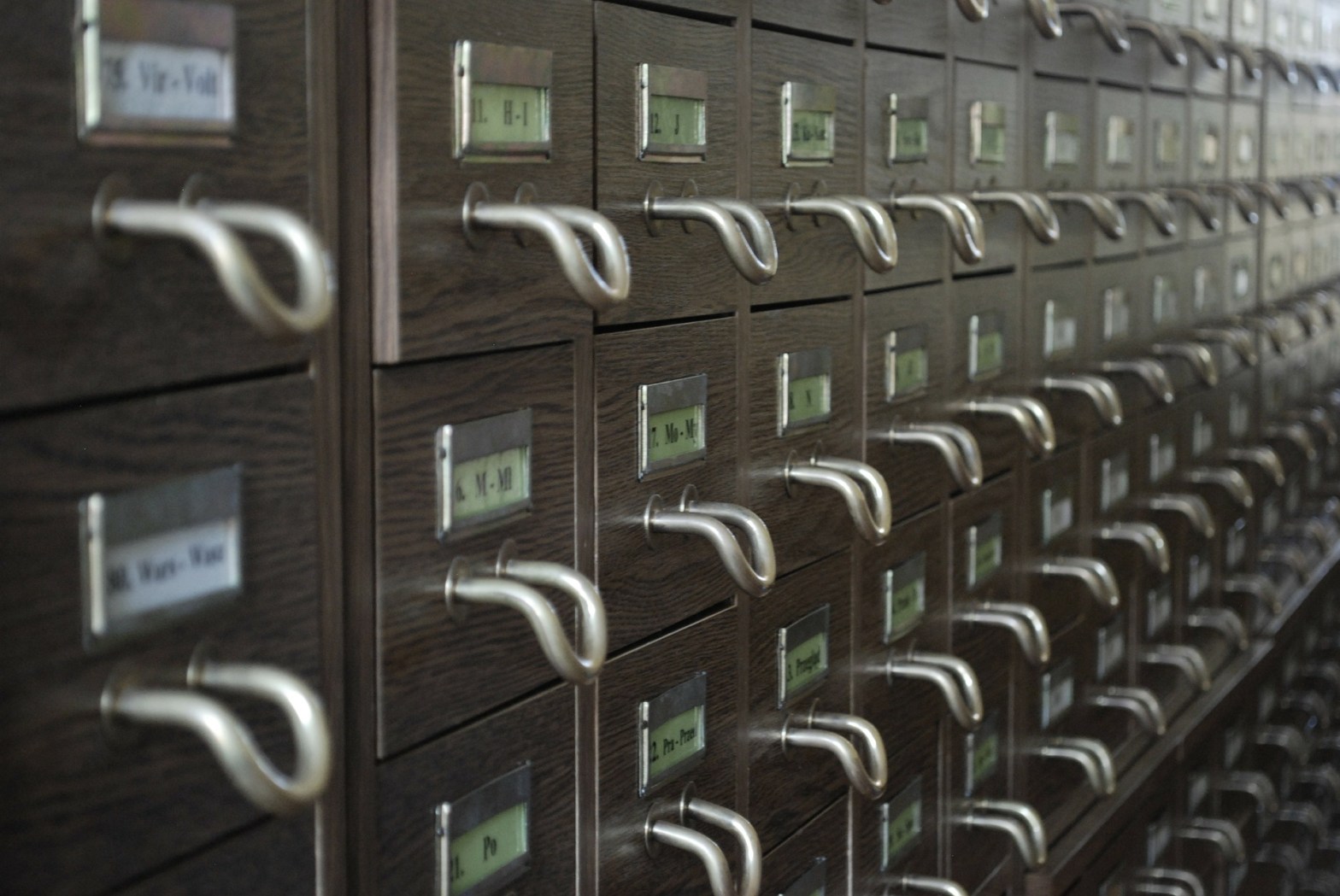
Being forty, I remember life before the internet. I wasn’t writing novels back then, but I do remember the smell of a library and the tedium of Dewey decimal cards. Do they still exist? Sadly, I haven’t been in a library for any more than a few minutes in about twenty years, but they were being replaced with computer search engines then, so I expect not (search results are mixed on the topic, but I don’t even know where the closest library is to do some investigative journalism to find out). In college, as part of earning a history minor, I had to take a course on research skills, which heavily relied on using a library and its research tools. I imagine the class I took no longer exists. Now, it is probably more about databases and the use of bullion operators in keyword searches or something like that. Even then, in the early 2000s, the curriculum seemed antiquated. Why would I go through all that effort when I could just type it into Google (or was it Yahoo then)? Suffice it to say, I’ve earned my library badge and spent long nights in quiet book-lined spaces, flipping through thick stacks of index cards, writing down the number, and then venturing into Ghostbuster territory to search for that dusty volume. Do I miss it? Maybe in the nostalgia sense, but in the practical sense? No. I would not be surprised if these great depositories of books vanished within the next ten years- they are already disappearing in schools.
Like most writers, I use a wealth of online tools to ensure I can spend as much of my time as I can getting the words on the page and not venturing to our local library. I won’t unveil all my coveted bookmarks (secret weapons), but I use thesauruses, dictionaries, grammar guides, name generators, mapping tools (the Inkarnate maps I’ve created and a great random city map generator), reference material on the costs of medieval products, Wikipedia (of course), random face generators, picture databases, gosh there is so much. I mean, how convenient is it to type in just about any question you have, as strange (or macabre) as it is, and be able to find a quasi-legitimate answer in a fraction of a second (I’m writing fantasy, not historical fiction)? I always joke with my wife that the FBI is probably scratching their brains as to why all these authors are looking up different types of poisons, how long it takes to die from such and such a wound, ancient methods of torture, and narcotics during the medieval times (I write dark fantasy).
My search history may read like Hannibal Lector’s grocery list, but I really am a nice guy, officer.
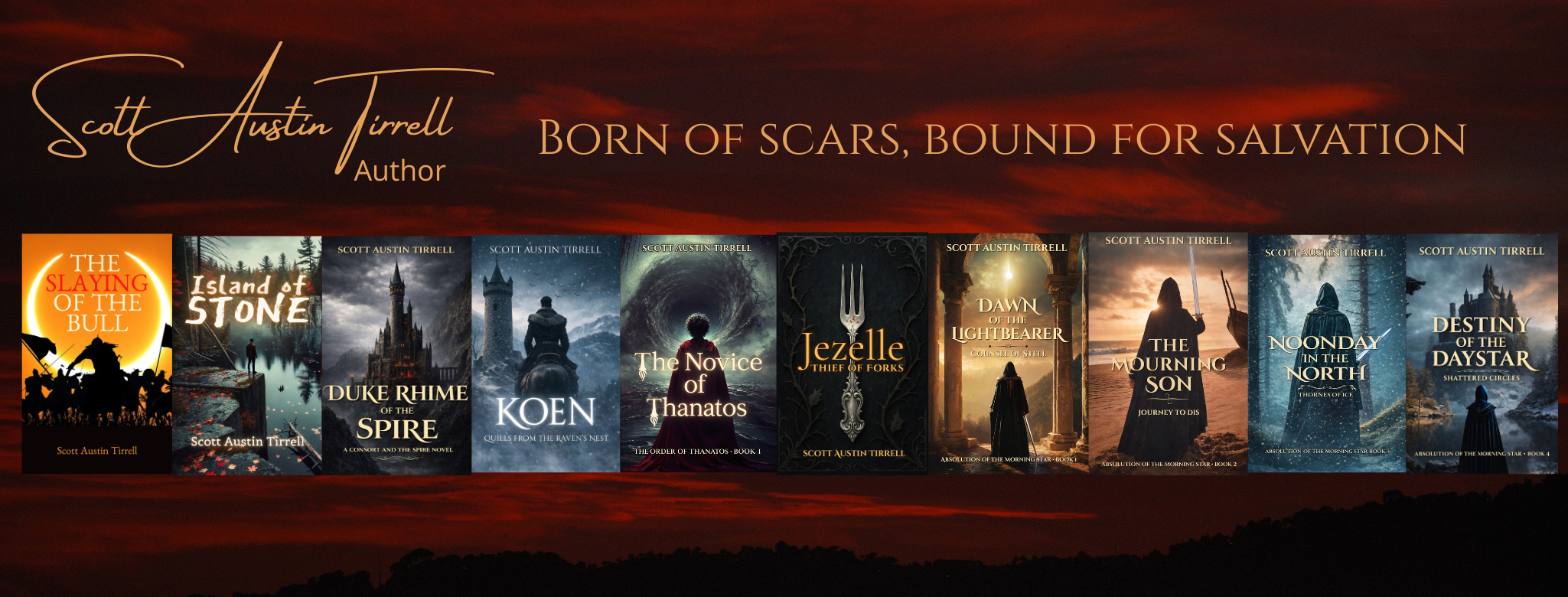
As a side note, I admit I did take out some books when writing the Slaying of the Bull (which is historical fiction). There is not much about 13th-century Hungary online. But, I searched these texts through MIT’s online database and briefly stepped into the library to pick them up. MIT (my employer for ten years) has seven world-class libraries, and I’m embarrassed that I’ve never seen past the front desk for any of them. I also pulled the journal articles I used for much of the Bull from online sources. I should say, I realized that historical fiction is a lot of work and not really for me, as proud as I am of that book.
All this does help you appreciate the sheer genius of the greats, though. Could I come up with a world as vivid as Frank Herbert’s Dune or Tolkien’s Middle Earth without all the crutches? Maybe, but I think I would be spending much more time researching than writing and certainly not putting out two novels a year. It took Tolkien twelve years to write the Lord of the Rings, and Herbert six years for Dune. And, don’t even get me started on the benefits of word processing over a typewriter, or paper, for that matter! I’ve tried writing with a pen, but there were more cross-outs than substance, and with pencils, I got sick of cleaning up the rubber dust. My penmanship also tends to look like a chicken doing the flamenco. On a whim, have you ever felt a little deviant and turned on Word’s track-changes function while writing a novel? The horror. My carbon footprint might be high with spending so much time on a computer, but I love nature too much to sacrifice the trees to my rambling mind. Speaking of which, I did ask you not to get me started 😉
Well, it is back to the joys of Lucardia. Noonday in the North, book three in my Absolution of the Morning Star series, is at 85,417 words. I’m inching towards the finish line, and I better get to work before losing power again when everyone switches on their AC as it reaches 90 today in Boston.
Cheers!
Discover more from Author Scott Austin Tirrell
Subscribe to get the latest posts sent to your email.

I agree, most information is available online, but I used to have to remind my students, just because it is on the internet doesn’t mean it’s true. Great post, Scott.
LikeLiked by 3 people
Thanks for the compliment and taking the time to post a commment! Yes, the accuracy of online information is one thing, and why writing fantasy has become my love. For my purposes, I just need a foundation of legitimacy or a semblance of truth, but if something is not entirely accurate, it’s not the end of the world. Writing historical fiction was a blast, but the audience is tough…no, brutal is a better word, and writing fiction like a text book got tiring. It was like 80% research and 20% writing with much of the work not ending up in the novel. If and when I have more time (retirement maybe), I will get back into Historical Fiction, but for now, fantasy it is for me!
LikeLiked by 1 person
I enjoy historical fiction, but I don’t nitpick. I have seen some reviewers really go to town on an authors for some really simple things.
LikeLiked by 1 person
Why are libraries good to continue to exist? Because not all resources are uploaded
LikeLiked by 2 people
Very true. I hope I didn’t come across as anti-library. My post is more about my dependency on online tools and standing in awe of those who came before who did not have the benefit of these tools.
LikeLiked by 1 person
I am deeply saddened by the disappearances of libraries. I spent all recess periods in the library during elementary and middle school and quite a lot during high school. My family regularly went to libraries during the summer and I would bring home stacks of books to read. Since college, though, I “go” to the libraries to download ebooks or to order pdf copies of research articles. In the early 2000s, I was writing research papers (such as the rise of infectious disease in the countries of the former Soviet Union for a medical anthropology class) without stepping foot in a library. Despite that, I still believe that libraries (along with art, music and P.E. classes) are essential for young people. Supporting local libraries is more important than ever so people have access to good sources of knowledge. Online sources seem much less reliable and adequate than what I found when I was an undergraduate.
LikeLiked by 1 person
I remember as a child taking out stacks of medieval picture books from our local library. It spurred a love for the medieval period that has continued 30+ years later.
LikeLiked by 1 person
I’m lucky to have an awesome library in my neighborhood. No, I don’t use it like I used libraries when I started writing in the 1980s, Still, it’s a great resource when I want to take a deep dive into a topic by reading a book or a few chapters. My library’s catalog is on line, so I use the internet to find the book I want before going in. I can even check if it’s on the shelf!
LikeLiked by 1 person