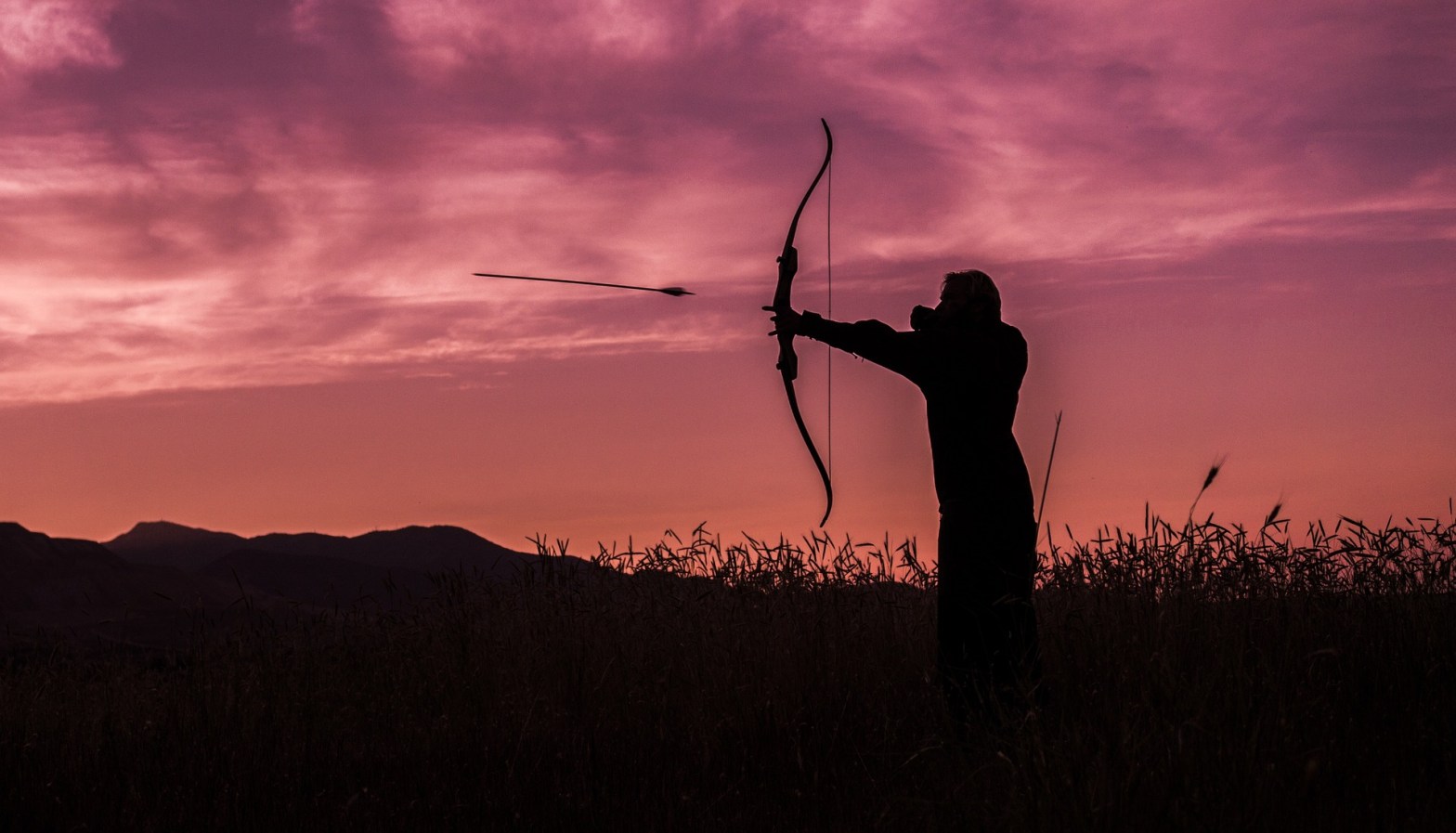
This week, a few of my discoveries were that most bird sh** has little to no smell (unless they are sick), that fart is one of the oldest words in the English language, and that it is pretty difficult to kill someone instantly with an arrow.
It is a joke amongst writers that we better hope no one gets murdered in the neighborhood, as our search histories would be pretty incriminating, and mine is no exception. The Absolution of the Morning Star series is a dark fantasy set in the late medieval period- probably the equivalent of the early 16th century. It is a sinister and turbulent time for Lucardia; thus, many people die in my books (poison has reared its head plenty). In my current work in progress, Koen, I’m on chapter five and have already killed off eighteen named characters. I want to make my books as visceral and realistic as possible, so that means delving into the internet’s darkest subjects. It has brought me places I really did not want to go and some that I wish I hadn’t ventured, but I do it all for you, dear reader!
It’s not all bad. Through countless hours of research, I’ve found that the discoveries I make and the information I glean feeds the plot as much as it supports it. Let me provide an example. Perhaps a story requires a quick death to move things along. Say, a posted guard needs to be eliminated so the main character can pass. It is a scene we’re all familiar with and one often portrayed in movies. The easiest method would be to pick up a gun. The kinetic energy of a firearm makes killing someone instantly just a trigger pull away. Even a shot to the arm or leg can cause massive blood vessel damage leading to death in minutes. But, when you remove the traumatic force of velocity, things get much more drawn out and complicated.
Gunpowder weapons have only recently appeared in The Absolution of the Morning Star’s world. Hence, the tools of death in my stories are blades, spears, axes, war hammers, and arrows (and some other interesting implements). They are violent, painful, and, for lack of a better word, personal weapons. In terms of story, they also make killing a character instantly quite challenging. Without something magical or devastating, like an explosion, there are only two options: massive trauma to the brain or rapid blood loss. For an author, it can get frustrating and ultimately repetitive. You can only chop off so many heads (which is not as easy as you may think) and stab so many hearts. Also, it should give you a semblance of relief that the heart and brain are well protected, and most of your major blood vessels are deep and hard for a sharp pointy object to cut. A quick Google search will show you that being stabbed 20+ times and surviving is not impossible. The triangle of death, a term used by modern snipers (also called the sniper’s T) and where a sharp object would kill you relatively instantly, is a tiny target in the scheme of things. I’ve found countless stories of people being shot with multiple arrows and surviving- i.e., Saint Sebastian. It is why medieval archers were more concerned with putting as many shafts in the air as quickly as possible rather than focusing on accuracy.
Yes, I know, with all the challenges, killing someone quickly with medieval weapons can clearly be done. With a bit of imagination, it can also be interesting to write and read. It is a messy affair that does lend itself well to imagery. But what if you wanted to kill that guard quietly too? You may be thinking; you can slit their throat as they do in the movies, right? Oh boy, here we go again into the internet’s dark corners. Suddenly, we come to another rabbit hole and a point of contention in the chats. Yes, there are chats about this topic, which should give us all pause. Funny enough, a fellow writer often poses the question. Then, all the “experts” creep out of the woodwork and go into too much detail. I won’t go into what I’ve learned here, but there is much to think about, ultimately changing a story’s flow. All joking aside, I hope the purveyor of this information is just another writer who has done their research, but who knows in this crazy world?
Quick aside: Let me be clear. I do not condone violence or particularly enjoy writing about it. However, I am intrigued by what a violent world does to the human psyche, and the prospect of violence certainly raises the stakes in a story. Ultimately, death, sometimes violently, is necessary to demonstrate humanity’s potential vileness and the human spirit’s raw power to overcome.
Well, it’s 6 PM, and I have a date with my characters. Something just splashed in a swamp, and I’m guessing someone is about to have a bad day 🙂
Cheers!
Discover more from Author Scott Austin Tirrell
Subscribe to get the latest posts sent to your email.

Infection kills you quicker than anything on the medieval battlefield. You might have survived the arrow, but what it left inside you, might kill you. They had no understanding of what caused the sickness or the plague.
LikeLiked by 1 person
Well, this made me smile. Then it made me a little uneasy as I realised that a part of my brain I rarely visit was going: “A slice across the femoral artery at the top of the thigh will cause a fast bleed out but you need to step aside to avoid being covered in the arterial gush. Perhaps better to use a long thin blade at the base of the skill or through the eye works well.” I’ve no idea where that came from and I don’t want to find out
LikeLiked by 1 person
Ha! Yes, I should have mentioned my worlds have the added complexity of armor designed specifically to protect these vital areas. A simple mail coif, something quite common, does well to protect the throat or the back of the skull from a jab. Explaining how a character had to maneuver a pick in between the plates of the armor of their enemy for a slow bleed-out just isn’t as sexy as a head flying off on a geyser of blood.
LikeLike
Have you seen what a crossbow bolt does when fired from a meter away? Armour isn’t much help. It’s so deadly and so hard to stop that in 1096, when it was new, Pope Urban II banned its use ‘by Christians against Christians’. It was a favourite weapon for mercenaries facing off against knights.
LikeLiked by 1 person
Yes, devastating. Even an English longbow hits like a 45. The Pope should have actually said commoner against nobleman, as it was probably more of a political statement than a concern for the wellbeing of his flock. Suddenly, a simple farmer could easily kill a lord. I’m sure that didn’t go over well in tthe upper strata of society.
LikeLiked by 1 person