After my last post and my bold statement that I had no regrets, some asked me, “What about in death, Scott?” What an excellent question. All too often, when someone passes, the survivors are left with regret. I wish I had said I love you, or maybe, I wish I told them how much they hurt me. Those are the extremes, but it runs the gambit. I’ve known death. All my grandparents have passed, and I’ve lost some friends too. But in my death experiences, I’ve been lucky to see hope, not regret. Let me explain.
My first interactions with death, and I mean where it bit hard, were with my maternal grandmother. I was thirteen. This wonderful woman babysat my sister and me for much of our childhood. We spent just about every weekday in her little apartment during the summer. We were close, and I loved her to death. While watching TV, I used to lay in her lap, and she would rub my head. Unfortunately, she was not a healthy woman. She had diabetes and was overweight for the entire time I knew her. My grandmother was the best cook, but the rich fare took its toll.
We had a couple of big scares with my grandmother. Once, I was on a float for the boy scouts in a big parade. It got hung up because of a medical emergency. After the parade, I discovered it was because of my grandmother, who had passed out because of her low blood sugar. While in the hospital, she had congested heart failure. She wasn’t eating, and we prepared for the worse. But one day, she asked for ice cream, and my mother started to sneak her peach melba sherbert. She recovered. That was just one of many episodes.
Towards the end, I was getting older and didn’t need to be babysat. My sister was sixteen/seventeen and could watch out for me. But I still visited. This was long ago, and I’m losing track of the time scale. It feels like this period was long, but it was probably just a year or so. Anyway, I took a movie, Jurassic Park, and visited. We had some laughs. The film was a bit much for her, I think, but as always, she humored me. After, she wanted to make me Kraft mac and cheese with frankfurts (her term for hot dogs). It was my childhood favorite (and still is, to be honest), and I couldn’t object. We sat down and ate, but something didn’t taste right. She had forgotten to add milk. I said nothing but looked up and saw how old she had gotten. It shook me.
Soon after, she had more heart issues and could no longer live alone. She moved into the nursing home where my mother worked. Things must have been pretty bad because she couldn’t join us for Thanksgiving that year. My mother told me that for $25, the nursing home would provide her with a special holiday meal. A turkey dinner was my second favorite thing my grandmother cooked for us, and I would be damned if she was going to have Thanksgiving without turkey. So I dished out my lawn mowing money, and she had a lovely meal. She died soon after. I am so glad I did that.
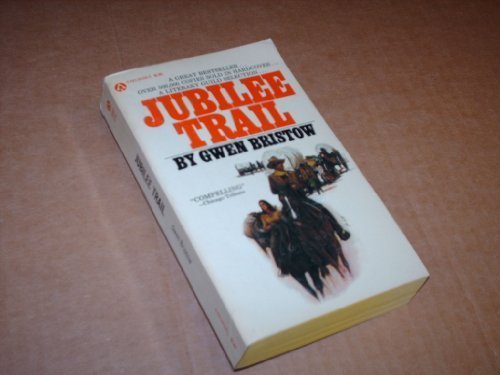
By the end, my grandmother was ready to go. She had signed paperwork that prevented significant medical intervention. When the end came, my mother was there with her. My grandmother’s favorite book was the ‘Jubilee Trail’ by Gwen Bristow. A well-thumbed version was at her bedside when she died. She told my mother she was on the Jubilee Trail as she lay dying. Her final words were, “It’s nice.” It was Friday the thirteenth.
Phew, that was hard to write.
My second interaction was with my paternal grandfather. I was sixteen. How do I describe my grandfather? I would say, for me, Word War II defined his life. He would probably have said it was us, his family. He didn’t have much of a family life growing up. Is mother died when he was twelve, and he didn’t get along with his stepmother. I learned later in life from my parents that he had said he didn’t know family until my sister and I came along. We sure did have a lot of laughs. But most of my memories of him surround World War II, and his involvement in the war is a source of much pride.
My grandfather was a D-day veteran (29th Divison). He landed on Omaha Beach during the third wave. If you know much about D-day, the first and second waves were fodder for German machine gun bullets. Some units lost 90% of their fighting strength. By the third wave, the Allies were progressing, but my grandfather said bullets were still flying by like angry bees and lost a button from a particularly angry insect. The death toll may have been less, but he witnessed the aftermath of those first two waves, which was likely very traumatic. He saw most of his actual fighting inland, where he earned a bronze star.
When my grandfather enlisted in 1942, he was initially assigned to be a machine gunner. During World War II, the average life expectancy of such a role was three minutes. It was a death sentence. Luckily, an officer saw my grandfather doodling (my grandfather was a great artist) and thought it would be a waste of talent. So, my grandfather was promoted to staff sergeant and assigned to SHAEF to draw maps. What is SHAEF? It stands for the Supreme Headquarters Allied Expeditionary Force, commanded by US General Dwight D. Eisenhower. My grandfather’s World War II-related collection contains correspondence signed by Eisenhower and many pictures. The gem is a signed thank-you note on US President’s Letterhead addressed to my grandmother after she wrote Eisenhower wishing him a happy birthday and thanking him for taking care of my grandfather during the war.
As a kid, it all seemed so neat. He had stories, pictures, metals, an old gun he had taken off a German officer, and just a bunch of awesome things that helped stimulate a love for history in his grandson—looking back now, sharing those memories with me must have been difficult. Still, it instilled in me that we should take nothing for granted. I remember buying him a D-day book for his birthday. We went through it together, and he told me many stories I had not heard before. Tears were in his eyes, which impacted me, as I never knew someone so tough could cry. I remember my grandfather as a stoic man who always stood tall. He had a gentlemanly grace you don’t see anymore.
He ran into some bad luck later in life. My grandmother had read someplace the health benefits of flax seeds and began feeding them, in abundance, to my grandfather. He developed a bleeding ulcer that landed him in the hospital. They had to give him a blood transfusion, which saved his life but also gave him Hepatitis. The disease slowly ate away at his liver. His health rapidly declined after my grandmother’s Alzheimer’s diagnosis.
My father’s parents had a special love. They married immediately before my grandfather went to war and spent four years apart. Ultimately they were married for 56 years, but by the end, my grandmother did not know who he was and fell asleep during his funeral. Perhaps it was for the best. I state the obvious here, Alzheimer’s is a terrible disease. My grandfather was a soldier and tried his best to care for his wife. He may have survived German bullets, but this disease sucked his life out. I remember how tired he looked as my grandmother fed ice cream to her stuffed animals.
The last time I saw him was a visit to the rehabilitation center where he lay, slowly dying (liver failure is horrible too). I had earned my driver’s permit, and my dad thought it would be good practice for me to go for a visit. It was the longest I had ever driven, and it was at night. When we arrived, I was so proud of myself and shared that with him. I was becoming a man, and I think that made him proud.
You may be asking why this sad story brings me hope. My grandfather had given me a watch. It was too “old-manish” to wear at that age, but I kept it in my backpack. One day, I was called to the principal’s office. I immediately knew why. My grandfather had been deteriorating for some time. It was November 20th. I remember the date because that watch stopped at the precise date and time he died. I still have it someplace, and it reminds me that there is a lot in this world we don’t understand.
As I said, I’ve been lucky. I shared good moments with my loved ones before losing them. In one, I saw a glimpse that, in the end, it might not be so scary, and with the other, perhaps there is something beyond. I miss them, and this was probably the most challenging blog I’ve ever written. But they taught me a valuable lesson- don’t leave things unsaid until it is too late. By their nature, regrets are irreversible, and I’m glad I have none.
Cheers!
Discover more from Author Scott Austin Tirrell
Subscribe to get the latest posts sent to your email.

Great post Scott. Death is inevitable and that makes it all the more important to spend meaningful time with those we love while everyone is alive and healthy. You were lucky to be able to do that.
LikeLiked by 1 person
Thanks, Carla. It was a hard one to write, which I wasn’t expecting. It’s been 27 years since my grandmother died and 25 for my grandfather. I suppose that happens when you start digging into the past and stirring up all those forgotten memories. Ultimately, it was cathartic and I’m glad I got it down so I won’t so easily forget how much they meant to me in the future.
LikeLiked by 1 person
It was beautiful and you now have those wonderful memories in the forefront of you mind.
LikeLike
This is an inspirational read. You are part of your amazing family’s legacy.
LikeLiked by 1 person
Thanks for sharing. I know how hard this would have been to write.
I have lost the two most important people in my life. The daughter of my heart 18 years ago this month, and my Granny 11 years ago. Their loss was brutal and honestly always will be. No matter how much time you have, it isn’t enough. No matter what experiences you shared with them, you will always want more. So why ruin what you did have with regrets.
LikeLiked by 1 person
Yes, it was much harder than I was expecting. It’s been decades, but it shows the power of the written word to stir memories. Thanks for checking out my blog and leaving a comment. I really appreciate it!
LikeLike