I’ve always been comfortable being alone.
Not in a performative, monk-on-a-mountain sort of way—but in the quiet, backyard-on-a-summer-evening kind of way. I’m an introvert by nature. Growing up, there were stretches when there were other kids in the neighborhood and stretches when there weren’t. During the quiet times, I turned inward. I imagined stories, built kingdoms in the woods, and held conversations with people who didn’t exist outside my mind.
That imagination, born partly out of necessity, became the root of my writing. And with it came something else: a fascination with loneliness. Not just the feeling of being alone, but the strange, complex ways it shapes us—how it haunts us, protects us, even transforms us.
It’s no surprise, then, that loneliness appears everywhere in my books.
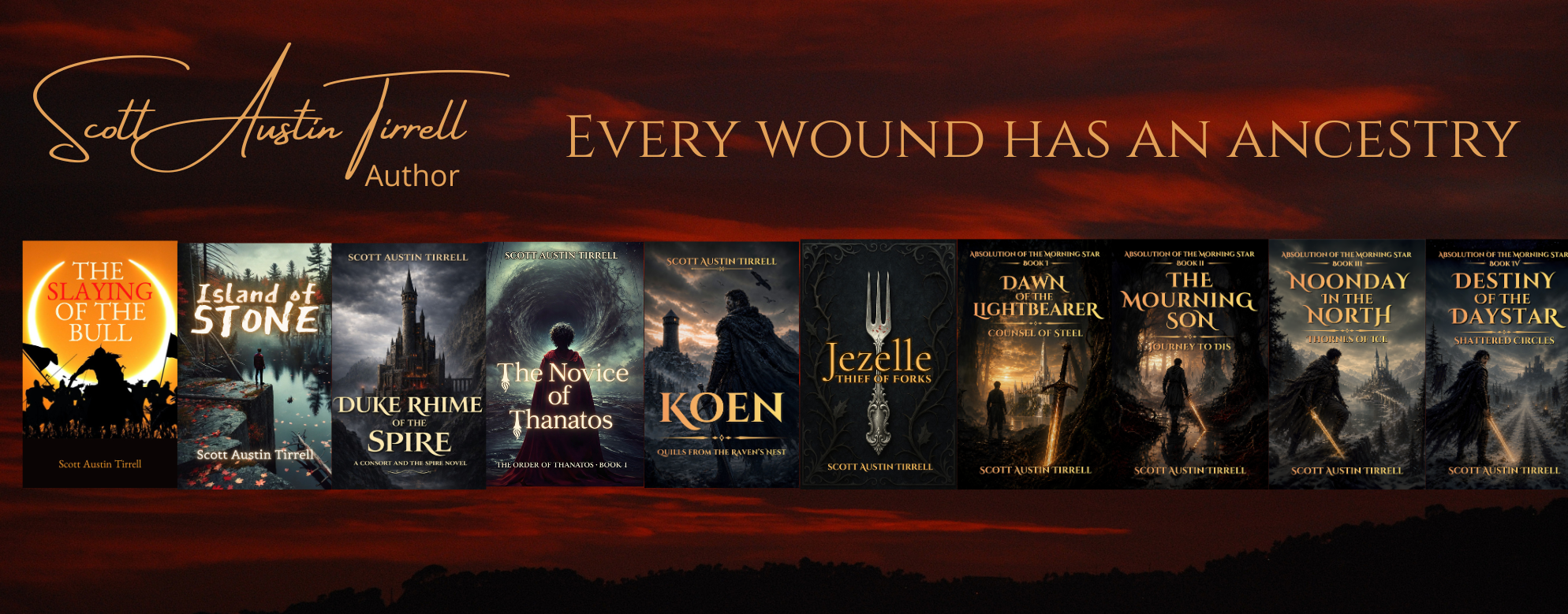
Even with hundreds of characters across the Absolution of the Morning Star series and its companion novels—courtiers, witches, monks, thieves, knights, and ghosts—my protagonists are often alone in the ways that matter most. People come and go. Some violently. Some in anger. Others just drift, easing into the world’s noise. But my central figures walk paths no one else can follow. Their solitude is often their crucible.
Erikson Gray begins Dawn of the Lightbearer surrounded by guardians, yet already set apart. His descent beneath the old oak is not just a physical journey—it’s a step into a fate that only he can perceive. The sword he finds speaks only to him. And though he does not yet understand it, that whisper begins to separate him from everything and everyone he’s known.
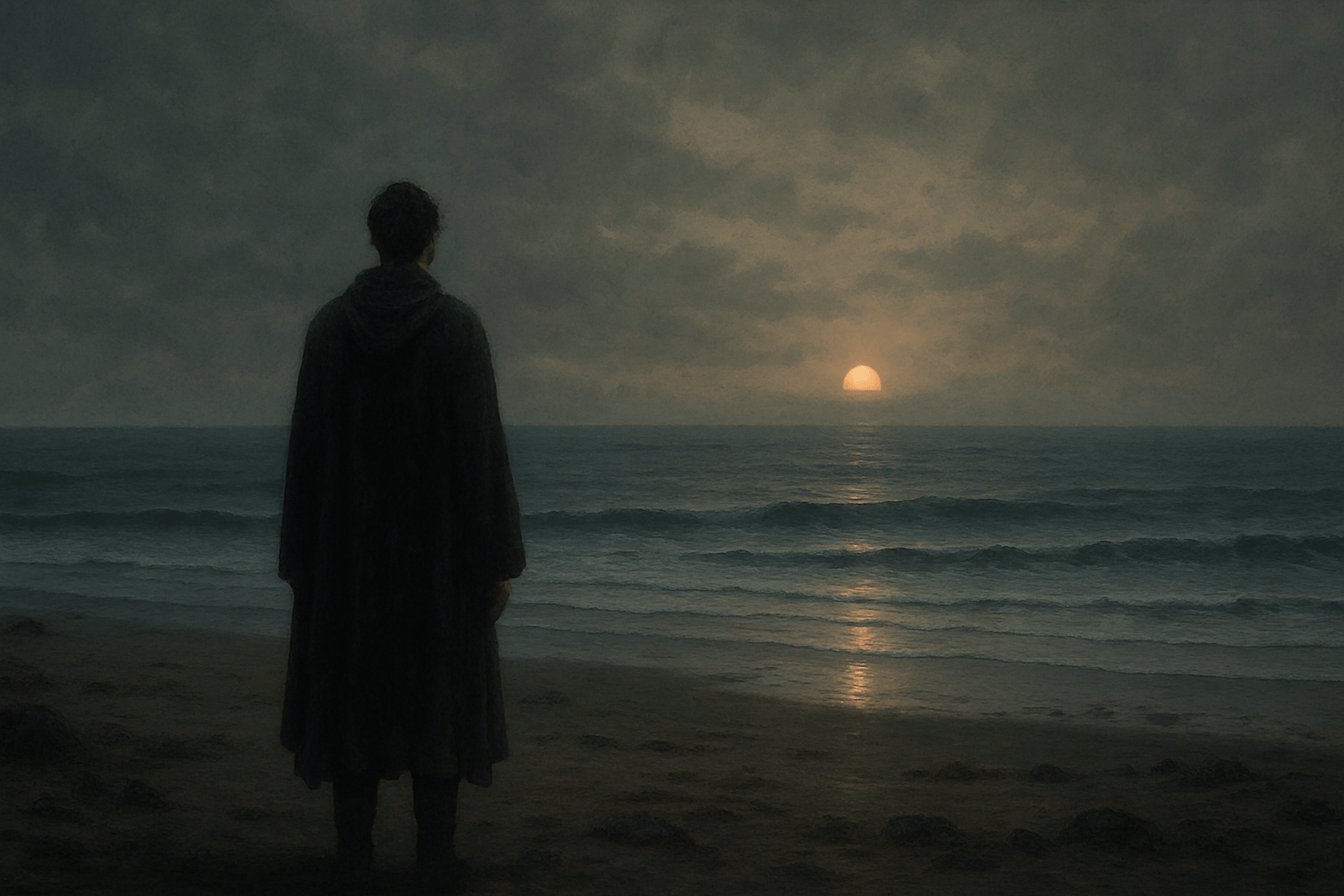
In The Mourning Son, he wakes alone on a beach, his memories erased. The sword remains. The whispers remain. His sense of isolation deepens—not just from others, but from himself. He begins to feel that something greater is calling him. And he answers. It pulls him through the Devilwood in Noonday in the North as he quests for someone to understand, to validate his destiny- his maternal grandfather, Agris of Thorne. Perhaps he will finally find his family, his place.
By Destiny of the Daystar, Erik no longer runs from the call of Lightbearer. He embraces it. He sees himself as the one who must heal Lucardia, the one destined to lead. But that belief—however noble—costs him. The more he steps into destiny, the more unreachable he becomes. Even love and friendship fall away. His solitude is no longer a condition of survival—it’s the price of becoming who he believes he must be, the true uniter that will confront humanity’s doom.
His father’s story in Koen: Quills from the Raven’s Nest is not born from exile or abandonment, but from devotion. His marriage to Rachel of Thorne is meant to cement a fragile political truce. But it becomes more than politics. Koen falls in love.
Rachel cannot bear children. She hopes, but she knows. And the truth reaches Koen only after their vows are spoken. The realm needs an heir, and his father, Emperor Vesper, expects results. True duty would mean setting Rachel aside and finding someone who can secure Lucardia’s future.
Koen can’t do it.
So, instead, he clings to a desperate hope. He pursues a miracle, whispered of in the shadows—a path to fertility through forbidden magic. He bargains with witches who demand more than coin. He risks everything. He tells himself it’s duty, but in truth, it’s love. Or perhaps weakness. Or perhaps both.
In trying to hold onto love and fulfill his legacy, Koen loses both. He loses Rachel. He loses the favor of his father. He loses the illusion that he can carry everything and remain whole. His loneliness isn’t immediate. It arrives like winter, gradual, bitter, and without comfort.
Mishal’s solitude in The Novice of Thanatos is a deeper, colder thing. It doesn’t begin with loss—it starts with difference. Even as a child, he was strange. Touched by powers, no one understood. Even those who are supposed to love him see him as something other and fear him, or worse, blame him for their problems.
And then that family disappears into the ether. Strangers take him to a place where, for the first time, his abilities are valued—but not for who he is, only for what he can do. The acceptance he finds comes with heavy chains: expectations, doctrines, and secrets.
For a brief time, he has companions—Prior Damek, a mentor with a smile, and Caleb, a comrade in the struggle. But like most things in Mishal’s life, these bonds do not last. By Skelside, he is betrayed. He uncovers dark truths about the Order, truths that fracture everything he thought he understood. When he escapes, he does so alone, dragging both knowledge and trauma behind him.
At the gates of Thanatos, Mishal stands not as a novice but as a survivor. He enters a world that claims to be ordered and sacred but offers no compassion. Only cold discipline and burdensome duty. There, he becomes one of many—but has never felt more alone.
Why do I keep returning to loneliness? Part of it is personal. I grew up learning how to be alone. I still find peace in solitude. I can entertain myself for hours, sometimes days, without needing much from the outside world. But I’ve also come to understand loneliness not just as a space of comfort, but as a force. A shaper of people. A test of who we are when there’s no one left to listen.
I’m drawn to those on journeys, especially ones where survival, fate, or faith strip away all companionship. Because that’s where the deepest truths emerge—not just about the world, but about the self. In my work, loneliness is not a flaw to be overcome. It’s not filler. It’s not a narrative lull. It’s a crucible. And sometimes, it’s the only way to reach something sacred.
Even in a world crowded with voices, my stories follow those who slip through the noise. They don’t choose solitude—it chooses them. The road they walk narrows until only they can pass, shaped by burdens no one else can carry.
Loneliness, in these tales, is not a flaw to be fixed. It is a shadow cast by conviction, by sacrifice, by truth too heavy to share. And yet, even in their quietest moments, there is something enduring in them—something that survives, that remembers, that endures without witness.
Perhaps that’s the lesson they all must face in time: not every journey needs a companion—some simply need to be walked. And though they may feel the ache of loneliness along the way, they are never truly without company. In the silence, they meet themselves—and in that quiet meeting, they find the stoutest companion of all.
Cheers!
Discover more from Author Scott Austin Tirrell
Subscribe to get the latest posts sent to your email.

Even those who are not forced into loneliness fill the world with imagination – only they call it ‘real life’. And they, too, have to ‘escape’ into other fantasies from time to time. Loneliness comes when we see that our world is imagined, and even see that others are doing just the same. The separation that we feel is illusory too, but affects us all the same. Some do, eventually, find a true companion; some find a whole world. And some stay lost in their imagination. That ‘conviction’ – that ‘heavy burden’ – of which you write does hold some to a solitary path, but perhaps they do not always feel lonely. Perhaps they are walking that path for others, who do not yet understand the need – who perhaps call them to join a different ‘truth’.
LikeLiked by 1 person
I’m an introverted loner, so I tend to write stories with few characters. They aren’t lonely, but the interaction is more intense.
LikeLiked by 1 person