I don’t believe in ghosts — not in the flickering, sheet-draped sense of spirits rattling chains in the night. My rational mind resists that. And it’s not as if I didn’t conduct my own tests to arrive at my conclusions. Throughout my teens, I searched. I wandered into places that must surely have been haunted: abandoned farmhouses, vacant asylums, crumbling factories, and cellars left to rot. I also searched in the natural world, exploring caves, twisted forests, and places that just felt off. I had moments that were strange, even terrifying — shadows shifting where no one stood, sounds that didn’t belong to the living, strange lights, and even screams in the night. Were they proof? No. Of course not. But mystery rarely requires proof to be powerful.
One memory comes to mind that I have shared before. On a summer’s night, when I was maybe fourteen or fifteen, my friends and I camped on the mountain behind my house. We weren’t yet seasoned enough to sleep under the stars, so we dragged a heavy tent up the slope in an old shopping cart, with its wheels wobbling and shrieking over rocks. That night, as we whispered in the tent about girls and futures and other things teenage boys dream about, the sound of that cart came back to us. The same creak, the same rattle, unmistakable. We froze. When we dared shine a flashlight out the mesh window, the beam fell on the cart — now upright, though we all remembered laying it flat before crawling inside our flimsy fortress. There are countless rational explanations for what might have happened, but none of them mattered to us then. In that moment, our imaginations ran wild. Something malicious, out there dancing with the crickets, had moved that cart. It was a simple, harmless action, but oh, the power it had. What gave it that power? That question began me on a quest.
That’s the thing about ghosts. Proof isn’t what gives them potency. Mystery does. Awe does.
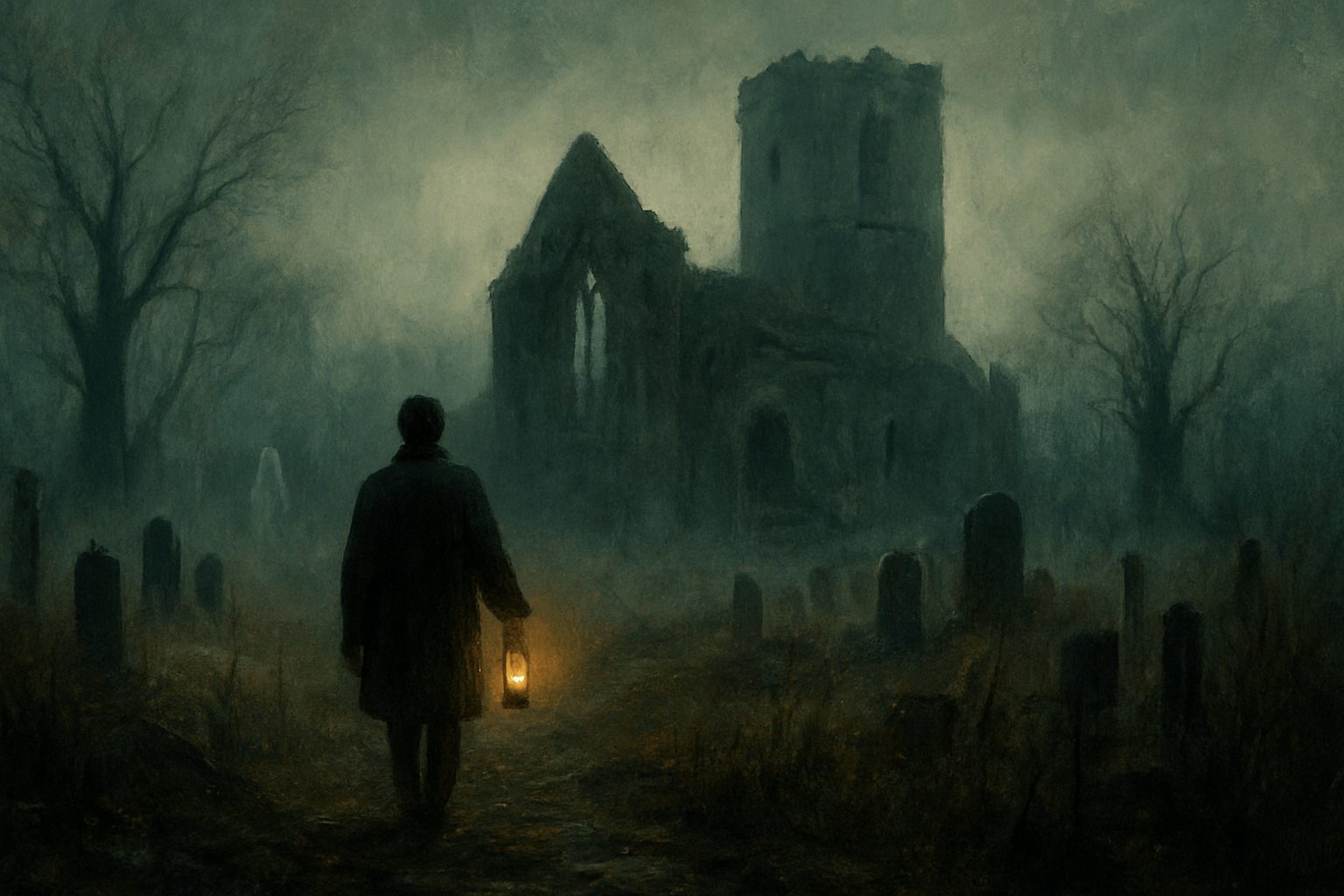
Even as my rational mind closed the door on the supernatural, some part of me still hoped there was more than we can see, something beyond the veil. That hunger carried into my twenties and thirties, where I devoured horror films. I own a few slashers, but it was ghost stories that scratched my itch. I collected thousands of them, watched every flickering frame of haunted cabins, lonely campsites, forest paths where shadows moved just a little too naturally. And always, I loved the journey more than the reveal. Show me the ghost, and the trick is broken. The magic lives in what we don’t see, in the gaps where the imagination gnaws.
It’s influenced my writing more than I give it credit. Every story has a destination, but the power is in the journey.
Ghosts, ruins, forgotten histories — they’ve become part of my vocabulary as a writer. My characters don’t move through pristine worlds. They walk through fractured greatness, ruined keeps, temples swallowed by moss, voices that whisper in the dark. But more likely than not, there is silence and the impression that something else is there when all rationality says there is not. There may be gleaming castles, but they are built upon forgotten catacombs. And the ghosts my characters encounter aren’t always spirits in the literal sense. They are memories. Scars. Choices that cannot be undone, sometimes their own, and sometimes they are inherited. Sometimes they’re entire civilizations forgotten, yet still press upon the shoulders of the living.
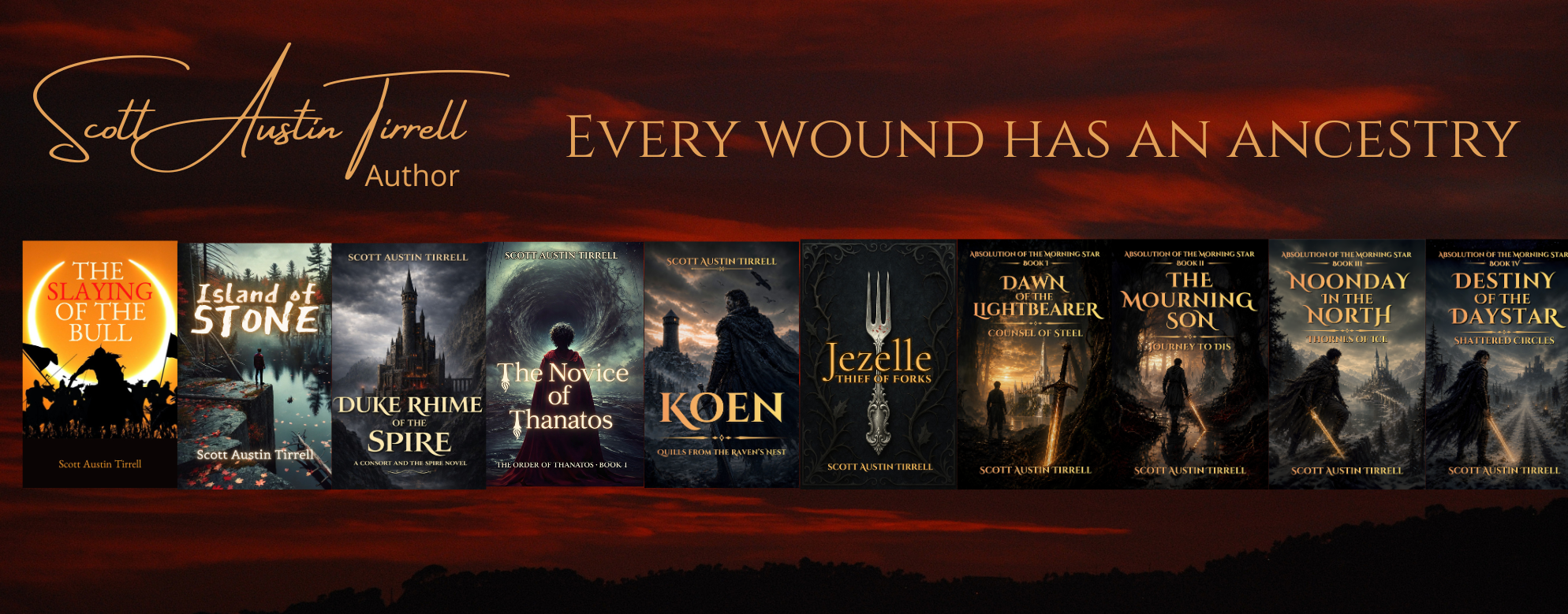
When I first wrote Mishal’s opening in The Novice of Thanatos, he feels the touch of his dead grandfather. That brush with the other side was deliberate — it mirrored the way I once felt reaching for the unexplained. It demonstrates that Mishal will not just face bumps in the night, that it is not just a harmless memory, but a physicality and a source of rebirth from the impotent dead. Mishal doesn’t want the touch, doesn’t seek it, but he can’t ignore it. And from that moment, he becomes a unique conduit for the dead’s quiet rebellion. In Lucardia, ghosts aren’t just remnants, and through Mishal, they are suddenly given teeth. They will remind the living that even death cannot silence a voice.
And maybe that’s true for us too. Aren’t we all haunted, in some way, by the past? By the cart that moved when no one was looking? By the memory of a voice we can’t hear anymore, but still feel? Ghosts may be nothing more than the shape our internal demons take, the ways memory claws its way back into the present. But that doesn’t make them less real.
I return to this theme because I see life itself in that juxtaposition — the thin sense of security inside the void. Bundled in a blanket by a fire while dangers swirl in the darkness beyond. Isn’t that existence? We are fragile sparks surrounded by infinite shadow, and we know it. That’s why we build, why we carve our names into stone, why we raise towers and temples and stories. Not because they will last forever, but because they are ours, a defiance against silence. And even when they crumble, the ruins still whisper: we were here.
That’s what I want readers to feel — that the world is full of voices, that everything is fragile, but that nothing truly vanishes without leaving a trace. Writing itself is a kind of haunting. Every story is a ghost I’ve exhumed, a memory given new breath. In chasing ghosts as a boy, in watching them flicker across screens, in failing to find the thrill again, I wasn’t really searching for proof of life after death. I was searching for meaning. For assurance that some smoke remains after the spark fades.
I never found it in the dark halls of abandoned places. But I did find it in the act of writing. And that, in its way, is the most enduring ghost of all.
Cheers!
Discover more from Author Scott Austin Tirrell
Subscribe to get the latest posts sent to your email.

Yes we are sparks and we may seem fragile… we are not. We have the power to illuminate the dark, each in our own way. You do it in the act of writing.
LikeLiked by 2 people