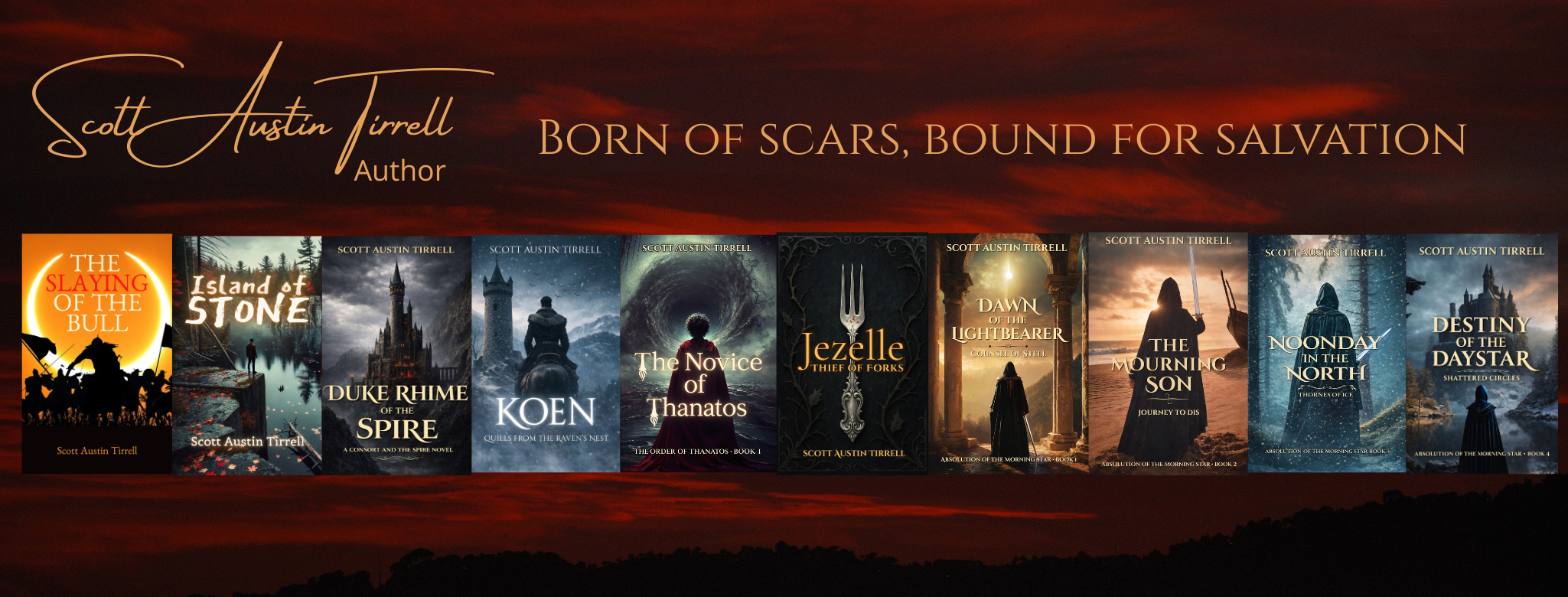

First, I would like to thank you all. After posting that I was stepping back from blogging to focus on rediscovering my passion for writing fiction, I received a considerable amount of support. There was also concern that I may be giving up. Don’t worry. I am still writing. In fact, I’ve been doing it nonstop and with renewed vigor. However, I suppose I need to provide some further context to you all on what led to this shift in focus.
A few weeks ago, while lying in bed after a long day of exploring Genoa, Italy, I checked my email. I noticed that I received a response to one of my queries for Jezelle: Thief of Forks. I took a deep breath and prepared for another form rejection to add to my significant pile. I clicked and read. It took a moment to register. I rubbed my eyes and read again as my heart began to race. They enjoyed what they read so far, and were requesting the full manuscript.
Every writer dreams of these moments—the ones where your world might change with a single email. Mine may have just arrived. I had received requests for a full manuscript before, but this one hit harder. It was not from some unknown agent. This was from one of the most sought-after literary agents in publishing, someone famous who regularly secures high six-figure deals for first-time authors, someone whose reputation alone can open doors that most of us don’t even get to knock on. To imagine being represented by a person like that is to imagine, just for a moment, a completely different future. For a few weeks, pushing aside my better judgment, I allowed myself to picture it: the call, the offer, the deal, the validation, how I would give notice to a job that has gutted me. After all the years of writing in the dark, I finally broke into the light. Suddenly, this all felt real.
Of course, I was in Europe, with no access to the entire manuscript on my phone, and had to write back to explain and assure them that I would send it to them as soon as I returned. They enthusiastically responded that it was fine. As soon as I got home, it was one of the first things I did. A few days later, they confirmed receipt. Someone with decades of experience in the industry, someone known for transforming authors’ careers, was reading my work. The next few weeks were agonizing, as I checked my email every few minutes.
And then it came. No.
To understand how heavy a word like no can be, you have to understand the scale of the mountain I’m climbing. At this level of agenting, it’s estimated that an agent might receive over a thousand queries in a single month. Out of those, perhaps one or two percent—maybe ten or twenty writers—are asked for a full manuscript. Out of those, an agent may make an offer to half a dozen clients a year. Statistically, simply receiving a request for a full manuscript is already a small miracle. And after hundreds of form rejections over the years, this wasn’t one of them. This was a real read. A real engagement. A real chance with a heavy hitter. The summit was in sight!
I can hardly express the heartache I felt at the fall. The dissolution. The shattering grief. I was so close to my dream that I could almost taste it.
Now, there are many forms of rejection. Typically, at this moment, you would receive another form response: Thank you, but this isn’t quite right for us at this time. Our business is subjective, and a no from us doesn’t mean some other agent wouldn’t love and support your work, etc., etc. As mentioned above, agents are busy, and there are literally thousands of other manuscripts flooding in for them to focus their attention on. They don’t have the time—or the obligation—to offer personal feedback.
But this rejection that arrived wasn’t a generic copy-paste paragraph. It contained personalized comments. Only a few lines, but lines that were thoughtful, specific, and honest. It was a vein of gold in a wall of granite. They said they found the concept heartbreaking and compelling, but they wished for a deeper sense of Jezelle’s interior world. More of her voice. More of the girl behind the actions. It was the kind of note that bruised the ego, but also clarified a path. It showed that she took the time to read my work, digest it, and then felt compelled to give me a glimmer of hope that I was on the right track. It demonstrated how truly close I had really come. Not quite there, but close.
Still, I won’t pretend it didn’t hurt. For a few days, I let myself stew in that disappointment. When you get that near to something that could truly change the trajectory of your writing life, the fall from almost to not-yet is steep, nearly crushing. You imagine all the lives you could have lived if the answer had been different. And for a short stretch of time, you feel the weight of every mile you’ve walked to get here. To start all over again seems impossible.
But writing is an act of endurance, and endurance is measured in what you do next. Rejection is part of the game, and you must learn that constructive criticism may sting, but it’s in a good way. Life’s lessons are the fertilizer for growth.
After the haze lifted, I went back to Jezelle with new eyes. I took those few sentences of feedback and used them as a lantern to reenter the story. Once illuminated, I saw the problem. My writing naturally leans towards the visual. I see the scenes in a very cinematic way. In cinema, you rarely delve into the character’s mind. What happens within is demonstrated in words and actions alone. To me, delving into their head feels like telling rather than showing, the first no-no in writer’s 101. But it is a balance. In today’s world, what sets reading apart from watching a movie is that you do get to see inside a character’s head. The reader gets to intimately know them from the inside out, something hard to achieve in cinema without resorting to boring monologues. My problem was that I had gone a little too far in the direction of the cinematic. To quote their response, they didn’t get “a great sense of who Jezelle was as a character beyond her actions and external descriptions.”
So, I’ve begun reshaping her from the inside—giving her thoughts space to breathe, letting the reader feel not only what happens to her, but what happens within her. And in doing so, something unexpected happened: the rawness of my own disappointment found its way onto the page. Jezelle’s emotions—the fear, the abandonment, the sharp ache of being discarded—became sharper, more authentic, more human. It was all telecast from my heart to hers.
Strangely, that rejection gave me something valuable: direction. A more precise understanding of how to make the book not just good, but great. More honest. More alive. And in this industry, where so many rejections are doors that close without a sound, getting even a sliver of guidance feels like an unexpected gift. I couldn’t take that for granted.
So, I’m still climbing. The summit may feel a bit further away, but that’s the nature of this path. Perhaps this moment is the one that changes everything, turning rejection into redemption. Writing demands stubbornness; publishing demands resilience. And sometimes the no’s that sting the most are the ones that ultimately sharpen your blade.
If you’re out there with me in the querying trenches, take heart. A no isn’t the end of the story. Sometimes, it’s the moment you finally understand how to tell it.
Cheers!
For those interested, I updated the sample chapter here.
Discover more from Author Scott Austin Tirrell
Subscribe to get the latest posts sent to your email.

Wow, Scott. I could feel it–the unquenchable, almost feverish desire to open that email and the heart-stopping dread that makes you hesitate. And you soldiered through it. Good for you. (Do keep hard copies of those two emails–we don’t get many “small miracles” in our business!)
Write on.
Will
LikeLiked by 1 person
I’ve been there a couple of times, Scott–the-almost-but-not-quite experience. Now I’m grateful I can publish my works without those agonizing waits and their aftermaths. (But of course you’ve been there and done that too.)
At least the agent gave you some solid advice you can use.
LikeLiked by 1 person
Is the door open to another query once you have finished the rewrite? Based on the personalized comments — basically, I spent the time to read your MS and I like what is here but we need more, I’m guessing yes? The agent has already invested some time in your work, and finds it promising and not quite there YET….
LikeLiked by 1 person
It wasn’t clear, but it wouldn’t hurt to try if done tactfully and demonstrating I took the feedback to heart. All they can do is say no 🙂
LikeLiked by 1 person
You got a full read. That’s wonderful and something you should be very proud of. You got critique from a literary agent who loves to read books in your genre, that’s also wonderful. You are almost there, that’s also wonderful.
But I know what you mean. I got praise from a publishing house (who I will not work with) and then I started working with my editor. She left me my voice, that’s what I insisted on, but (besides all the mistakes in grammar and punctuation) she pointed things out that I should have noticed myself. With her by my side I grew.
You are growing now. From good to better, to best. You are on your way.
LikeLiked by 1 person
I’m certainly growing. It comes in little spurts, usually spread between struggle, but it’s happening.
LikeLike
Your books are about humans – by and large. And even the non-humans have motivations. The story of ‘what’ happens is less engaging than that of what and ‘why’. And people aren’t always heroes; sometimes they’re as scared as hell but just doing what’s ‘right’. Sometimes they don’t know what’s right but do know that if they ‘hold back’ they will fail. As Tennyson said, “Theirs not to make reply, theirs but to do and die,” But even in the doing, they wonder if they haven’t made some ghastly mistake.
That letter seems like a really useful pointer at the need to make your characters more than ‘moving shapes’ – bit parts in a drama. They need to be ‘players’. Perhaps sometimes a writer withdraws too much from the ‘real’ world and therefore doesn’t connect with the flow of motivations in that real world. And in their fantasy worlds there might then be a similar feeling – for writer and reader – of just being an observer.
When people read a book, they want to ‘connect’ with the principal characters; they want to expand their own range of feelings by absorbing the narrative of feelings of those characters. They want to be ‘transported’.
Your characters are ‘close’ to human; your insight there is right. But to a reader they do feel a little like ‘puppets’ of the story. And to be fair, that does happen to real people too. But then we ‘catch our breath’ and think about what we _feel_. Mostly, though, even heroic life is about motivations. And sometimes regrets. Find the big feelings: love, hope, fear, faith – even revenge. They thread their way through all of our lives – behind the lights, camera and action. 🙂
LikeLiked by 1 person
You’ve hit the nail on the head – writing is endurance. So sorry for this devastating rejection, but I am so glad that was helpful rejection, that you are able to re-write with renewed vigour! Keep going, Scott! We’re all cheering for you!
LikeLiked by 1 person