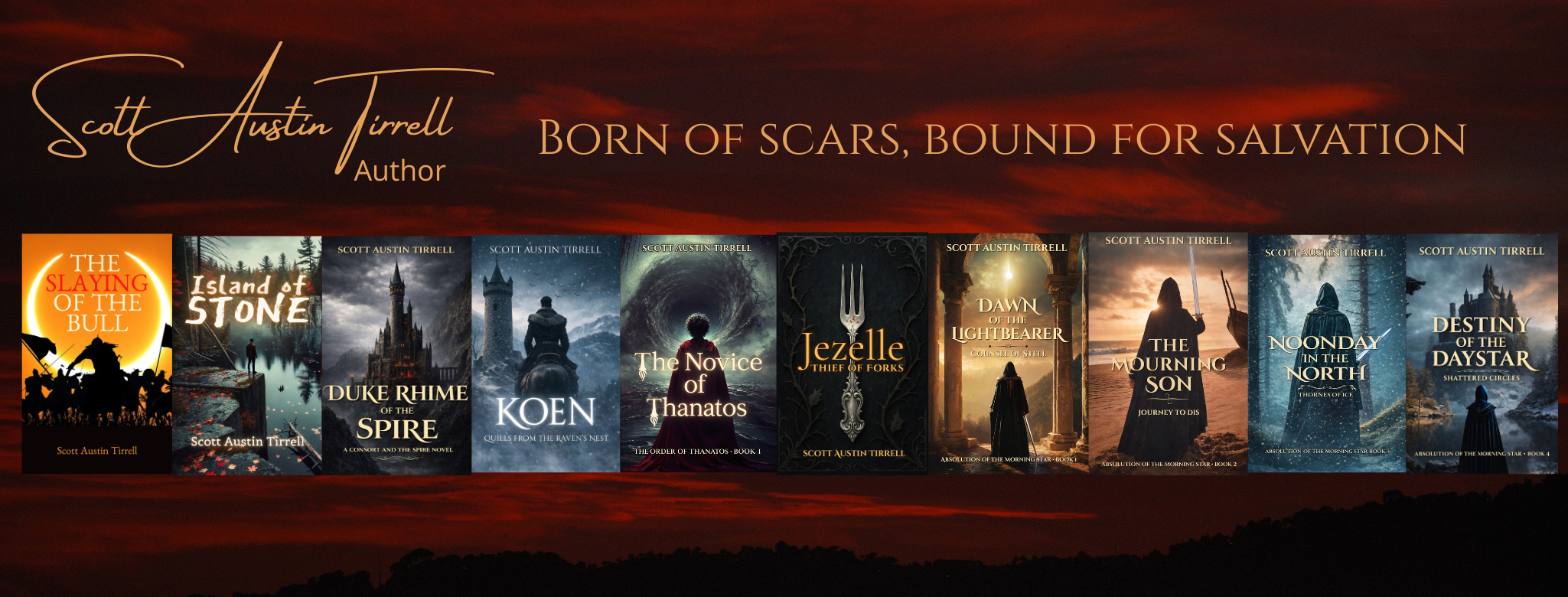

I’ve decided to stop my query process for Jezelle: Thief of Forks and switch gears to self-publishing the book. On the surface, that may look like defeat—another swing at traditional publishing and missing—but that’s not what this is. This is me looking directly at how this business actually works, looking at how far Jezelle swam in those rapids, and choosing to latch onto a lifesaving rock before I’m swept away into oblivion. Grasping onto that rock while I still have some life in me is honest survival. And before you conclude that Jezelle isn’t worth publishing, let me be clear: the truth is the opposite. Jezelle is the best book I’ve written, and I came closer with this one than I ever have before.
Let’s look at the numbers. I sent 103 queries between June 26 and January 23—a solid six months of effort. So far, I’ve received 66 rejections. I don’t expect to hear back from 22 of the remaining agents because silence is part of the process, and we all know it. That leaves 15 still out, and I’ll give those until March; after that, the book steps into the world. Not with the fanfare I wanted, and not with the clean story of “I landed an agent, and everything finally turned a corner,” but with a quieter slide—probably better suited for a thief anyway. I want to be clear about something, though: I didn’t quit early, I didn’t send a handful of queries and declare the industry broken, and I didn’t stop because I got tired of hearing no. I swam the route until I realized I was going to drown. I tailored my queries to agents, rebuilt the template more than twenty times based on feedback, iterated my synopsis, rewrote, revised, and tried to be systematic because if there’s anything you can control in this business, it’s the quality of your process. That process worked in the sense that Jezelle caught eyes: I received multiple requests for the full manuscript. I received feedback and rejections that were personal rather than form. The book drew attention, and that matters even if it doesn’t come packaged as the fairytale ending.
Better yet, some of these were “dream agents”. One read the material and sent me a long, thoughtful note that put everything into perspective. I’m not sharing what it said to shame anyone or stir up outrage; I’m sharing it because it’s one of the clearest explanations of modern publishing I’ve ever been given. Over their fifteen years as an agent (before that, they ran an SFF imprint at a large publishing house), they have rejected 20,000 manuscripts. They have represented 40 (that’s a 0.2% accceptance rate). The heart of it was simple: an agent has to love a client’s work—personally and professionally—because the job of selling a book has become hellishly difficult, and enthusiasm is not optional when you’re trying to push a novel through rooms full of people whose primary responsibility is to decide whether something can be sold at scale. Sales and marketing directors have far more power than they used to, bookselling chains are hard to move, and even when an editor loves a book, they may not be allowed to acquire it unless it’s already “100% right for the market” at that exact moment. The agent’s conclusion wasn’t that the book was bad; it was that they weren’t feeling that “WOW” reaction they need in order to fight for it at the highest level. That stung, obviously, but it also motivated me, because what it really said was this: it’s mercurial. It’s tastes. It’s timing. It’s market-fit. A book can be strong, and still not be the right one for the current moment.
Part of the reason Jezelle is a harder sell is that it’s a dark book. It’s grimdark/dark fantasy with horror elements and a heist pulse underneath, and it deals with dark themes right out of the gate—especially the opening section where a child is given to a brothel by her father. There isn’t a cozy version of that, and I’m not interested in sanding those edges down until the story becomes something it was never meant to be. I understand why that makes the book risky, but I also believe honesty matters, and I don’t think we get to shy away from what it looks like when agency is torn from the innocent, or how long the consequences last. With the Epstein case resurfacing in public conversation again, it’s hard not to feel how contemporary and unresolved these realities still are. I can’t write cozy fantasy; I know it’s big right now, and I know a huge readership wants comfort, warmth, and safe landing places, but I don’t think truth exists for me without darkness. Otherwise, the story washes out in the light, and I’d rather write what I mean than chase a trend I can’t inhabit.
What I’m holding onto through all of this is that coming close still counts. I’ve learned that there’s a kind of coping mechanism writers develop where we pretend every “no” means nothing, but I don’t believe that anymore. With Jezelle, I had enough requests and enough meaningful feedback to know the writing is landing for some people. The pursuit made the book better—significantly better—because I did a substantial rewrite after feedback from another dream agent, and I’m proud of what that rewrite did to the story. The dream didn’t land in the way I hoped, but the distance between me and that dream is smaller than it’s ever been, and that’s not nothing. It tells me my goals aren’t delusional; it tells me I’m getting close; it tells me that the work is working even if the gate didn’t open this time.
So why self-publish now? Because this is the door I can actually open, and because speed and control matter more than they used to. I’ve been traditionally published before, and it was a dream come true, but the tradeoff is that you don’t get to iterate quickly. With my indie books, if I feel my keywords aren’t landing, I can change them in minutes. If I think the copy needs tightening, I can adjust it. If I want to change my cover, I do it. If I want to test a campaign, I can do that too—sometimes to waste my money, sure, but at least I can learn fast. With trad, you learn slowly, and you can’t touch the levers. Right now, slow doesn’t feel survivable. Amazon doesn’t give new releases the nudge it used to; if a book doesn’t sell immediately, it doesn’t index the way it should, and I’m still struggling to get some of my recent titles to show up under keywords that should be obvious. If Jezelle is going to find its readers, it’s going to do it the way my books have always done it: one person at a time, over time, through persistence rather than fireworks.
I don’t have an exact release date yet, but the target is late March after I put it up for preorder. The cover is done, the book has been edited as much as I can do on my own, it’s been proofread by others, and I’ve applied the feedback, and I’m considering BookSirens for ARCs because that has always been a difficult part of release for me. As for what “success” looks like, I’m still learning that too. I have nine published titles, and I don’t feel like I understand the economics of this business any better than I did when I started. I would love to sell a book a day, and that’s been elusive. I don’t say that for sympathy; I say it because self-publishing isn’t a magic door either. It’s just the door that opens when you push on it.
This post isn’t an excuse, and it isn’t a plea. It’s me stating reality: I exhausted the traditional route for this book, I did everything I know how to do, I came close, and now I’m releasing it anyway because Jezelle deserves a life outside my hard drive. If you’ve been waiting for it, if you’ve followed my work, if you like grimdark stories that don’t flinch, if you like heists and horror and a girl who survives the worst thing the world can do to her and becomes dangerous, keep an eye out. She’s coming—quietly, deliberately, the way she’d want it.
And just to head off the narrative that likes to attach itself to posts like this: I’m not giving up. I’m not done. I’ve already started writing a new book (10,000 words in) with no ties to my other stories—still Lucardia, but a different timeline, a changed world, fresh worldbuilding, and a story idea I’ve carried for a long time that I finally decided to jump into because passion counts too. I’m also still working on The Monk of Thanatos, as well, so those who are waiting for the continuation of that story, don’t fret! I’m pushing forward, and all this decision really is is me pulling myself out of the river, wet and disheveled, but still alive. Now, I enter the dark forest of Indie publishing. If anything, this process proved to me that I’m getting close, and that matters—because close means the work is working, and I intend to keep going until I reach the summit of my mountain.
Cheers!
Discover more from Author Scott Austin Tirrell
Subscribe to get the latest posts sent to your email.

Good luck. I recently self-published my book. It’s a interesting journey.
LikeLiked by 1 person
Thanks and same to you! Your book looks fantastic. A little suggestion, you might want to pepper more links to it on your website to direct readers right to it. I had to search it on Amazon.
LikeLike
Good for you, Scott. Well said. I wish you every success with it.
Warm regards,
Will
LikeLiked by 1 person
I agree … That response is affirmation that you’ve written another good book. And I suspect that the publishing world has gone into a bit of a spin as people read significantly less and as Amazon trounces the high street. It means they can reject a really strong novel just because their ‘focus groups’ say they want something endearing and heroic – or failing that, sickly romantic.
LikeLiked by 1 person
Scott you are a good writer and I wish you well. My read is usually nonfiction and light. However, I w continúe to watch
LikeLiked by 1 person
It’s interesting you mention it’s a hard sell because it’s dark.There’s a similar pardigm in music, “industry” has a tendancy to want to shy away from it, yet if the work actually can actually make it’s way to the right listener (in this case reader) – funny it tends to resonate better with an audience.
LikeLiked by 1 person
Wow! You have persistence! I gave up on traditional publishing after cancer as I haven’t got the energy I used to have. I’ve found self-publishing really suits me. And to be honest, I’ve found that lot of traditionally published fantasy books out there are really quite boring and generic. I much prefer reading indie authors. Loving the sound of Jezelle – can’t wait to read it!
LikeLiked by 1 person
You have given the universe PLENTY of opportunities to respond here. You mentioned March as your launch month; I’m at a stopping point currently with my other reading project so would be happy to read the full revised version of Jezelle and give some feedback (as much or as little as you’d like — I’m a really good proofreader if that’s all you are looking for, can provide more input if you’d like). I already am quite emotionally invested in Jezelle and would love to be able to follow her whole journey sooner rather than later….
LikeLiked by 1 person
Thanks, Holly! I will send it along via email.
LikeLike