Here we are again with another blast from the past. Below is my second-ever blog post from April 4, 2020. I had just published Island of Stone, and I had not yet built up the writing momentum or the courage to start a new project, so I was looking through my old catalog of manuscripts from my twenties to see which one to publish next. At this point, I thought that was going to be Vril, the first book I wrote back in 2005. It is an Indiana Jones meets The Da Vinci Code kind of story.
I can’t stress how much of an impact The Da Vinci Code had on me as an early writer. I don’t know if you remember, but the book was everywhere in the early 2000’s. I remember going to the beach, and everyone was reading it. Its success was largely driven by word of mouth, and the excitement around that buzz helped me take the first step of putting words on the page.
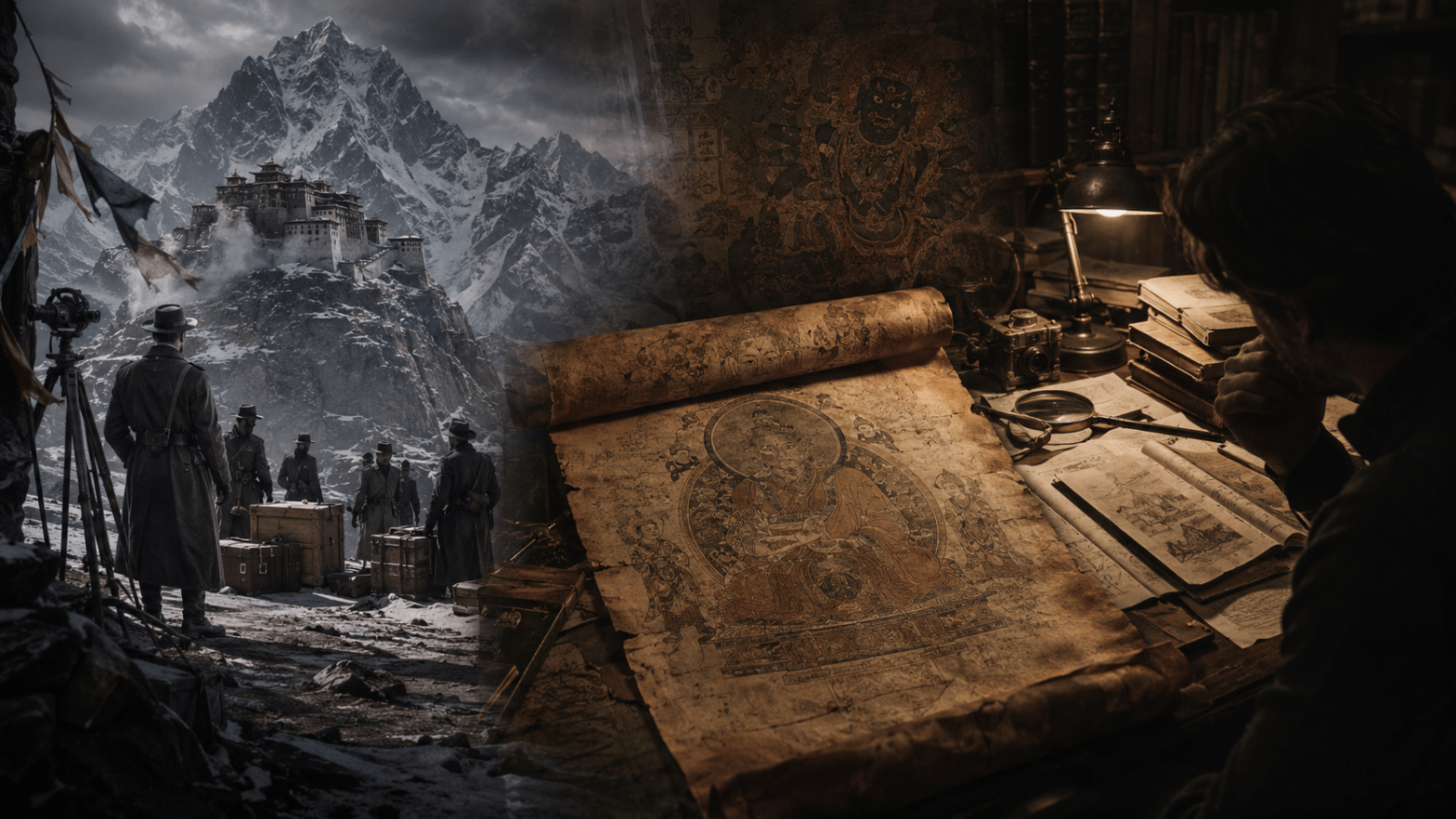
At the time, I thought I would be a historical fiction/thriller/conspiracy fiction writer, just like Dan Brown, and Vril scratched that itch. I also wrote it while living in China, so some of that influence is there, with the first few chapters set in Tibet in the late 1930’s. It begins with the Nazi SS’s expedition to the mysterious kingdom, where the Nazis are given ancient Buddhist texts by the Regent Reting Rinpoche (the new Dalai Lama had not yet been found, and the regent wanted to hold on to his power by forming an alliance with Hitler). This was all real history, drawing heavily upon the book Himmler’s Crusade by Christopher Hale.
In my story, the ancient texts detail the bringing forth of Vril, an ancient power. Ultimately, the Nazis fail to achieve this goal when one of the texts is lost during the war. It then skips ahead to modern times, to a Harvard Professor, Alex Dwendelson, who’s barely holding on to his job due to his fascination with this “pseudo-history”. The Nazi’s, now under new management (with a villain based on Erik Prince, founder of Blackwater, who turned into a real villain), never stopped looking for this lost text, and you guessed it, Alex stumbles upon it first. Calamity ensues.
Needless to say, I didn’t end up publishing the book. It wasn’t a bad story, and it had its gems, but the idea ultimately fizzled during editing when I realized it needed too much work. It also ran into a multitude of tropes, as you can probably tell from my brief description. It ended up back in the drawer with my other failed projects. I’ve learned that most of us should not publish our first few novels. They are used to get rid of all the purple prose and bad ideas, usually introduced there by our heroes.
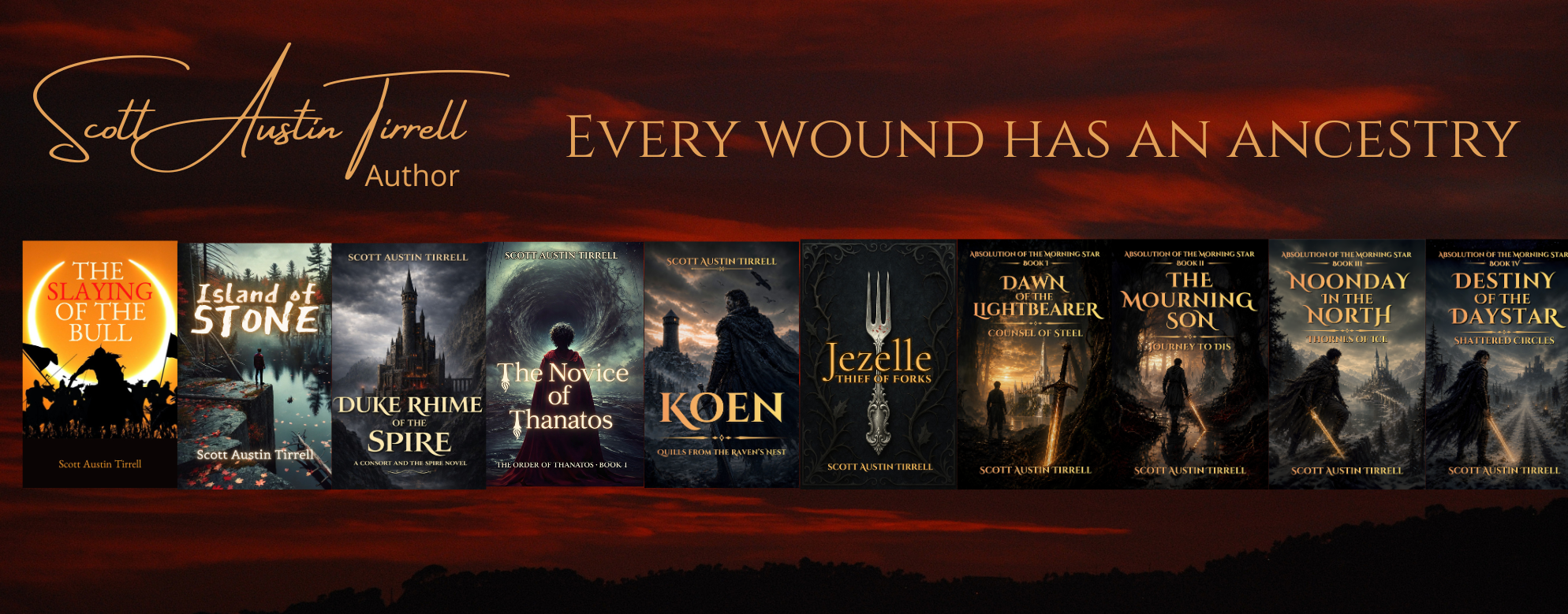
Instead, I went with reworking and publishing The Slaying of the Bull, which I think was the third novel I wrote, after returning to the US. Both Vril and the Bull were written before Island of Stone, but I went with the island first because I had received some interest from agents soon after I wrote it in 2008, and thought it had the best chance of success. Ultimately, it didn’t really matter. None of them took.
It is hard to go back to old works like that. With time, it becomes difficult to remember where your mind was years ago, and reigniting that passion is nearly impossible. Also, as your style changes and your writing improves, you end up rewriting the whole god damn book, and it ultimately suffers from the incongruent voices. When I wrote Dawn of the Lightbearer, my first new project in a decade, it poured out of me, and I realized how much easier it was just to write new books.
Cheers!
Discover more from Author Scott Austin Tirrell
Subscribe to get the latest posts sent to your email.

Failed project, or training? A sportsman learns from losses, so do writers. Even by finishing a manuscript you have gone further than many “writers” who merely talk about it.
LikeLiked by 1 person
Yes, you are right. Failed is perhaps a strong word.
LikeLiked by 1 person
It seems to have worked out well in the end, but a lot of writers seem to be too hard on themselves and lose sight of the fact that they have achieved a great deal, even if something still needs work.
LikeLike