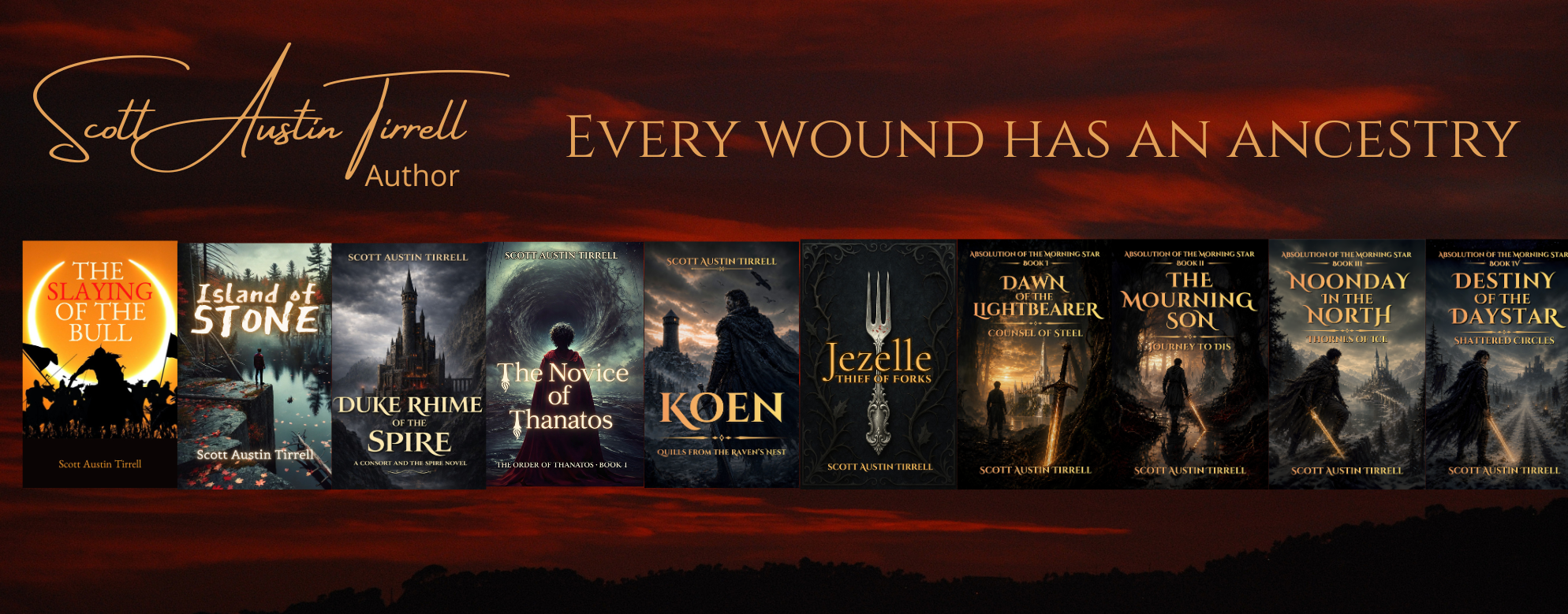

This week’s look into the past was originally published on April 9, 2020. I skipped over about a week of posts that were mainly about how the Island of Stone performed in that first week after publication. I chose the post below because it gives some insight into how that particular book rose from the ether.
It all came down to being burned out researching for my early, historically based fiction. In my basement, I still have binders and notebooks full of all sorts of research for both Vril and The Slaying of the Bull. The Bull, in particular, was a huge undertaking, set in the 13th century and on a topic that hasn’t been particularly well-researched —the Mongol invasion of Hungary. I wanted the book to have a strong, historically accurate foundation, which meant spending a lot of time down rabbit holes. I reached out to curators, I borrowed books from all over the world (MIT’s Libraries were a godsend), I obtained blueprints from the Catholic Church, and even traveled to some of the locations, including Budapest. At the time, I really thought I was producing something great. Did I? Probably not, but I get an A for effort. It is a long book, and as you will see, it would have been even longer. I began writing the sequel, which was going to take place 17 years after the first and focused on the fall of Baghdad’s round city to the Mongols in 1258, but I will likely never get back to it. My passion is now well-rooted in Dark Fantasy.
Anyway, it is a neat snapshot. Check it out!
Cheers!
Discover more from Author Scott Austin Tirrell
Subscribe to get the latest posts sent to your email.

You sold me on Slaying of the Bull, just downloaded it from Kindle Unlimited. When I visited Budapest I got interested in the impact of the Mongol invasion so the topic is perfect for me.
LikeLiked by 1 person
I hope you enjoy it, and thank you! I will be honest, it is probably not my best work. A younger, less experienced writer wrote it. But much of the history in it is real, and although I take liberty with many of my connections for the sake of the story, they are plausible.
LikeLike