As I mentioned in my last post, over the last few weeks, I have been looking backward more than usual.
Part of that has come from my Flashback Fridays series, which has forced me to dig through six years of blog posts and revisit the person I was when all of this began. Part of it has come from writing Sylvanus: Swords and Sons and realizing that what I once thought was a detour into Lucardia’s past is actually becoming essential to where the larger story is going. And part of it has come from always trying to better understand exactly what ties all of my work together.
For years, I have described Lucardia by its size. Thousands of years of history. Multiple kingdoms. Religions, wars, dynasties, ruined cities, gods, monsters, and enough dead people to keep the Order of Thanatos employed indefinitely. All of that is true, but I am beginning to think it misses the point.
A vast world is not made vast because the author tells you it is. It feels vast because the past is still alive inside the people who inhabit it.
That realization has led me to a phrase I keep returning to:
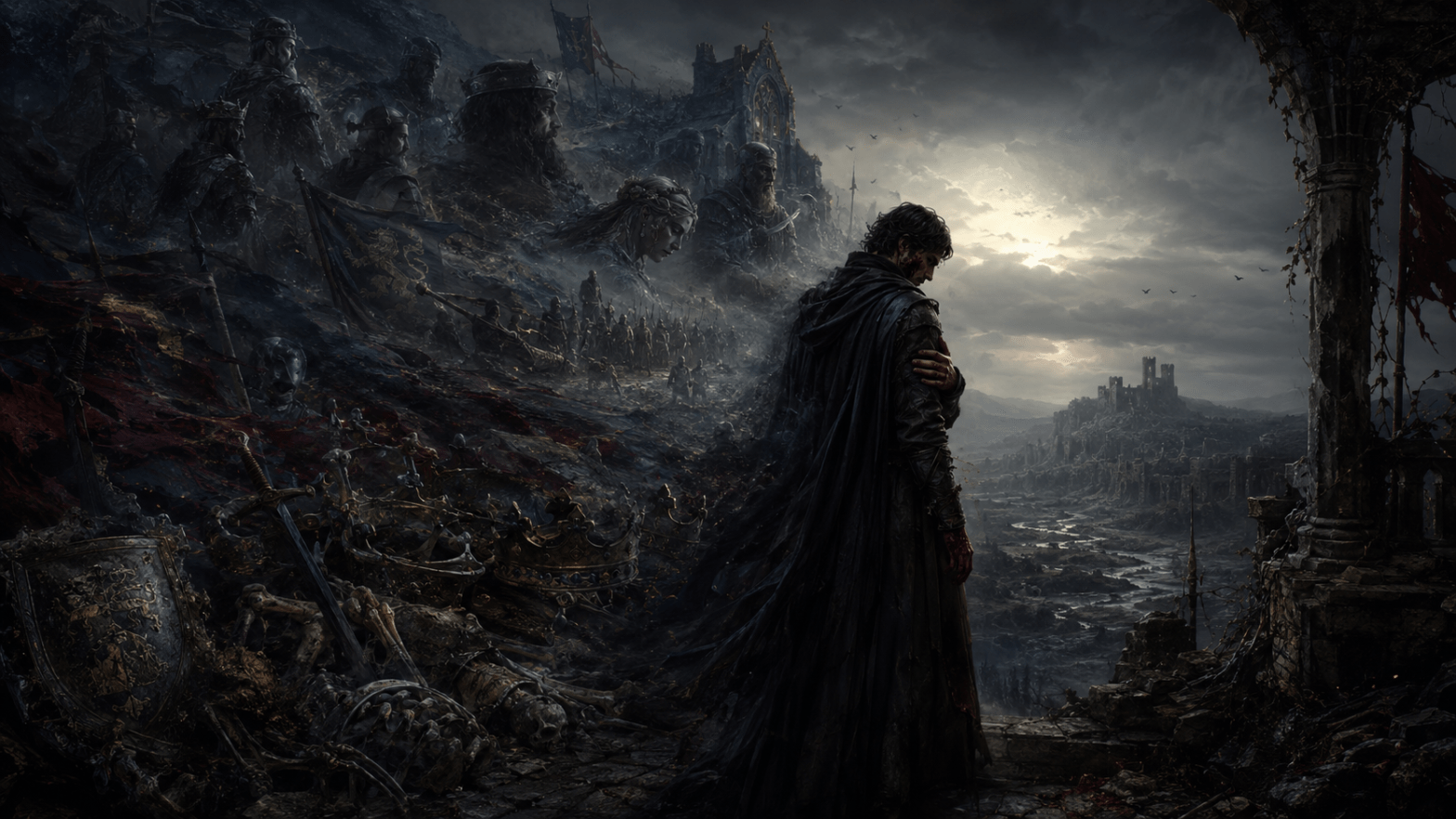
Every wound has an ancestry.
The more I think about it, the more it feels like a motto for nearly everything I write. Lucardia is full of wounded people, but very few of those wounds begin with them.
A prince inherits expectations placed upon his bloodline generations before his birth. A child grows up inside the consequences of a war she never fought. A priest performs a ritual whose original meaning has been buried beneath centuries of doctrine. A rebellion begins because one generation can no longer endure what the previous generation created or accepted. A husband makes a desperate decision out of love, and that private choice eventually becomes a political catastrophe.
The present is never clean. It arrives carrying everything that came before, and this may be why I have such a difficult time leaving the past alone.
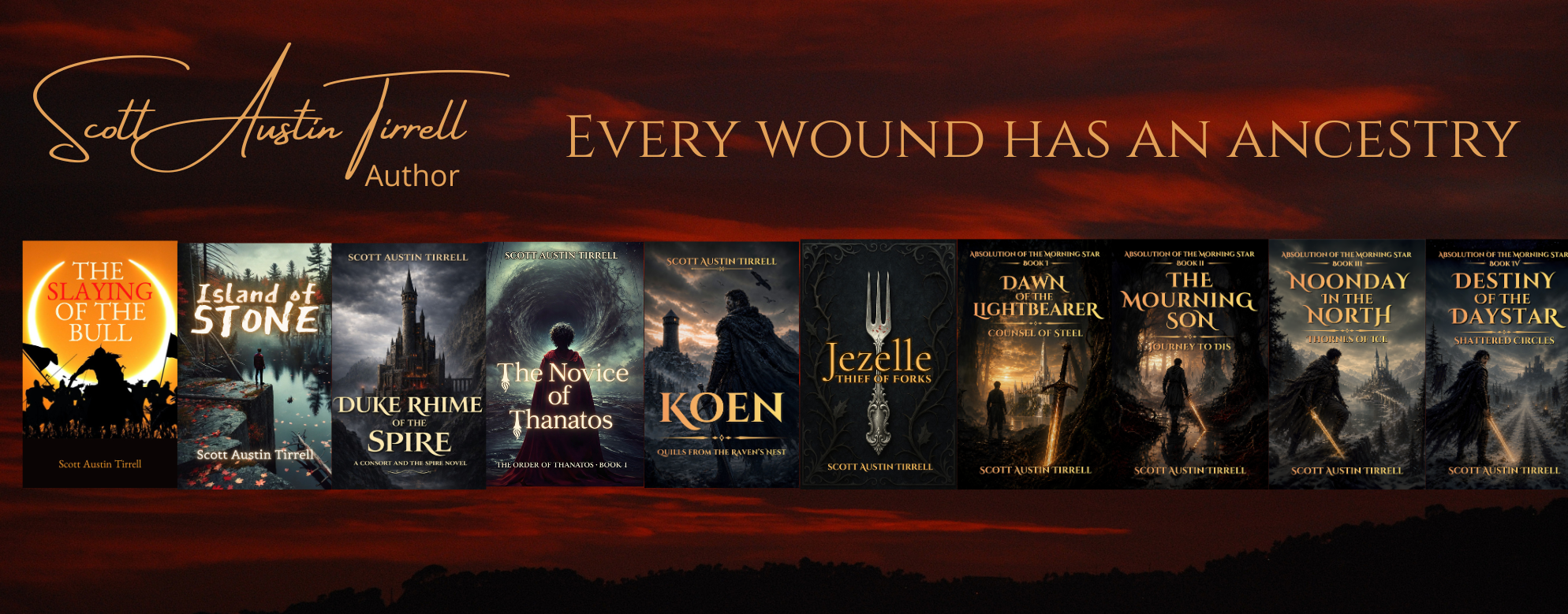
When I wrote Koen: Quills from the Raven’s Nest, I only intended to explain a three-year disappearance I had casually mentioned in Absolution of the Morning Star. I wanted to know where Koen went and what happened to him. Simple enough.
Except the answer changed everything.
Koen’s disappearance could not be understood without Rachel, their marriage, infertility, dynastic expectations, and the growing fracture within his family. His personal desperation became entangled with the politics of an empire. Then I realized Koen could not have witnessed everything that happened during those years, and that he did not rebel alone, which led me to Sylvanus. As I worked on Sylvanus, another question remained: what happens to Erikini? Now she needs a book too.
Somewhere along the way, I also realized Jezelle: Thief of Forks belongs to this same history in ways I cannot yet explain without spoiling things. What began as a single prequel is now becoming a four-book series, likely titled Blood and Banners.
For a while, I felt guilty about that. I should be finishing Absolution of the Morning Star. I have two books left, yet I keep digging backward.
But the historian in me should have known better.
As I’ve mentioned, I studied history and psychology, and those two disciplines have probably shaped my fiction more than anything else, but I was also drawn to those two disciplines for a reason, one that culminated in my fiction writing. The historian wants to know what happened before the story began. The psychologist wants to know what those events did to the people who inherited them.
That is where Lucardia lives.
History creates pressure, people respond to it, and their responses become history for someone else. One generation wounds the next, often without meaning to. A father’s fear becomes a son’s burden. A king’s compromise becomes a law. A rebellion becomes a national myth. A religious lie becomes doctrine. A victim becomes powerful enough to create new victims. Eventually, no one remembers where the wound began. They only know that it hurts.
That is where history and psychology become inseparable. And I theorize that this is also where a fantasy world begins to feel old.
I’ve begun to realize I do not need to explain every ruined castle if the people living beside it still hate the family that destroyed it. I do not need to describe centuries of religious history if a monk is afraid to question a prayer because someone was burned for doing so generations earlier. I do not need to tell readers that two kingdoms have fought for five hundred years if two characters cannot sit at the same table because of something their grandfathers did.
History works best when it leaves fingerprints. Or, better yet, scars.
That is the flavor I want Lucardia to have: not simply dark fantasy, not simply grimdark, and not merely a giant world filled with lore. I want readers to feel that everyone they meet has arrived from somewhere, that every belief has a history, every institution has an original sin, every hatred has a story, and every act of love carries consequences.
There is something else buried in the motto, though. An ancestry is not a destiny.
We inherit much of what shapes us, but inheritance does not eliminate choice. A character can repeat the wound, deepen it, disguise it as virtue, and hand it to the next generation. Or they can decide that it ends with them.
That last possibility matters to me because, for all the darkness in my stories, I do not think I am particularly interested in hopelessness. Darkness only becomes interesting when something survives it: a friendship, a refusal, an act of mercy, a truth someone refuses to bury, or a person deciding that what happened before will not completely determine what happens next.
That is where hope lives in Lucardia. Not in pretending the wound never existed, but in understanding where it came from and choosing what happens to it now.
So, I think I have finally found the words for something I have been writing around for years.
Every wound has an ancestry.
I suspect you will be seeing that phrase again.
Cheers!
Discover more from Author Scott Austin Tirrell
Subscribe to get the latest posts sent to your email.

Europe feels old for just those reasons, going back to pre-Roman times. Stonehenge and other neolithic sites such as Carnac were almost certainly built to assert a wound, rather than heal one, but each, too, had its history within warring kingdoms. And of course the USA was created from the spillover of European discord.
LikeLiked by 2 people
Scars yes. And seeds. Everyone has the power to create them, to plant them, to be them. Some seeds sprout soon after being created. Some take years, decades, or even centuries to find fertile ground to sprout….
LikeLiked by 1 person