
I’ve recently come to the unfortunate realization that nearly everything I’ve ever been passionate about is something nobody particularly wants to pay me to do.
Drawing. Painting. Music. Carpentry. Writing.
Apparently, when the universe was distributing interests, I wandered into the arts-and-crafts department and never found my way out.
Why couldn’t I have developed a passion for investment banking? Or corporate law? Computer programming? No, I had to fall in love with pursuits where years of practice, considerable skill, and a finished product can still earn you almost nothing.
The universe has a peculiar sense of humor.
I’ve been creative for as long as I can remember. As a child, I loved drawing. Eventually, that expanded into painting, music, woodworking, writing, and just about anything that allowed me to make something that hadn’t existed before. I was never particularly interested in simply following instructions or reproducing something someone else had already done. When I’d get a LEGO set, I’d throw aside the instructions and build from my imagination. I wanted to create!
And because I wanted to create, I worked at becoming good at it.
I’ve never been entirely comfortable with the idea of talent as some magical gift bestowed upon a fortunate few. Certainly, some people have natural aptitudes. Genetics probably plays a role, too. I’ve long suspected that much of my own creative ability comes down to a natural desire to problem-solve. My second grade teacher used to call me Mr. Fix-it. I enjoy figuring things out, whether that’s capturing an image, developing a piece of music, turning a pile of lumber into something useful, or constructing a complicated narrative.
But aptitude is only a starting point. It doesn’t accomplish much without the willingness to develop it.
Passion is what makes you spend hours practicing something nobody asked you to practice. It’s what drives you to start over when something isn’t working, to experiment, to improve, and to keep going long after the novelty has worn off.
People see the finished product and call it talent. They rarely see the thousands of hours that went into developing the skill. And, in my case, most of those hours have been devoted to pursuits that are notoriously difficult to monetize.
Of course, being good at something and being able to make a living doing it are two entirely different propositions. This is particularly true in the arts, where passion and dedication are often treated as admirable qualities that should somehow compensate for the absence of financial reward.
People will tell you how wonderful your work is, how much they admire your creativity, and how they wish they possessed your abilities. Then they’ll ask if you can do something for free. It’s an interesting economic model.
Over the years, my creative interests have evolved, but the underlying impulse has remained remarkably consistent. Whether I was drawing, painting, making music, building something, or writing, the satisfaction came from taking something that existed only in my imagination and giving it form.
There’s something almost magical about that process. An empty canvas becomes a painting. A collection of sounds becomes music. A stack of boards becomes furniture. A blank page becomes a story. Something that existed nowhere outside your own head suddenly exists in the world.
Unfortunately, the world is under no obligation to care. And there’s the rub.
We’ve all heard the familiar advice: Find something you love doing, and you’ll never work a day in your life.
What a wonderful sentiment and what absolute nonsense.
Finding something you love doing is relatively easy. Finding someone willing to pay you to do it is another matter entirely. Finding enough people willing to pay you to support yourself might as well be considered a supernatural occurrence.
There is, however, one notable exception among my creative pursuits: carpentry.
Over the years, I’ve undertaken an enormous amount of work renovating and improving my home. I’ve built things, repaired things, redesigned spaces, and tackled projects that would have cost a small fortune if I’d hired professionals.
And unlike my books, paintings, or music, this particular passion has actually produced a measurable financial benefit. By doing the work myself, I’ve saved tens of thousands of dollars in renovation costs.
Of course, there’s a catch. Those savings came largely from not having to pay for labor, and the only reason I saved so much was that I wasn’t paying myself. Apparently, I’ve finally discovered the secret to making my creative pursuits financially worthwhile: benefiting from my own free labor.
I suppose that’s progress.
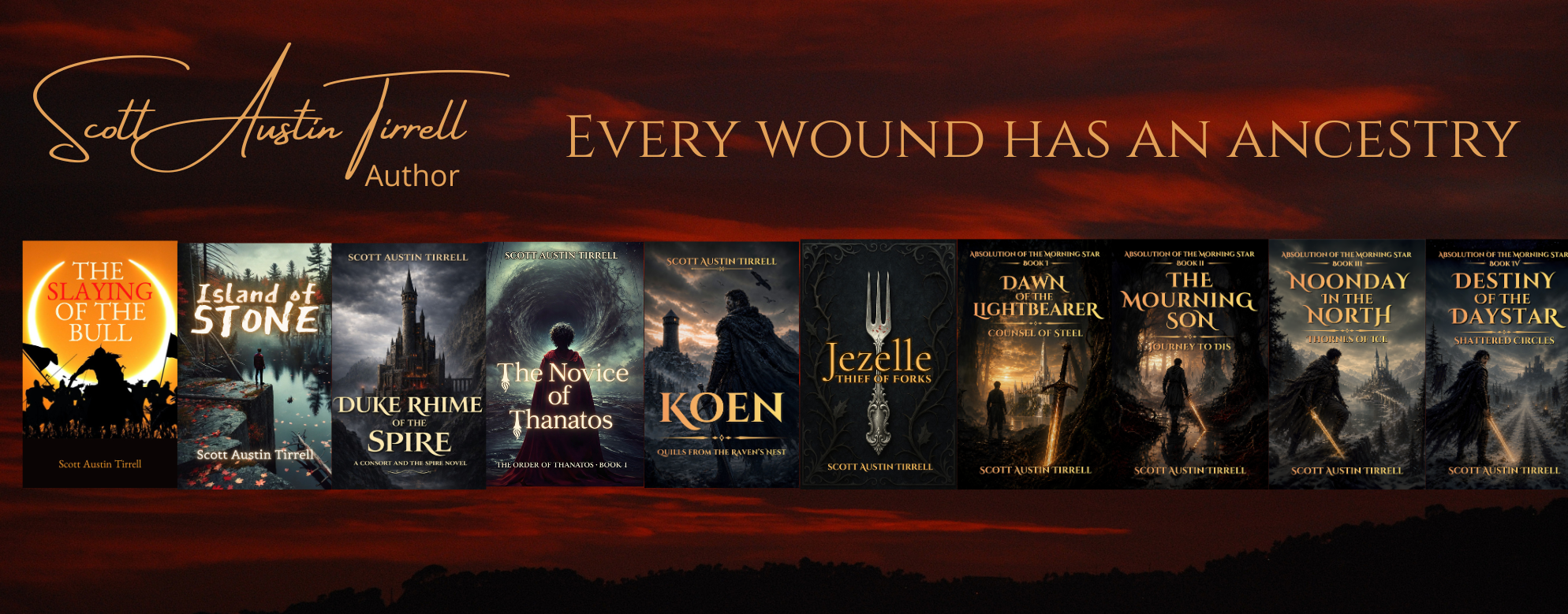
And once those biggest renovation projects were finished, naturally, I decided to return to being a novelist. Because apparently drawing, painting, music, and carpentry hadn’t provided sufficient evidence for me to reconsider my choices.
Writing may be the most absurd of my creative pursuits. A painting might take days. A piece of music might take a few weeks to master. But a novel? A novel can consume a year of your life, sometimes more. Hundreds of thousands of words written, rewritten, discarded, and written again. Research, editing, proofreading, formatting, cover design, marketing, and all the other little indignities that accompany publishing.
And after all that, you release it into the world where it may be greeted with the literary equivalent of a shrug.
It’s an extraordinary business model, really. Invest thousands of hours developing a product, spend additional time and money bringing it to market, and then hope a handful of strangers are sufficiently intrigued to part with the price of a cup of coffee. I am a lover of coffee, so I understand that is a difficult choice.
I really should have become a carpenter. At least I wouldn’t need to worry so much about AI (both professionally and creatively).
Ironically, I’ve managed to build a successful professional career by adapting many of the same skills I developed through my creative pursuits. Problem-solving, persistence, imagination, and the ability to recognize how seemingly unrelated pieces fit together have proven remarkably useful outside the arts. Whether I’m managing a complicated project, renovating a house, or constructing an imaginary kingdom, I’m drawing on much the same abilities. The difference is that, in my professional life, I’ve found ways to make those skills useful to others. And, more importantly, people are willing to pay for them. Too bad I hate almost every minute of it.
That’s a peculiar contradiction. The skills that support my life aren’t necessarily the ones that give it its greatest creative satisfaction.
And I suspect I’m hardly alone.
There are countless artists, musicians, writers, and other creative people who spend their days doing something practical so they can afford to spend their evenings doing something impractical. People who pour extraordinary effort into work that may never receive much recognition, much less financial compensation.
Some succeed, of course. Spectacularly, in a few cases. We celebrate those people, hold them up as examples, and encourage everyone else to follow their dreams. What we tend to overlook are the enormous numbers of passionate, dedicated people whose dreams remain stubbornly unprofitable.
Passion can develop talent into skill. Skill can produce extraordinary work. But none of those things guarantees an audience, recognition, or financial success. That’s an uncomfortable truth, particularly when you’ve invested years of your life in something. In a society like ours, where much worth is placed on financial gain, it is especially difficult psychologically. When I tell someone that I am a novelist outside my day job, I always get the same face and a similar series of questions. They are usually in good spirit but almost always a little demeaning. It is truly hard to feel successful.
And yet, knowing all this, I continue.
I still write. I still create. I still spend ridiculous amounts of time worrying about the histories of imaginary people, the geography of imaginary kingdoms, and whether a fictional character could reasonably have traveled a particular distance in a particular number of days. Nobody is paying me to worry about these things. Nobody has even asked me to. But I do it anyway. Because despite the frustrations, disappointments, and occasional desire to throw my computer out the window, I genuinely love the process of creating. I love watching something take shape. I love discovering connections I hadn’t anticipated, solving problems I created for myself, and occasionally producing something that makes me sit back and think, Yes. That’s exactly what I wanted.
I just wish the world were a little more interested in the results.
Perhaps that’s the peculiar burden of being a creative person. The work itself can be immensely satisfying, even when the response to it is anything but. And I don’t regret any of it. I don’t even regret the thousands of hours I’ve spent developing a fictional world that exists primarily inside my own head. I’d rather be a creative person than not. It is great for boredom and makes me particularly well-suited to retirement life. I simply wish that, somewhere along the way, I’d also developed a passion for something outrageously lucrative. Preferably something that I enjoyed.
But no. Apparently, I was destined to spend my free time making things. Including this blog post, in which I’ve devoted several hundred words to explaining why devoting several hundred words to something is an economically questionable decision. There must be a lesson in there somewhere. Unfortunately, I’m probably too busy writing another novel to learn it.
Cheers!
Discover more from Author Scott Austin Tirrell
Subscribe to get the latest posts sent to your email.
