On Monday, Sylvanus: Swords and Sons goes out into the world. I chose its release date without knowing what this week would bring. Now, after the blue wave, I find myself preparing to release a book about power and responsibility at a moment when I am cautiously hopeful about both. The timing was unplanned, but it has made me think about how much of the world outside my window has found its way into Lucardia.
I have generally avoided politics on this blog. I would rather talk about the stories I am writing and the things that interest me in my writing world, and I know readers come here for those things, too. But I cannot honestly discuss what this particular book means to me without acknowledging the circumstances in which it took shape. Much of Lucardia has been written over the last six tumultuous years, and its beginnings reach further back, into a world Trump was already helping to change. I never set out to write a commentary on American politics. I was, however, living through them while imagining what people might become under another deeply troubled system.
For years, I have watched people excuse conduct they would once have condemned. I have watched cruelty become evidence of strength and demands for accountability become, somehow, the greater offense. Perhaps most disturbing has been watching people surrender their own judgment to preserve their standing within a group. There always seems to be another explanation for why this particular abuse must be tolerated, and another reason the person responsible cannot be challenged just yet. Eventually, I begin to wonder what remains of a principle that never requires anyone to act and what the uses of laws are if no one enforces them.
Those concerns have followed me into my fiction. Lucardia is full of people who have learned to live with things they should find intolerable. Some benefit directly. Others are afraid, or exhausted, or trying to protect someone. Many have inherited an understanding of the world that makes its injustices seem necessary. They can recognize suffering and still believe that interfering would be foolish, disloyal, or dangerous. Sometimes they are right about the danger.
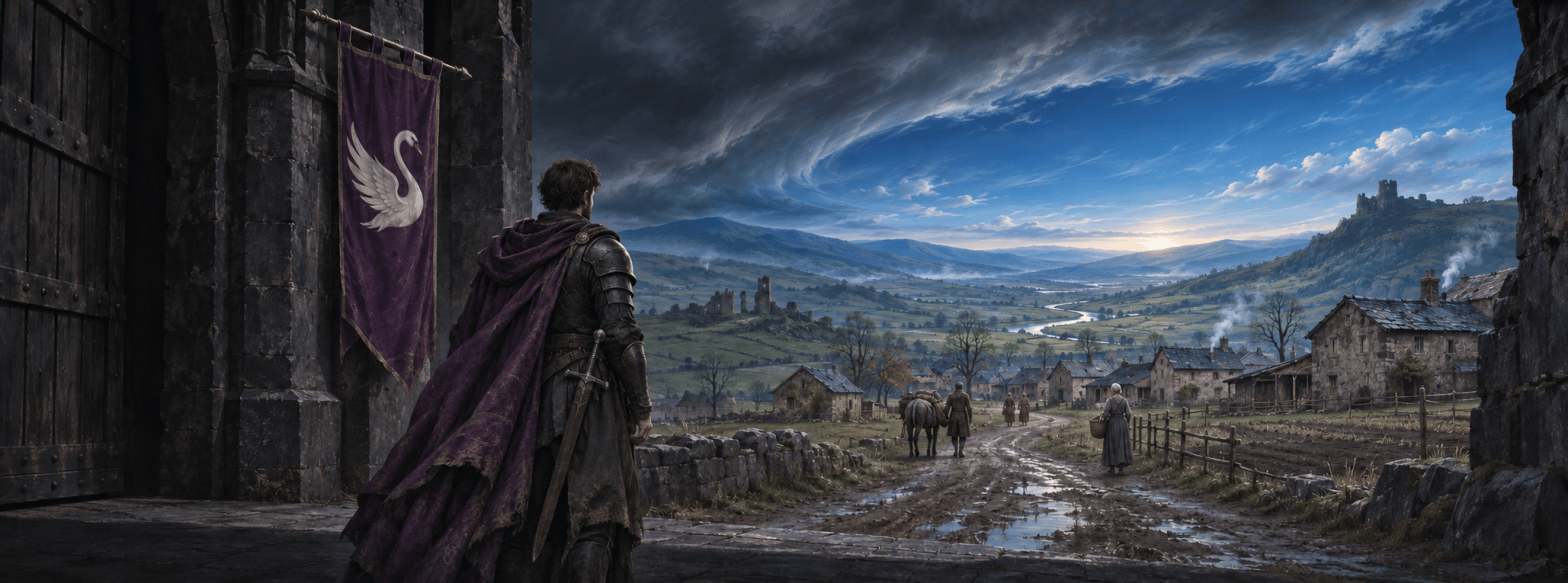
Sylvanus has a great deal to lose by questioning the order of his world. He is a prince and the son of Emperor Vesper. The authority he might challenge is bound up in his family, his position, and his understanding of who he is. His father’s transgression carries a weight greater than that of a stranger’s, and his villainy inflicts a unique hurt on a son who once looked up to him. Confronting what is wrong, therefore, requires him to examine things he has been taught to value or that have benefited him, as well as choices he would prefer to forget.
That is part of what makes him interesting to me. He has benefited from the system around him and bears responsibility for harm within it. He cannot place himself comfortably outside its failures. Whatever he comes to understand, he still has to face the fact that understanding arrived after other people had already paid a price.
There is something painfully familiar in that. When people begin to question a leader or a movement they supported, I want there to be somewhere for them to go. A society cannot change if everyone is required to remain forever who they were at their worst. But I also understand the anger of those who warned them, suffered the consequences, and are now expected to welcome their realization as though nothing happened. Changed convictions do not restore what someone else has lost. The difficult work begins when a person accepts that and chooses to act differently anyway, knowing they may not be welcomed with open arms on the other side.
For Sylvanus, responsibility becomes increasingly personal through the people around him. His companions have knowledge he needs, limits he must recognize, and lives that matter beyond their usefulness to him. Their willingness to follow him places an obligation on him. When someone accepts danger because they trust your judgment, you owe them more than confidence in yourself.
This is where the question of leadership becomes most compelling to me. A title can establish who gives the orders. It cannot establish whether those orders deserve to be followed. Someone accustomed to obedience may go a very long time without understanding the difference, particularly if the people around him have learned that agreement is safer than honesty. Learning to hear an unwelcome truth requires him to give up some of the comfort his position provides.
I think about that now, as a new group prepares to exercise the power voters have entrusted to them. I wanted this rejection of Trump and the politics he has encouraged. I am relieved by it. After years of wondering how much people would accept, it matters to see an overwhelming demand for a different direction. I am willing to feel hopeful without pretending that an election has repaired the damage.
The obligation now is enormous. Those elected must confront abuses, rebuild trust, and make decisions that will affect people who have already endured enough. Most importantly, they must reestablish the rule of law and accountability. They will face pressure to protect their allies and opportunities to excuse their own conduct. They will be able to tell themselves that their goals are too important to risk by admitting a failure. Every one of those temptations should sound familiar, and we must always remember where they led. The lesson is perhaps the only benefit from this nightmare we are now waking from.
They must remember why people demanded a change. We cannot object to dishonesty only until a convenient lie serves our purposes, or oppose abuses of authority only while someone else holds it. The people I voted for owe the public an account of what they do. My support does not entitle them to less scrutiny, and their opponents’ failures do not relieve them of their own obligations.
That does not mean I want them to be timid. Course correction requires action, and accountability may require uncomfortable confrontations. I want them to have the courage to use their authority and the judgment to recognize its limits. There are people who depend on them and cannot afford another group of leaders more concerned with securing their positions than fulfilling their responsibilities.
Sylvanus explores these questions through people whose loyalties are tangled and whose choices have consequences they cannot always anticipate. Family affection does not erase wrongdoing. Opposition to a cruel ruler does not settle what should replace him. Even people who agree that something must change can have profoundly different ideas about what they are owed when it does. Those complications are part of the story because they are part of human beings.
I did not foresee this particular moment when Lucardia began to swirl in my imagination. I knew I wanted to write about people trying to live in a world that could demand terrible things of them, and what it might take for them to refuse. Over time, that also became a question about what follows the refusal. Once someone begins to understand the harm around him, what is he prepared to risk, surrender, or change in himself?
That is the question I am carrying into Monday’s release. We may be stumbling out of a long shadow, but we still have to decide how to conduct ourselves beyond it. I hope the people we have chosen understand the weight of that responsibility. I hope we remember it, too, when they ask for our patience, our loyalty, and our trust.
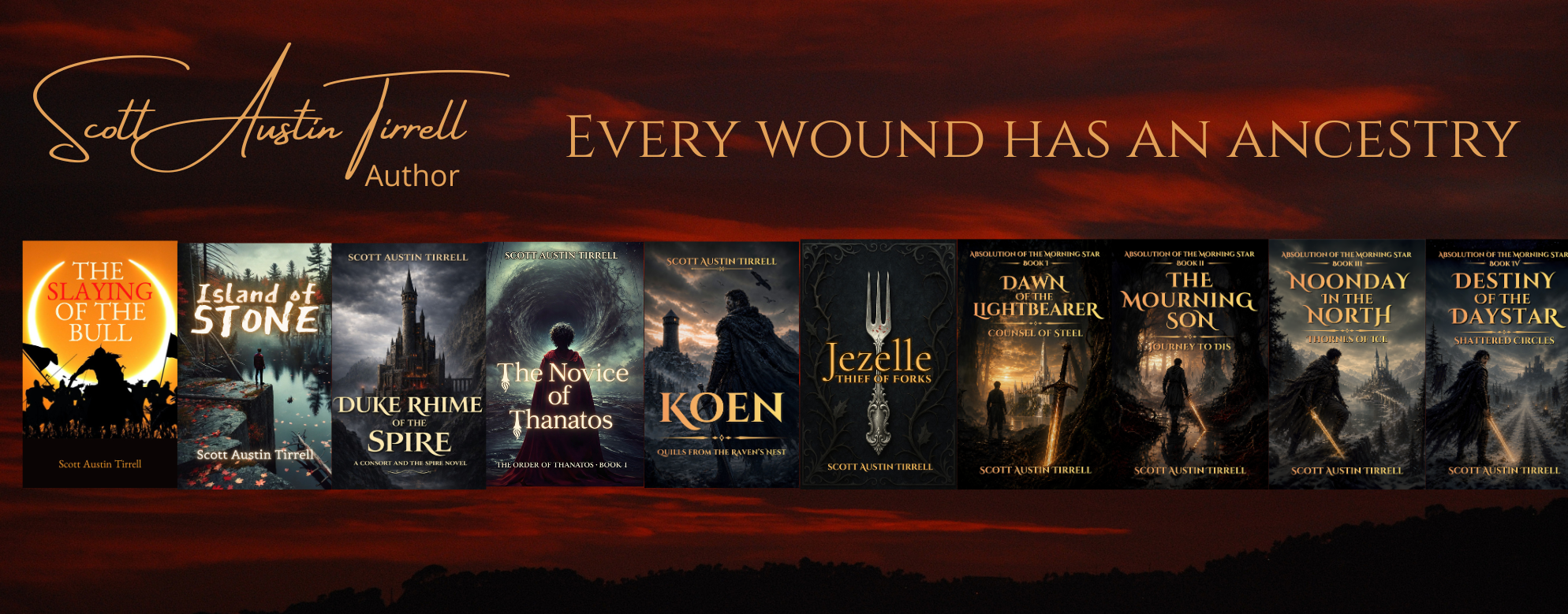
All versions of Sylvanus: Swords and Sons, the second book in the Blood and Banners series, release Monday, November 9. You can preorder a copy today! If you haven’t had a chance to check out book 1, Koen: Quills from the Raven’s Nest, now is the time! Amazon is currently discounting the paperback by 25%, and the ebook will be just $0.99 starting tomorrow at 8 AM EST (for a limited time).
Cheers!
Discover more from Author Scott Austin Tirrell
Subscribe to get the latest posts sent to your email.

We live in interesting times, to be sure!
LikeLike