Sylvanus: Swords and Sons has now crossed 60,000 words, placing me roughly at the midpoint of the novel.
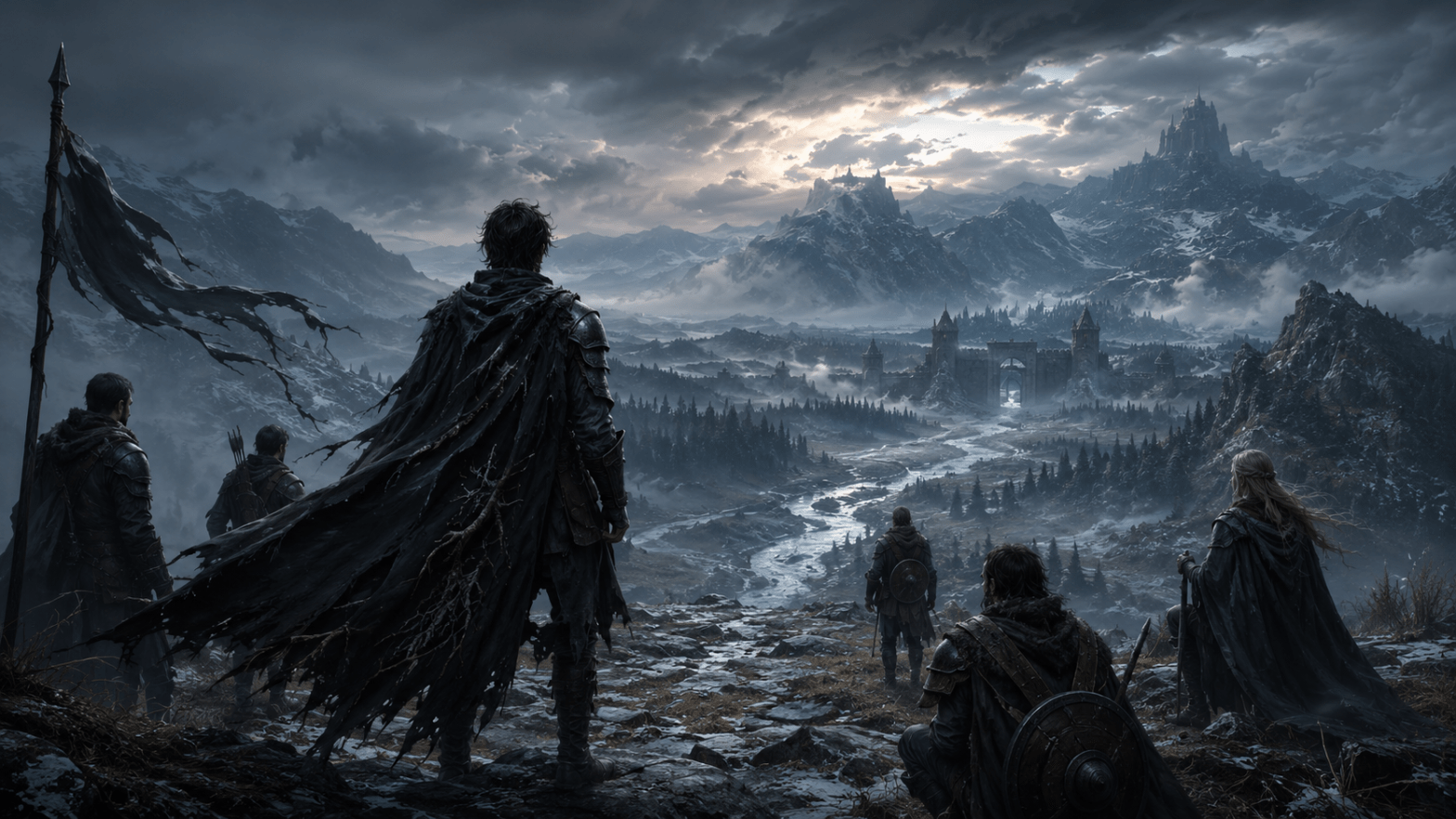
After a long and arduous journey, Sylvanus and his remaining companions are preparing to cross into the Northlands and enter the realm of his brother, Koen. It is a major transition in the story, but also in Sylvanus himself. The man approaching the border is not the same prince who left Runemaul.
Much of what Sylvanus carried with him has been stripped away. The road has peeled back his assumptions, his pride, and his understanding of leadership, all while solidifying his hatred for his father. He is slowly learning that being a leader is not a matter of title or blood, but of responsibility, sacrifice, and the people who continue walking beside you. To rebel, hatred is not enough. He must become something greater than an unhappy prince.
Soon, this changed Sylvanus will meet a brother who has also changed after his own arduous journey, and that should create an interesting dynamic.
The midpoint of a novel is often the most difficult section to write. The excitement of the beginning has faded, while the momentum of the ending remains somewhere beyond the horizon. The shape of the book is visible, but it is not yet complete. This is often where flaws that were easy to overlook at the beginning become impossible to ignore.
As I approached 50,000 words, I began to feel that some of Sylvanus’s supporting characters were too flat. They were present in the scenes, but they were little more than bodies in the background.
That was a problem, especially because Sylvanus leaves Runemaul with twelve men and gains another companion along the way. It is a sizable group, and while not every character needs equal attention, they should feel like people rather than names standing around the edges of a scene.
So I stopped moving forward and went back to the beginning.
I started with the moments when these characters were first introduced, adding more detail and giving each of them a clearer identity. I created a spreadsheet listing every character and his defining qualities, then worked forward through the manuscript, looking for places where they could become more involved in the story.
At first, their presence needed to remain restrained. Sylvanus is a prince, and many of these men would naturally be apprehensive around him. They would not immediately joke with him, challenge him, or speak freely in his presence.
But shared hardship changes relationships.
As they traveled together, suffered together, and began to trust one another, I allowed those characters to enter the conversations more fully. Their voices became clearer. Their reactions became more distinct. Slowly, they stopped being bodies in the room.
There is still more work to do in editing. Managing a large group without overcrowding every scene is difficult. Fortunately, this is dark fantasy, and the journey has been unforgiving- there are fewer bodies in the room now.
Going backward after writing 50,000 words took considerable time, but it turned out to be exactly what the book needed. Travel, family visits, and long breaks from writing had disrupted my momentum. I had fallen out of the story’s current. Revisiting the opening gave me a chance to see how the ship was sailing and make a few course corrections.
In the last several days, I have finally begun writing new material again, and I can feel the flow returning. Flow, the zone, or whatever you call it is the drug that makes writers write. When it comes, time disappears. This reality disappears. There is only the story. You still possess some semblance of control, but it is no longer complete. Writing begins to feel less like directing and more like collaborating with some mysterious force, something greater than my own feeble intellect. Perhaps it is the subconscious. Perhaps it is the result of countless ideas, memories, fears, and observations suddenly connecting beneath the surface that are usually crowded out by the stressors of life. Or perhaps some other door has opened.
Characters begin to act on their own. They say things you did not plan for them to say. They surprise you with their decisions. The scene comes alive, and the story begins to feel as though it possesses a will separate from your own.
When I reach that state, the words stack up quickly, and I do not want to stop.
That feeling cannot be summoned on command. Sometimes it arrives at the beginning of a book. Sometimes it appears in the final chapters. Sometimes it vanishes for weeks and must be rediscovered by doing the less glamorous work of revision, restructuring, and correcting what went wrong.
That was what happened with Sylvanus.
I had to go backward before I could move forward.
Now, Sylvanus stands at the edge of the Northlands, ready to cross into Koen’s realm. He is leaving one version of himself behind and stepping into the next stage of his life. He is finally becoming the man who will be ready for the road he and his brother must eventually travel together.
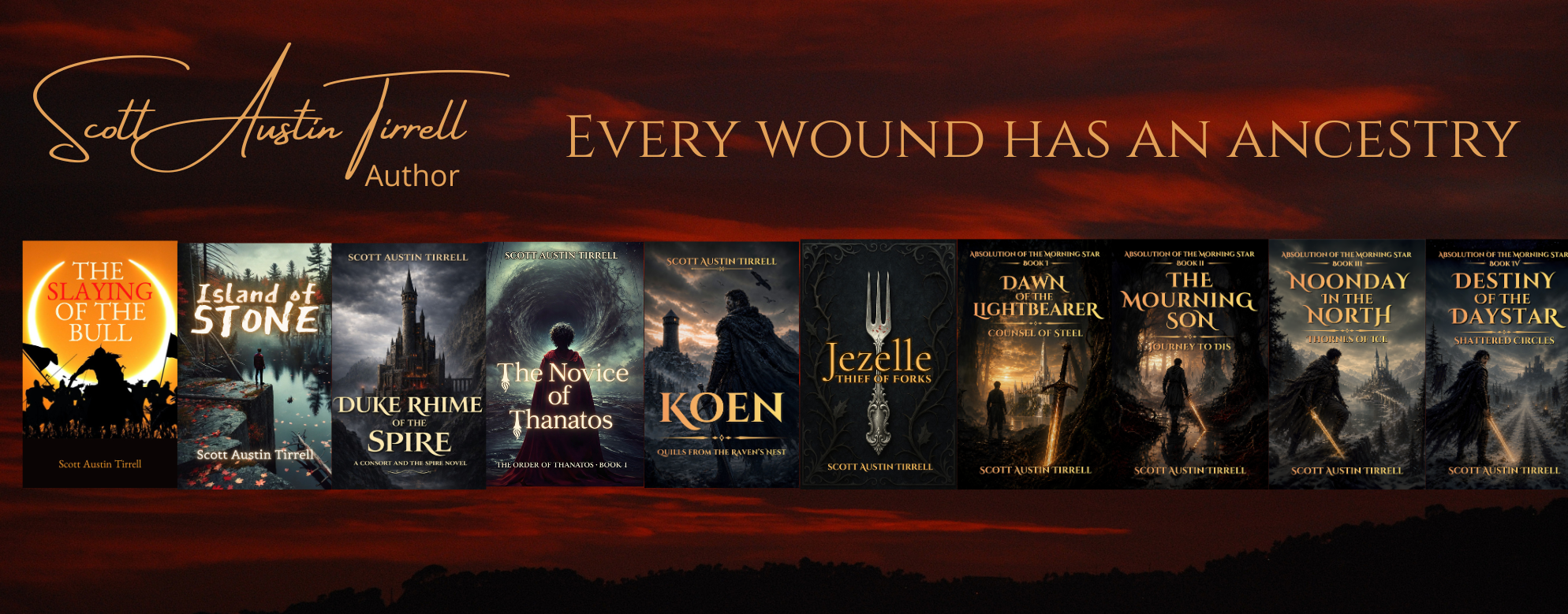
Readers of the Absolution of the Morning Star series, especially Dawn of the Lightbearer, already know where that road will end.
But there is still much that happens between this moment and the prologue of Dawn of the Lightbearer.
I have also decided that Sylvanus will not be the final book in this prequel arc. One more novel will follow: Erikini. Her story will begin after she is left in Oakenyard and will eventually connect with Jezelle: Thief of Forks. That means Koen, Sylvanus, Erikini, and Jezelle will form a single sequence leading into the Absolution of the Morning Star series. It is ambitious, but there are loose ends in Koen that can only be resolved by telling Erikini’s story.
For now, however, the Northlands await. The current has returned, and I am following it.
Cheers!
Discover more from Author Scott Austin Tirrell
Subscribe to get the latest posts sent to your email.

That flow state is one of the best things about writing.
LikeLiked by 1 person