There is something strange about writing a novel about a man whose future you have already written. You know where he will eventually stand, who will be beside him, and some of what it will cost to get there. Then you go back and discover how much of his life you still don’t understand.
Sylvanus has been part of Lucardia since Dawn of the Lightbearer. He existed long before I gave him a book with his name on the cover. I knew his family, his place in the empire, and his role in the larger story. I knew that the land saw him as a villain, and he was a person his nephew both feared and despised. I also knew that none of what Erikson Gray would know about him would be true. But spending an entire novel with him brought out a character I didn’t expect. A character can occupy a few pages under the weight of his history. Give him a whole book, and you have to follow him through the decisions that create a human being.
Sylvanus: Swords and Sons, the second book in Blood and Banners, is now available for pre-order and releases November 9. Getting it here has been one of the most intensive writing-and-revision experiences I’ve had. The manuscript initially shrank, and then it grew as I worked through it, cutting where the story needed less and expanding where I realized it needed more. At roughly 141,000 words, it is now the longest novel I’ve written. That was never the goal, but neither was the journey it became.
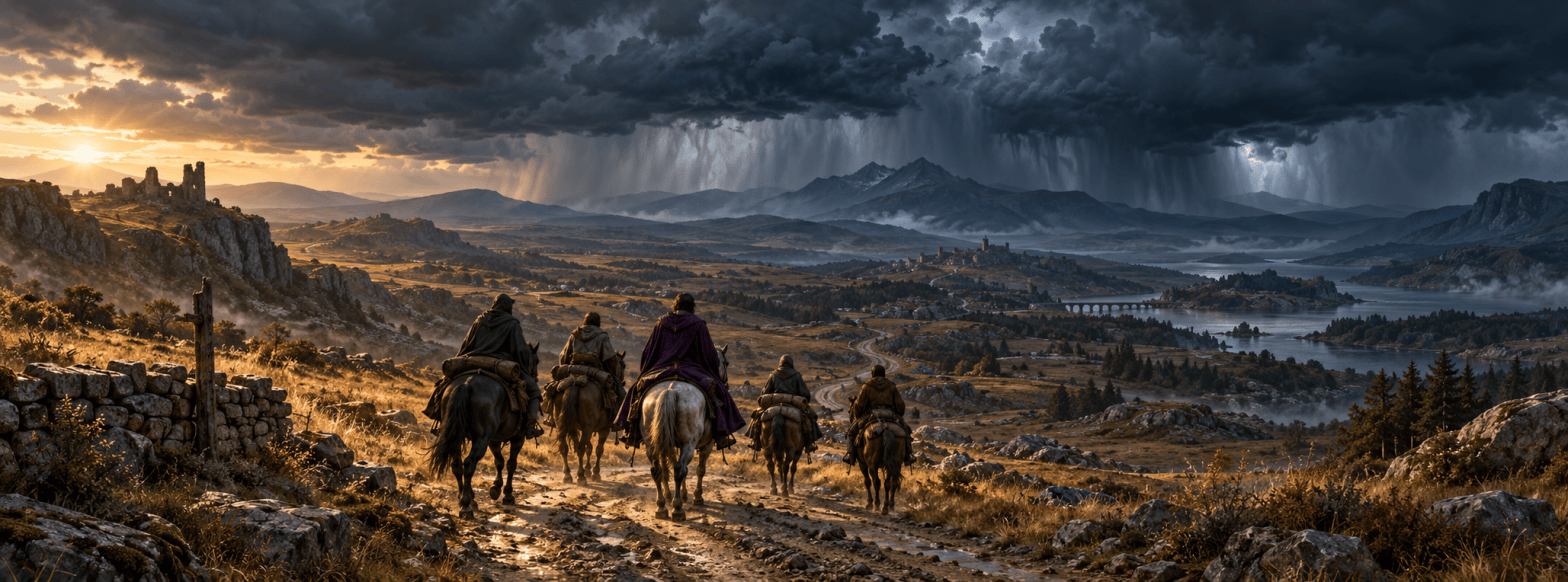
When I began, I hadn’t expected the journey itself to carry so much of the book’s emotional weight. There was a destination to reach and a complicated story waiting there. But the road became increasingly important, eventually occupying about half the novel. What happened along the way changed the man who would arrive, and that, in turn, changed what became possible once he got there.
Sylvanus is a prince. He understands appearances, persuasion, and the usefulness of saying the right thing at the right moment. Those are real abilities, especially in his father’s empire. They are also abilities that can make it easier to mistake being admired for being trusted, or giving an order for knowing how to lead. Put him on a dangerous road with people whose lives depend on his judgment, and those distinctions become rather urgent.
That was where so much of the work happened. I had to pay close attention to what he noticed about the men around him, what he took for granted, and when another person’s suffering finally became something he could no longer explain away. The journey needed to leave marks on him that would remain after the immediate danger had passed. Each change had to belong to Sylvanus, including the uncomfortable ones he might have preferred to avoid.
And waiting at the destination was his brother, Koen. Without giving too much away for those who haven’t read Koen: Quills from the Raven’s Nest, he ends that book broken by what he has experienced. He has endured three years of hardship in pursuit of a miracle. His wife, Rachel of Thorne, has spent those same three years not knowing whether her husband was dead or alive. Bringing them back into each other’s lives under unfavorable circumstances meant reckoning with what those years had done to them both. Especially with Rachel now pregnant with Erikson Gray, the protagonist of the Absolution of the Morning Star series.
Their relationship had to feel real. Koen’s suffering could not account for everything between them, because Rachel had lived through an ordeal of her own. They shared a marriage, but they had experienced those years separately, with different fears and different understandings of what had happened. I had to give both of them room within that relationship, including room for the things that would be difficult to say or hear.
Then I had to throw Sylvanus right into the middle of it. He arrives with his own history, needs, and expectations of his brother. What he finds between Koen and Rachel matters to how he understands both of them and to what he can reasonably ask of Koen. The brothers’ relationship could not develop in isolation from the marriage. All three people had to remain themselves while their lives became bound up in the same unfolding events.
There were times when I wasn’t sure I could pull that off. Even after I had a complete draft, I worried that perhaps I hadn’t (among many other insecurities). I knew what these relationships needed to carry, but knowing what you intend and feeling confident that it has reached the page are different things. Much of the revision involved returning to those uncertainties and working through them, scene by scene.
Some of that work reached down to very practical matters: who knew the road, who could tend an injury, where the horses had gone, and whether the people involved could plausibly survive what I had just put them through. Fantasy permits a great deal. But you still need to account for people, objects, and those pesky horses after calamity. Those details matter because they give the larger events something solid to stand on, and working through them repeatedly brought me back to the people living through the story.
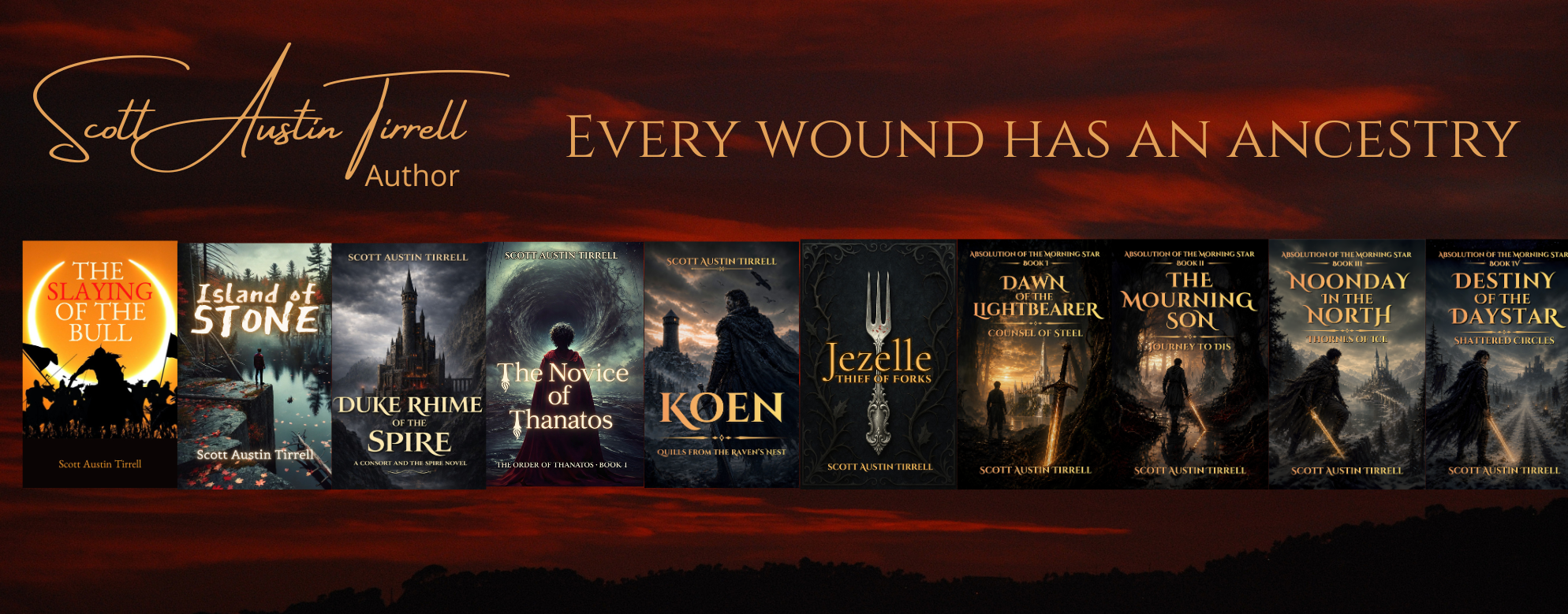
It also meant looking backward. As Koen and Sylvanus became more fully developed through Blood and Banners, I found myself returning to their appearance in Dawn of the Lightbearer with a clearer understanding of the men in the book’s very first scene. That has been one of the most satisfying parts of writing these books. A world I have spent years building can still surprise me, and an earlier moment can acquire weight I could not have given it when I first wrote it.
There is plenty of danger in Sylvanus: court intrigue, a brutal journey, divided loyalties, and the long reach of an emperor who is also a father. At its heart are people trying to understand what they can ask of one another, what they owe, and what they still have left to give. I hadn’t anticipated how much that would ask of me as a writer, or how deeply I would come to care about getting it right.
Now, at the end of that process, I feel confident in this story. That confidence took time, and it means something to me precisely because I didn’t have it at every stage. This is a book I can stand behind, and I’m ready for readers to make the journey.
Sylvanus: Swords and Sons arrives November 9 and is available for pre-order here.
Cheers!
Discover more from Author Scott Austin Tirrell
Subscribe to get the latest posts sent to your email.

All the best with your new book.
LikeLiked by 1 person
Thanks!
LikeLike